Spring Special Sale - 70% Discount Offer - Ends in 0d 00h 00m 00s - Coupon code: spcl70

Practice Free 200-201 Understanding Cisco Cybersecurity Operations Fundamentals (CBROPS) Exam Questions Answers With Explanation

We at Crack4sure are committed to giving students who are preparing for the Cisco 200-201 Exam the most current and reliable questions . To help people study, we've made some of our Understanding Cisco Cybersecurity Operations Fundamentals (CBROPS) exam materials available for free to everyone. You can take the Free 200-201 Practice Test as many times as you want. The answers to the practice questions are given, and each answer is explained.

Question # 6

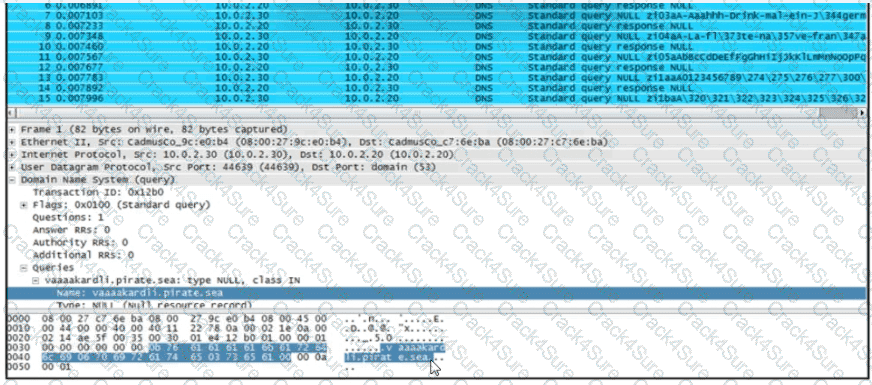
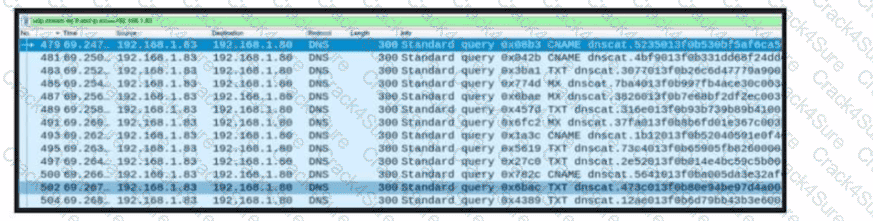
Refer to the exhibit.

200-201 question answer

What is occurring?

A.

ARP flood

B.

DNS amplification

C.

ARP poisoning

D.

DNS tunneling

Question # 7

Which security model assumes an attacker within and outside of the network and enforces strict verification before connecting to any system or resource within the organization?

A.

Biba

B.

Object-capability

C.

Take-Grant

D.

Zero Trust

Question # 8

A data privacy officer at a marketing firm has received a request from a former client to delete all personally sensitive information held by the company. The firm operates globally and follows international data protection standards. The only information retained about the client is a unique customer ID, "051473912", which is not directly tied to the name, address, or any other identifiable details. Which action should the data privacy officer take?

A.

Delete the data immediately to comply with all global privacy regulations.

B.

Retain the data, as a customer ID by itself does not qualify as PSI under international standards.

C.

Consult the legal team, as customer IDs are always considered PSI and cannot be retained.

D.

Delete the data if the customer ID is stored alongside additional information that can identify the client.

Question # 9

What describes the difference when comparing attack surface and vulnerability in practice?

A.

Updating the OS reduces the attack surface, and installing separate optional patches remediates and solves vulnerabilities within the system.

B.

Patching SMB vulnerability is an attack surface reduction, and the open unused ports are the vulnerabilities within the system.

C.

A SMB server that can allow remote code execution is a vulnerability, and closing port 139 is an attack surface reduction.

D.

The attack surface is the SQL injection targeted on the database, and the database tables are the vulnerabilities that might be exploited.

Question # 10

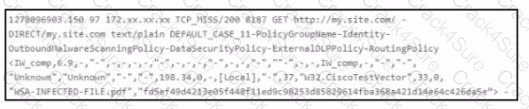
Refer to the exhibit.

200-201 question answer

Which technology produced the log?

A.

antivirus

B.

IPS/IDS

C.

proxy

D.

firewall

Question # 11

In digital communications, which method is recommended for securely exchanging public keys between users T0n2262144790 and D4n4126220794?

A.

Hardware Security Module

B.

Automated Certificate Management Environment

C.

Pretty Good Privacy

D.

Secure Multipurpose Internet Mail Extensions

Question # 12

What is the purpose of command and control for network-aware malware?

A.

It contacts a remote server for commands and updates

B.

It takes over the user account for analysis

C.

It controls and shuts down services on the infected host.

D.

It helps the malware to profile the host

Question # 13

Which evasion method is being used when TLS is observed between two endpoints?

A.

Obfuscation

B.

Encryption

C.

X.509 certificate authentication

D.

Traffic insertion

Question # 14

What is the impact of encryption?

A.

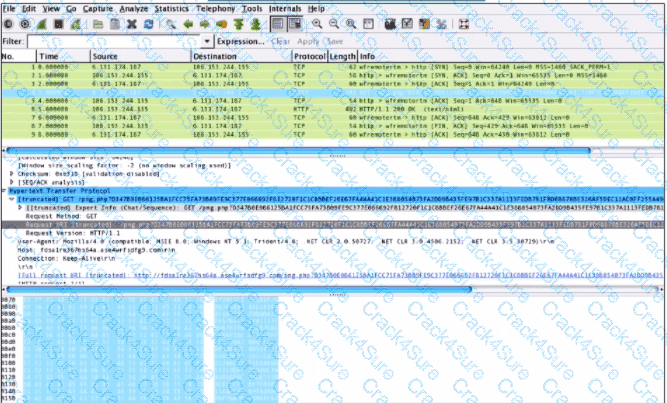
Confidentiality of the data is kept secure and permissions are validated

B.

Data is accessible and available to permitted individuals

C.

Data is unaltered and its integrity is preserved

D.

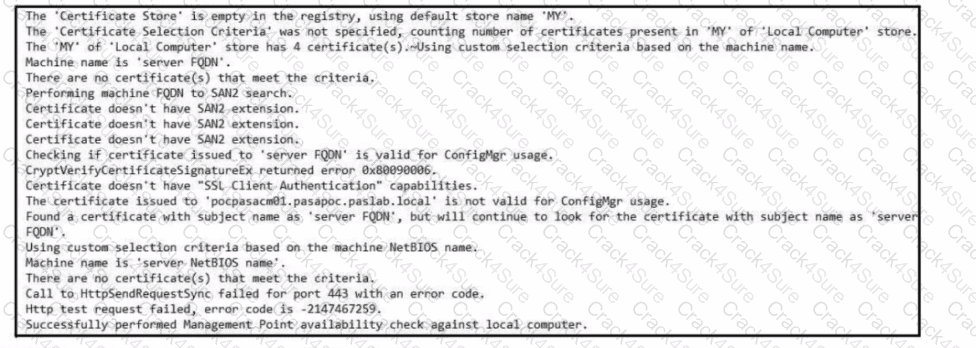
Data is secure and unreadable without decrypting it

Question # 15

What is rule-based detection when compared to statistical detection?
A.

proof of a user's identity

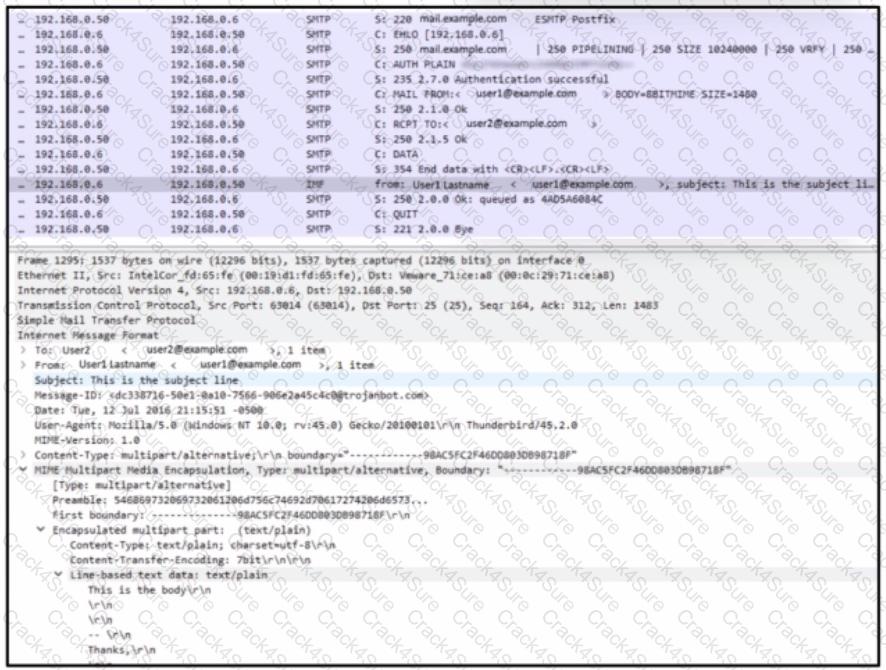
B.

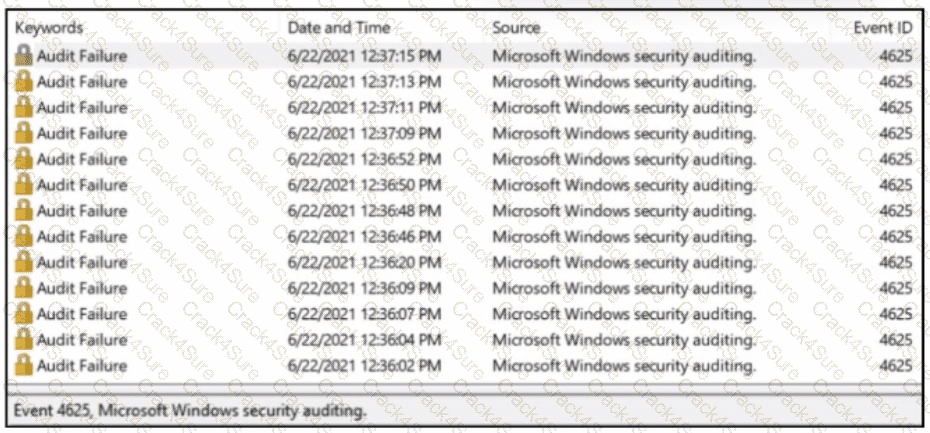
proof of a user's action

C.

likelihood of user's action

D.

falsification of a user's identity

Question # 16

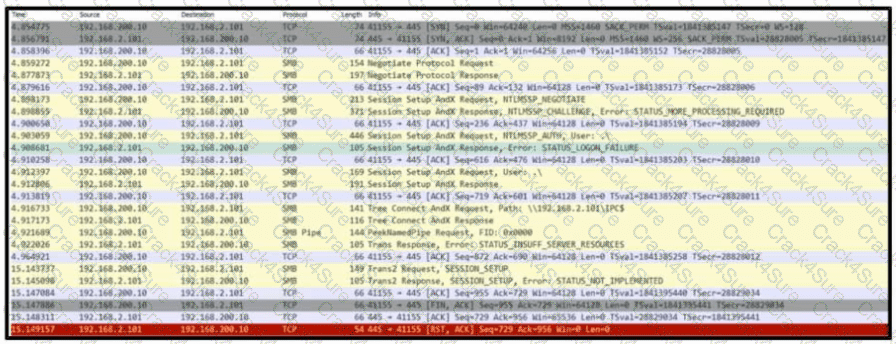
200-201 question answer

Refer to the exhibit. Based on the .pcap file, which protocol's vulnerability has been exploited to establish a session?

A.

SMB

B.

TCP

C.

Negotiate

D.

IP

Question # 17

What describes the public key infrastructure (PKI)?

A.

PKI verifies the identity of the user and sender and creates secure communication channels using asymmetric encryption.

B.

PKI ensures packet loss prevention and creates secure communication channels using symmetric encryption.

C.

PKI verifies the identity of the user and sender and creates secure communication channels using symmetric encryption.

D.

PKI ensures packet loss prevention and creates secure communication channels using asymmetric encryption.

Question # 18

Which type of attack involves sending input commands to a web server to access data?

A.

SQL injection

B.

Denial of service

C.

Cross-site scripting

D.

DNS poisoning

Question # 19

What is a difference between signature-based and behavior-based detection?

A.

Signature-based identifies behaviors that may be linked to attacks, while behavior-based has a predefined set of rules to match before an alert.

B.

Behavior-based identifies behaviors that may be linked to attacks, while signature-based has a predefined set of rules to match before an alert.

C.

Behavior-based uses a known vulnerability database, while signature-based intelligently summarizes existing data.

D.

Signature-based uses a known vulnerability database, while behavior-based intelligently summarizes existing data.

Question # 20

Which option describes indicators of attack?

A.

spam emails on an employee workstation

B.

virus detection by the AV software

C.

blocked phishing attempt on a company

D.

malware reinfection within a few minutes of removal

Question # 21

What is a difference between tampered and untampered disk images?

A.

Tampered images have the same stored and computed hash.

B.

Tampered images are used as evidence.

C.

Untampered images are used for forensic investigations.

D.

Untampered images are deliberately altered to preserve as evidence

Question # 22

Which type of evasion technique is accomplished by separating the traffic into smaller segments before transmitting across the network?

A.

tunneling

B.

fragmentation

C.

encryption

D.

proxies

Question # 23

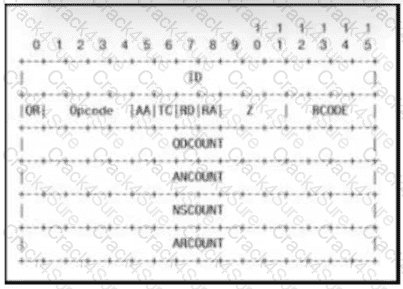
Refer to the exhibit.

200-201 question answer

Which field contains DNS header information if the payload is a query or a response?

A.

Z

B.

ID

C.

TC

D.

QR

Question # 24

An engineer must investigate suspicious connections. Data has been gathered using a tcpdump command on a Linux device and saved as sandboxmatware2022-12-22.pcaps file.The engineer is trying to open the tcpdump in the Wireshark tool. What is the expected result?

A.

The tool does not support Linux.

B.

The file is opened.

C.

The file has an incorrect extension.

D.

The file does not support the"-" character.

Question # 25

Which signature impacts network traffic by causing legitimate traffic to be blocked?

A.

false negative

B.

true positive

C.

true negative

D.

false positive

Question # 26

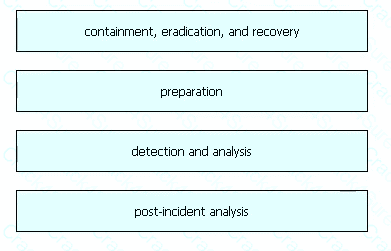
Drag and drop the elements from the left into the correct order for incident handling on the right.

200-201 question answer

Question # 27

Why is encryption challenging to security monitoring?

A.

Encryption analysis is used by attackers to monitor VPN tunnels.

B.

Encryption is used by threat actors as a method of evasion and obfuscation.

C.

Encryption introduces additional processing requirements by the CPU.

D.

Encryption introduces larger packet sizes to analyze and store.

Question # 28

Refer to the exhibit.

200-201 question answer

Which application-level protocol is being targeted?

A.

HTTPS

B.

FTP

C.

HTTP

D.

TCP

Question # 29

What describes a buffer overflow attack?

A.

injecting new commands into existing buffers

B.

fetching data from memory buffer registers

C.

overloading a predefined amount of memory

D.

suppressing the buffers in a process

Question # 30

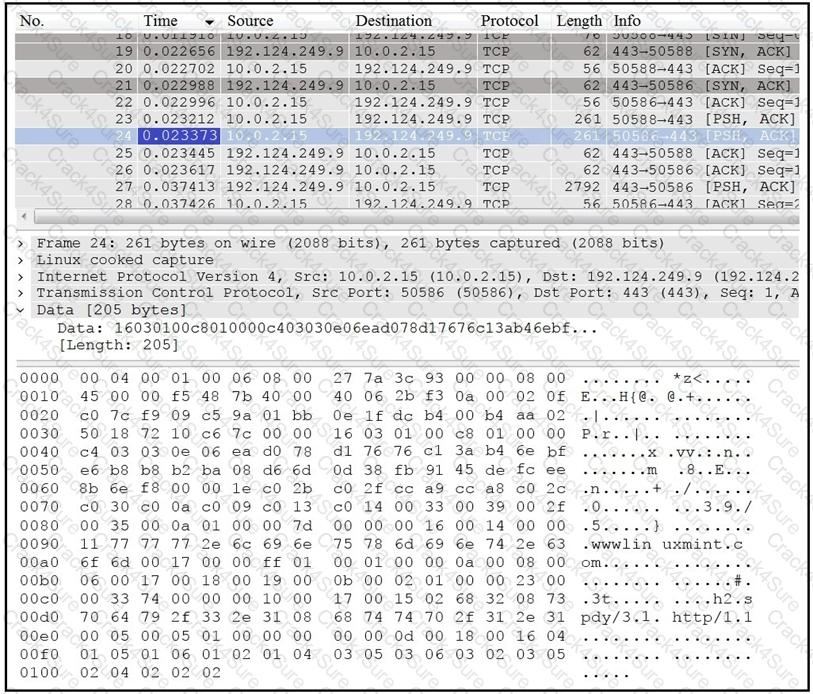
Refer to the exhibit.

200-201 question answer

Which application protocol is in this PCAP file?

A.

SSH

B.

TCP

C.

TLS

D.

HTTP

Question # 31

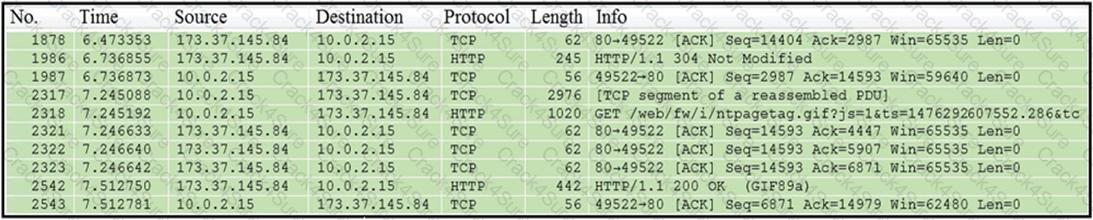
Refer to the exhibit.

200-201 question answer

Which packet contains a file that is extractable within Wireshark?

A.

2317

B.

1986

C.

2318

D.

2542

Question # 32

The SOC team has confirmed a potential indicator of compromise on an endpoint. The team has narrowed the executable file's type to a new trojan family. According to the NIST Computer Security Incident Handling Guide, what is the next step in handling this event?

A.

Isolate the infected endpoint from the network.

B.

Perform forensics analysis on the infected endpoint.

C.

Collect public information on the malware behavior.

D.

Prioritize incident handling based on the impact.

Question # 33

What is the difference between deep packet inspection and stateful inspection?

A.

Stateful inspection verifies contents at Layer 4. and deep packet inspection verifies connection at Layer 7.

B.

Stateful inspection is more secure than deep packet inspection on Layer 7.

C.

Deep packet inspection is more secure than stateful inspection on Layer 4.

D.

Deep packet inspection allows visibility on Layer 7, and stateful inspection allows visibility on Layer 4.

Question # 34

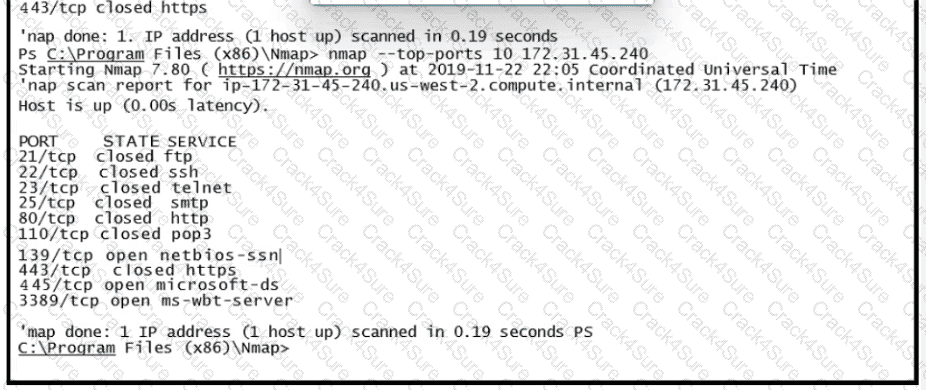
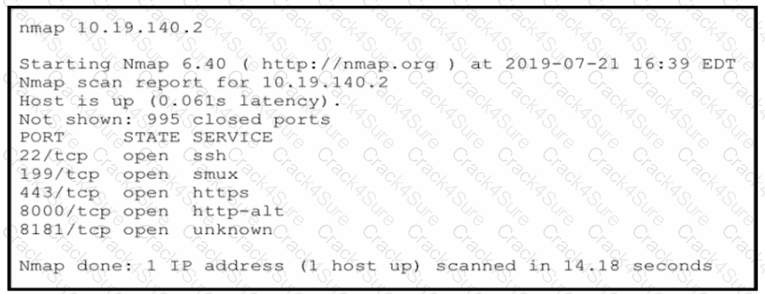
Refer to the exhibit.

200-201 question answer

What does this output indicate?

A.

HTTPS ports are open on the server.

B.

SMB ports are closed on the server.

C.

FTP ports are open on the server.

D.

Email ports are closed on the server.

Question # 35

Refer to the exhibit.

200-201 question answer

What is the outcome of the command?

A.

TCP rule that detects TCP packets with the SYN flag in an external FTP server

B.

TCP rule that detects TCP packets with a SYN flag in the internal network

C.

TCP rule that detects TCP packets with a ACK flag in the internal network

D.

TCP rule that detects TCP packets with the ACK flag in an external FTP server

Question # 36

200-201 question answer

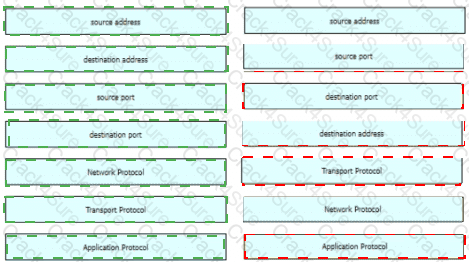
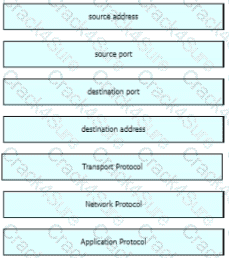
Refer to the exhibit Drag and drop the element names from the left onto the corresponding pieces of the PCAP file on the right.
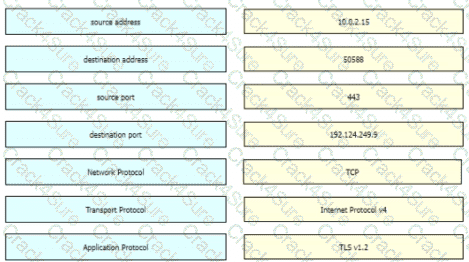
200-201 question answer

Question # 37

What is the difference between an attack vector and an attack surface?

A.

Attack vectors are flaws in configuration, and the attack surface is the system or software that has such flaws.

B.

The attack vector targets security weaknesses, and the attack surface is where an adversary attempts to gain entry across those weaknesses.

C.

The attack surface is tactics, techniques, and procedures used by the threat actor, and the attack vector is the system hardware.

D.

The attack surface defines the number of existing vulnerabilities available, and the attack vector determines the difficulty of available exploits.

Question # 38

A security analyst reviews the firewall and observes the large number of frequent events. The analyst starts the packet capture with the Wireshark and identifies that TCP port reuse was detected incorrectly as a TCP split-handshake attack by the firewall. How must an impact from this event be categorized?

A.

false positive

B.

true positive

C.

true negative

D.

false negative

Question # 39

Which technique obtains information about how the system works without knowing it's design details?

A.

DDOS attack

B.

reverse engineering

C.

DNS spoofing

D.

malware analysis

Question # 40

A company had a recent breach and lost confidential data to a competitor. An internal investigation found out that a new junior accounting specialist logged in to the accounting server with their user ID and stole confidential data. The junior accounting specialist denies the action and claims that the attempt was done by someone else. During court proceedings, the company presents logs and CCTV camera recordings that show the malicious insider in action. Which type of evidence has the company presented?

A.

indirect and corroborative

B.

direct and corroborative

C.

circumstantial and direct

D.

corroborative and substantive

Question # 41

Which list identifies the information that the client sends to the server in the negotiation phase of the TLS handshake?

A.

ClientStart, ClientKeyExchange, cipher-suites it supports, and suggested compression methods

B.

ClientStart, TLS versions it supports, cipher-suites it supports, and suggested compression methods

C.

ClientHello, TLS versions it supports, cipher-suites it supports, and suggested compression methods

D.

ClientHello, ClientKeyExchange, cipher-suites it supports, and suggested compression methods

Question # 42

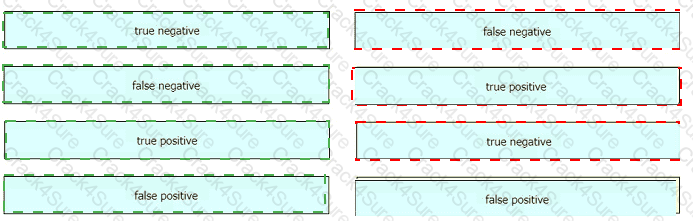
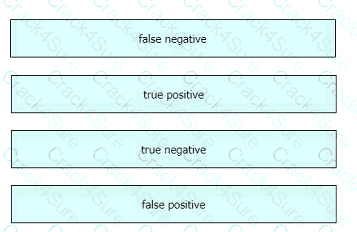
Drag and drop the event term from the left onto the description on the right.
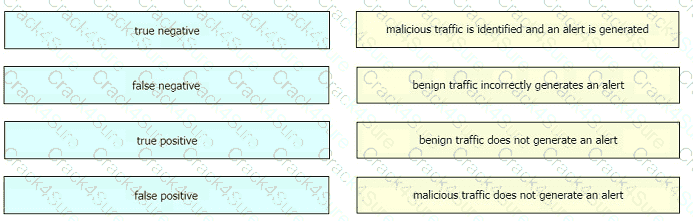
200-201 question answer

Question # 43

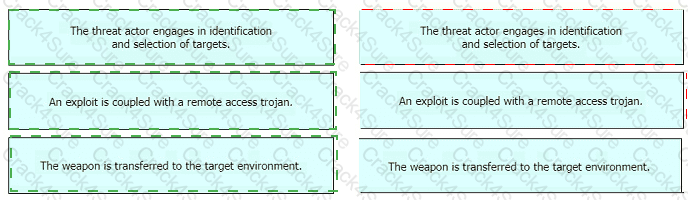
Drag and drop the definition from the left onto the phase on the right to classify intrusion events according to the Cyber Kill Chain model.
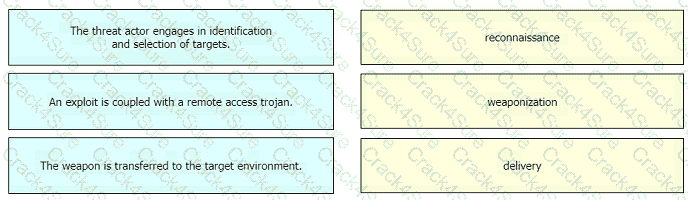
200-201 question answer

Question # 44

When trying to evade IDS/IPS devices, which mechanism allows the user to make the data incomprehensible without a specific key, certificate, or password?

A.

fragmentation

B.

pivoting

C.

encryption

D.

stenography

Question # 45

How does statistical detection differ from rule-based detection?

A.

Statistical detection involves the evaluation of events, and rule-based detection requires an evaluated set of events to function.

B.

Statistical detection defines legitimate data over time, and rule-based detection works on a predefined set of rules

C.

Rule-based detection involves the evaluation of events, and statistical detection requires an evaluated set of events to function Rule-based detection defines

D.

legitimate data over a period of time, and statistical detection works on a predefined set of rules

Question # 46

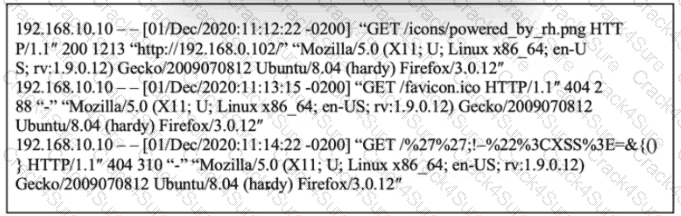
Refer to the exhibit.

200-201 question answer

What is occurring?

A.

Cross-Site Scripting attack

B.

XML External Entitles attack

C.

Insecure Deserialization

D.

Regular GET requests

Question # 47

An analyst is using the SIEM platform and must extract a custom property from a Cisco device and capture the phrase, "File: Clean." Which regex must the analyst import?

A.

File: Clean

B.

^Parent File Clean$

C.

File: Clean (.*)

D.

^File: Clean$

Question # 48

Which classification of cross-site scripting attack executes the payload without storing it for repeated use?

A.

stored

B.

reflective

C.

DOM

D.

CSRF

Question # 49

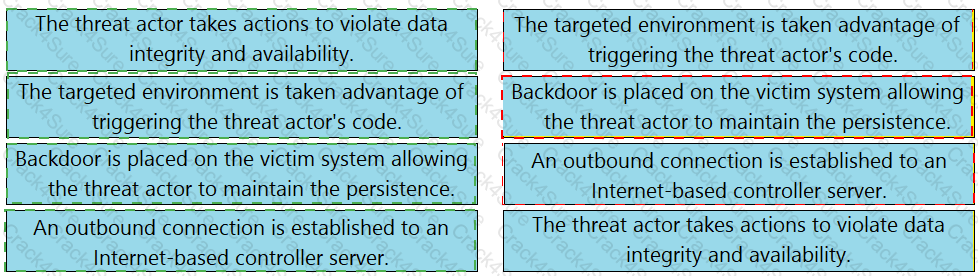
Drag and drop the definition from the left onto the phase on the right to classify intrusion events according to the Cyber Kill Chain model.
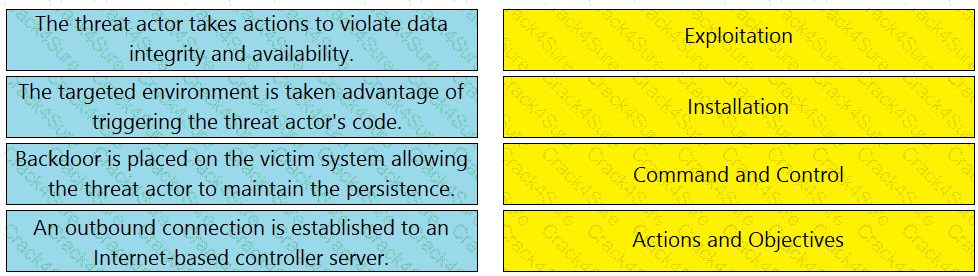
200-201 question answer

Question # 50

Which statement describes threat hunting?
A.

It is an activity by an entity to deliberately bring down critical internal servers.

B.

It is a prevention activity to detect signs of intrusion, compromise, data theft, abnormalities, or malicious activity.

C.

It includes any activity that might go after competitors and adversaries to infiltrate their systems.

D.

It is a vulnerability assessment conducted by cyber professionals.

Question # 51

200-201 question answer

Refer to the exhibit. A network engineer received a report that a host is communicating with unknown domains on the internet. The network engineer collected packet capture but could not determine the technique or the payload used. What technique is the attacker using?

A.

amplification

B.

teardrop

C.

session hijacking

D.

tunneling

Question # 52

How does certificate authority impact a security system?

A.

It authenticates client identity when requesting SSL certificate

B.

It validates domain identity of a SSL certificate

C.

It authenticates domain identity when requesting SSL certificate

D.

It validates client identity when communicating with the server

Question # 53

A user received a targeted spear-phishing email and identified it as suspicious before opening the content. To which category of the Cyber Kill Chain model does to this type of event belong?

A.

weaponization

B.

delivery

C.

exploitation

D.

reconnaissance

Question # 54

What is the impact of encapsulation on the network?

A.

Something significant is concealed from virtually separate networks.

B.

Logically separate functions in the network are abstracted from their underlying structures.

C.

Numerous local private addresses are mapped to a public one before the data is moved.

D.

Web requests are taken on behalf of users and the response is collected from the web.

Question # 55

What is a difference between SIEM and SOAR?

A.

SOAR predicts and prevents security alerts, while SIEM checks attack patterns and applies the mitigation.

B.

SlEM's primary function is to collect and detect anomalies, while SOAR is more focused on security operations automation and response.

C.

SIEM predicts and prevents security alerts, while SOAR checks attack patterns and applies the mitigation.

D.

SOAR's primary function is to collect and detect anomalies, while SIEM is more focused on security operations automation and response.

Question # 56

Which step in the incident response process researches an attacking host through logs in a SIEM?

A.

detection and analysis

B.

preparation

C.

eradication

D.

containment

Question # 57

A system administrator is ensuring that specific registry information is accurate.

Which type of configuration information does the HKEY_LOCAL_MACHINE hive contain?

A.

file extension associations

B.

hardware, software, and security settings for the system

C.

currently logged in users, including folders and control panel settings

D.

all users on the system, including visual settings

Question # 58

Which metric is used to capture the level of access needed to launch a successful attack?

A.

privileges required

B.

user interaction

C.

attack complexity

D.

attack vector

Question # 59

The SOC team detected an ongoing port scan. After investigation, the team concluded that the scan was targeting the company servers. According to the Cyber Kill Chain model, which step must be assigned to this type of event?

A.

actions on objectives

B.

delivery

C.

reconnaissance

D.

exploitation

Question # 60

What is the difference between a threat and an exploit?

A.

A threat is a result of utilizing flow in a system, and an exploit is a result of gaining control over the system.

B.

A threat is a potential attack on an asset and an exploit takes advantage of the vulnerability of the asset

C.

An exploit is an attack vector, and a threat is a potential path the attack must go through.

D.

An exploit is an attack path, and a threat represents a potential vulnerability

Question # 61

What is an attack surface as compared to a vulnerability?

A.

any potential danger to an asset

B.

the sum of all paths for data into and out of the environment

C.

an exploitable weakness in a system or its design

D.

the individuals who perform an attack

Question # 62

What do host-based firewalls protect workstations from?

A.

zero-day vulnerabilities

B.

unwanted traffic

C.

malicious web scripts

D.

viruses

Question # 63

Which regular expression is needed to capture the IP address 192.168.20.232?

A.

^(?:[0-9]{1,3}\.){3}[0-9]{1,3}

B.

^(?:[0-9]f1,3}\.){1,4}

C.

^(?:[0-9]{1,3}\.)'

D.

^([0-9]-{3})

Question # 64

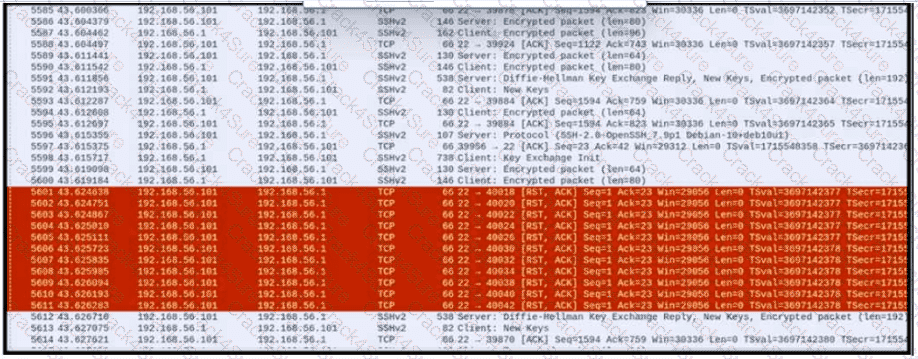
Refer to the exhibit.

200-201 question answer

An engineer is analyzing a PCAP file after a recent breach An engineer identified that the attacker used an aggressive ARP scan to scan the hosts and found web and SSH servers. Further analysis showed several SSH Server Banner and Key Exchange Initiations. The engineer cannot see the exact data being transmitted over an encrypted channel and cannot identify how the attacker gained access How did the attacker gain access?

A.

by using the buffer overflow in the URL catcher feature for SSH

B.

by using an SSH Tectia Server vulnerability to enable host-based authentication

C.

by using an SSH vulnerability to silently redirect connections to the local host

D.

by using brute force on the SSH service to gain access

Question # 65

What is the key difference between mandatory access control (MAC) and discretionary access control (DAC)?

A.

DAC is controlled by the OS, and MAC is controlled by the owner of the access list.

B.

DAC is the most strict access control, and MAC is object-based access.

C.

MAC is controlled by the OS, and DAC is controlled by the owner of the access list.

D.

MAC is the most strict access control, and DAC is object-based access.

Question # 66

What is the difference between statistical detection and rule-based detection models?

A.

Rule-based detection involves the collection of data in relation to the behavior of legitimate users over a period of time

B.

Statistical detection defines legitimate data of users over a period of time and rule-based detection defines it on an IF/THEN basis

C.

Statistical detection involves the evaluation of an object on its intended actions before it executes that behavior

D.

Rule-based detection defines legitimate data of users over a period of time and statistical detection defines it on an IF/THEN basis

Question # 67

What does the Zero Trust security model signify?

A.

Zero Trust security means that no one is trusted by default from inside or outside the network

B.

Zero Trust states that no users should be given enough privileges to misuse the system on their own

C.

Zero Trust addresses access control and states that an individual should have only the minimum access privileges necessary to perform specific tasks

D.

Zero Trust states that unless a subject is given explicit access to an object, it should be denied access to that object

Question # 68

How is NetFlow different from traffic mirroring?

A.

NetFlow collects metadata and traffic mirroring clones data.

B.

Traffic mirroring impacts switch performance and NetFlow does not.

C.

Traffic mirroring costs less to operate than NetFlow.

D.

NetFlow generates more data than traffic mirroring.

Question # 69

If a web server accepts input from the user and passes it to a bash shell, to which attack method is it vulnerable?

A.

input validation

B.

hash collision

C.

integer overflow

D.

command injection

Question # 70

An engineer configured regular expression “.”\.(pd][Oo][Cc)|[Xx][LI][Ss]|[Pp][Pp][Tt]) HTTP/1 .[01]" on Cisco ASA firewall. What does this regular expression do?

A.

It captures documents in an HTTP network session.

B.

It captures .doc, .xls, and .pdf files in HTTP v1.0 and v1.1.

C.

It captures .doc, .xls, and .ppt files extensions in HTTP v1.0.

D.

It captures Word, Excel, and PowerPoint files in HTTPv1.0 and v1.1.

Question # 71

Refer to the exhibit.

200-201 question answer

Which technology generates this log?

A.

NetFlow

B.

IDS

C.

web proxy

D.

firewall

Question # 72

STION NO: 102

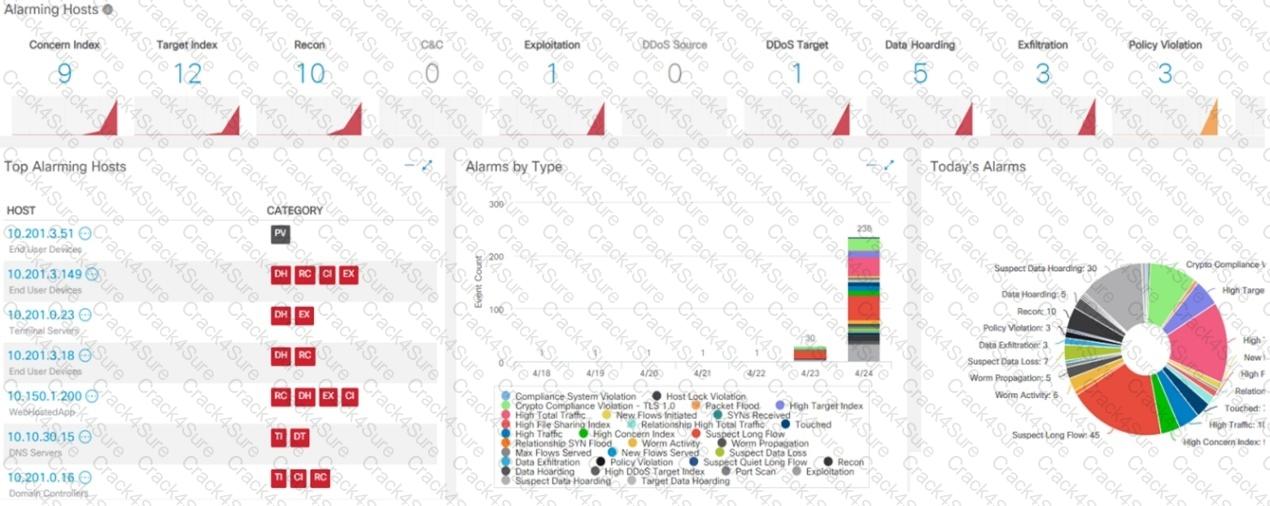
Refer to the exhibit.

200-201 question answer

What is the potential threat identified in this Stealthwatch dashboard?

A.

A policy violation is active for host 10.10.101.24.

B.

A host on the network is sending a DDoS attack to another inside host.

C.

There are three active data exfiltration alerts.

D.

A policy violation is active for host 10.201.3.149.

Question # 73

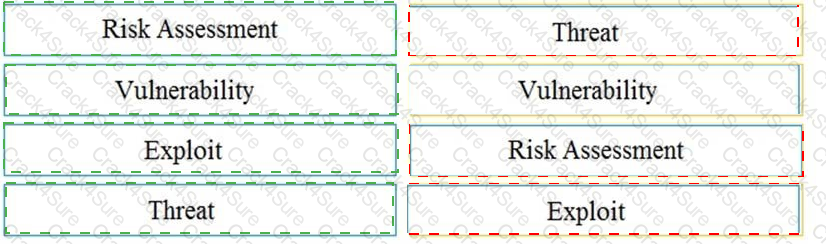
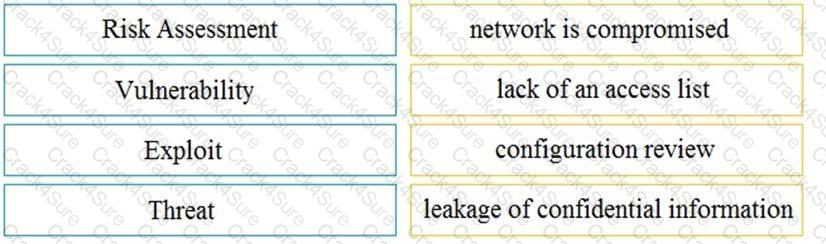
Drag and drop the security concept on the left onto the example of that concept on the right.
200-201 question answer

Question # 74

What is the difference between a threat and a risk?

A.

Threat represents a potential danger that could take advantage of a weakness in a system

B.

Risk represents the known and identified loss or danger in the system

C.

Risk represents the nonintentional interaction with uncertainty in the system

D.

Threat represents a state of being exposed to an attack or a compromise, either physically or logically.

Question # 75

A security specialist is investigating an incident regarding a recent major breach in the organization. The accounting data from a 24-month period is affected due to a trojan detected in a department's critical server. A security analyst investigates the incident and discovers that an incident response team member who detected a trojan during regular AV scans had made an image of the server for evidence purposes. The security analyst made animage again to compare the hashes of the two images, and they appeared to differ and do not match. Which type of evidence is the security analyst dealing with?

A.

checksum violated image

B.

integrity violated image

C.

untampered image

D.

tampered image

Question # 76

An offline audit log contains the source IP address of a session suspected to have exploited a vulnerability resulting in system compromise.

Which kind of evidence is this IP address?

A.

best evidence

B.

corroborative evidence

C.

indirect evidence

D.

forensic evidence

Question # 77

An engineer received an alert affecting the degraded performance of a critical server Analysis showed a heavy CPU and memory load What is the next step the engineer should take to investigate this resource usage7

A.

Run "ps -ef to understand which processes are taking a high amount of resources

B.

Run "ps -u" to find out who executed additional processes that caused a high load on a server

C.

Run "ps -m" to capture the existing state of daemons and map the required processes to find the gap

D.

Run "ps -d" to decrease the priority state of high-load processes to avoid resource exhaustion

Question # 78

An engineer is working with the compliance teams to identify the data passing through the network. During analysis, the engineer informs the compliance team that external penmeter data flows contain records, writings, and artwork Internal segregated network flows contain the customer choices by gender, addresses, and product preferences by age. The engineer must identify protected data. Which two types of data must be identified'? (Choose two.)

A.

SOX

B.

PII

C.

PHI

D.

PCI

E.

copyright

Question # 79

What is a difference between tampered and untampered disk images?

A.

Tampered images have the same stored and computed hash.

B.

Untampered images are deliberately altered to preserve as evidence.

C.

Tampered images are used as evidence.

D.

Untampered images are used for forensic investigations.

Question # 80

A security team receives a ticket to investigate suspicious emails sent to company employees from known malicious domains. Further analysis shows that a targeted phishing attempt was successfully blocked by the company’s email antivirus. At which step of the Cyber Kill Chain did the security team mitigate this attack?

A.

Delivery

B.

Actions on Objectives

C.

Command and Control

D.

Weaponization

Question # 81

What describes the impact of false-positive alerts compared to false-negative alerts?

A.

A false negative is alerting for an XSS attack. An engineer investigates the alert and discovers that an XSS attack happened A false positive is when an XSS attack happens and no alert is raised

B.

A false negative is a legitimate attack triggering a brute-force alert. An engineer investigates the alert and finds out someone intended to break into the system A false positive is when no alert and no attack is occurring

C.

A false positive is an event alerting for a brute-force attack An engineer investigates the alert and discovers that a legitimate user entered the wrong credential several times A false negative is when a threat actor tries to brute-force attack a system and no alert is raised.

D.

A false positive is an event alerting for an SQL injection attack An engineer investigates the alert and discovers that an attack attempt was blocked by IPS A false negative is when the attack gets detected but succeeds and results in a breach.

Question # 82

Which attack method is being used when an attacker tries to compromise a network with an authentication system that uses only 4-digit numeric passwords and no username?

A.

SQL injection

B.

dictionary

C.

replay

D.

cross-site scripting

Question # 83

Refer to the exhibit.

200-201 question answer

An attacker gained initial access to the company s network and ran an Nmap scan to advance with the lateral movement technique and to search the sensitive data Which two elements can an attacker identify from the scan? (Choose two.)

A.

workload and the configuration details

B.

user accounts and SID

C.

number of users and requests that the server is handling

D.

functionality and purpose of the server

E.

running services

Question # 84

What are two differences and benefits of packet filtering, stateful firewalling, and deep packet inspections? (Choose two.)

A.

Packet filtering is capable of UDP state monitoring only, and stateful inspection can provide monitoring of TCP sessions.

B.

Deep packet inspection is capable of malware blocking, and packet filtering is not.

C.

Stateful inspection is capable of packet data inspections, and deep packet inspection is not.

D.

Deep packet inspection operates up to Layer 7, and packet filtering operates on Layer 3 and 4 of OSI model.

E.

Stateful inspection is capable of TCP state tracking, and deep packet inspection checks only TCP source and destination ports.

Question # 85

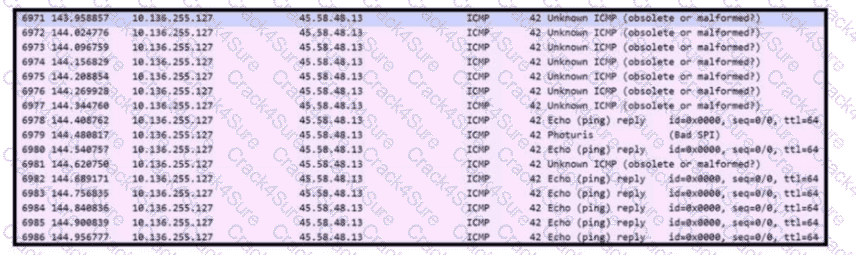
What is the difference between the ACK flag and the RST flag in the NetFlow log session?
A.

The RST flag confirms the beginning of the TCP connection, and the ACK flag responds when the data for the payload is complete

B.

The ACK flag confirms the beginning of the TCP connection, and the RST flag responds when the data for the payload is complete

C.

The RST flag confirms the receipt of the prior segment, and the ACK flag allows for the spontaneous termination of a connection

D.

The ACK flag confirms the receipt of the prior segment, and the RST flag allows for the spontaneous termination of a connection

Question # 86

200-201 question answer

Refer to the exhibit. An engineer received a ticket to analyze unusual network traffic. What is occurring?

A.

denial-of-service attack

B.

data exfiltration

C.

regular network traffic; no suspicious activity

D.

cookie poisoning

Question # 87

A security analyst notices a sudden surge of incoming traffic and detects unknown packets from unknown senders After further investigation, the analyst learns that customers claim that they cannot access company servers According to NIST SP800-61, in which phase of the incident response process is the analyst?

A.

post-incident activity

B.

detection and analysis

C.

preparation

D.

containment, eradication, and recovery

Question # 88

An automotive company provides new types of engines and special brakes for rally sports cars. The company has a database of inventions and patents for their engines and technical information Customers can access the database through the company's website after they register and identify themselves. Which type of protected data is accessed by customers?

A.

IP data

B.

PII data

C.

PSI data

D.

PHI data

Question # 89

Refer to the exhibit.

200-201 question answer

Which kind of attack method is depicted in this string?

A.

cross-site scripting

B.

man-in-the-middle

C.

SQL injection

D.

denial of service

Question # 90

Refer to the exhibit.

200-201 question answer

What is shown in this PCAP file?

A.

Timestamps are indicated with error.

B.

The protocol is TCP.

C.

The User-Agent is Mozilla/5.0.

D.

The HTTP GET is encoded.

Question # 91

Which attack method intercepts traffic on a switched network?

A.

denial of service

B.

ARP cache poisoning

C.

DHCP snooping

D.

command and control

Question # 92

A company recently encountered a breach. Critical services went through a disturbance and the integrity of the data was altered. An engineer is investigating the issue and searching through the logs in the SIEM. Which phase of the incident response is an engineer working on?

A.

post-incident and lessons learned

B.

recovery and restoration

C.

detection and analysis

D.

containment and eradication

Question # 93

At which layer is deep packet inspection investigated on a firewall?

A.

internet

B.

transport

C.

application

D.

data link

Question # 94

An analyst performs traffic analysis to detect data exfiltration and identifies a high frequency of DNS requests in a small period of time Which technology makes this behavior feasible?

A.

access control list

B.

NAT

C.

tunneling

D.

encryption

Question # 95

Which event is a vishing attack?

A.

obtaining disposed documents from an organization

B.

using a vulnerability scanner on a corporate network

C.

setting up a rogue access point near a public hotspot

D.

impersonating a tech support agent during a phone call

Question # 96

200-201 question answer

Refer to the exhibit. Which set of actions must an engineer perform to identify and fix this issue?

A.

Reinstall the IIS server to reset certificate details to default and try to connect to the server.

B.

Remove the intermediate certificates and install the CA root certificate on each server.

C.

Implement a different version of CA authority and install intermediate certificates.

D.

Add client authentication to the certificate template, reissue, and apply the certificate.

Question # 97

What makes HTTPS traffic difficult to monitor?

A.

SSL interception

B.

packet header size

C.

signature detection time

D.

encryption

Question # 98

When communicating via TLS, the client initiates the handshake to the server and the server responds back with its certificate for identification.

Which information is available on the server certificate?

A.

server name, trusted subordinate CA, and private key

B.

trusted subordinate CA, public key, and cipher suites

C.

trusted CA name, cipher suites, and private key

D.

server name, trusted CA, and public key

Question # 99

What is the impact of false positive alerts on business compared to true positive?

A.

True positives affect security as no alarm is raised when an attack has taken place, resulting in a potential breach.

B.

True positive alerts are blocked by mistake as potential attacks affecting application availability.

C.

False positives affect security as no alarm is raised when an attack has taken place, resulting in a potential breach.

D.

False positive alerts are blocked by mistake as potential attacks affecting application availability.

Question # 100

Which open-sourced packet capture tool uses Linux and Mac OS X operating systems?

A.

NetScout

B.

tcpdump

C.

SolarWinds

D.

netsh

Question # 101

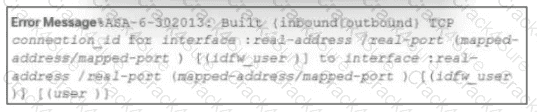
Refer to the exhibit.

200-201 question answer

What is occurring?

A.

The mail client is communicating on port 465.

B.

The Seq and Ack numbers are altered

C.

Mail communication is not encrypted.

D.

The SMTP relay service is running.

Question # 102

Refer to the exhibit.

200-201 question answer

A SOC analyst received a message from SIEM about abnormal activity on the Windows server The analyst checked the Windows event log and saw numerous Audit Failures logs. What is occurring?

A.

Windows failed to audit the logs

B.

regular Windows log

C.

brute-force attack

D.

DoS attack

Question # 103

What is the definition of threat intelligence in the context of cybersecurity?

A.

Update and hardening of IT infrastructure

B.

Design and implementation of advanced defense mechanisms

C.

Information and analysis related to potential security threats

D.

Design and delivery of sophisticated cyberattacks

Question # 104

What is the difference between the ACK flag and the RST flag?

A.

The RST flag approves the connection, and the ACK flag terminates spontaneous connections.

B.

The ACK flag confirms the received segment, and the RST flag terminates the connection.

C.

The RST flag approves the connection, and the ACK flag indicates that a packet needs to be resent

D.

The ACK flag marks the connection as reliable, and the RST flag indicates the failure within TCP Handshake

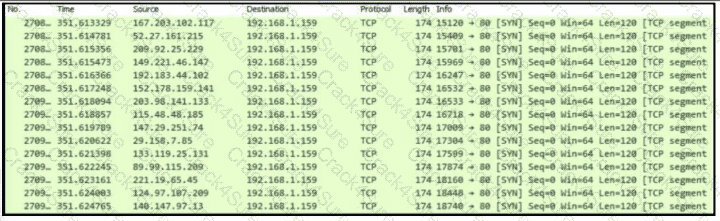
Question # 105

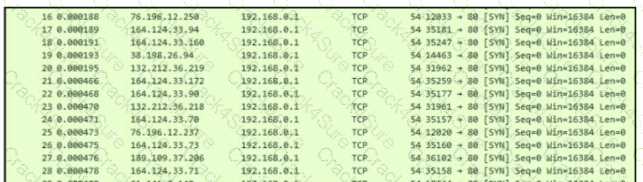
Refer to exhibit.

200-201 question answer

An engineer is Investigating an Intrusion and Is analyzing the pcap file. Which two key elements must an engineer consider? (Choose two.)

A.

Variable "info" field and unchanging sequence number

B.

High volume oi SYN packets with very little variance in lime

C.

identical length of 120 and window size (64)

D.

SYN packets acknowledged from several source IP addresses

E.

same source IP address with a destination port 80

Question # 106

What is the difference between inline traffic interrogation and traffic mirroring?

A.

Inline interrogation is less complex as traffic mirroring applies additional tags to data.

B.

Traffic mirroring copies the traffic rather than forwarding it directly to the analysis tools

C.

Inline replicates the traffic to preserve integrity rather than modifying packets before sending them to other analysis tools.

D.

Traffic mirroring results in faster traffic analysis and inline is considerably slower due to latency.

Question # 107

A security engineer must protect the company from known issues that trigger adware. Recently new incident has been raised that could harm the system. Which security concepts are present in this scenario?

A.

exploit and patching

B.

risk and evidence

C.

analysis and remediation

D.

vulnerability and threat

Question # 108

Which access control should a chief information security officer select to protect extremely sensitive data categorized at various levels of confidentiality?
A.

MAC; each object owner is responsible to provide access only to authorized users.

B.

MAC; access control decisions are centrally managed and minimize the human error probability.

C.

DAC; access control decisions are centrally managed and minimize the human error probability.

D.

DAC; each object owner is responsible to provide access only to authorized users.

Question # 109

200-201 question answer

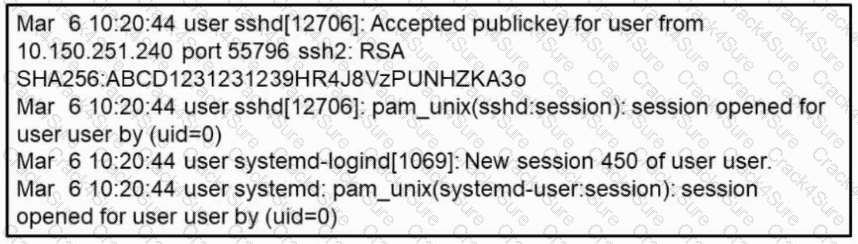
Refer to the exhibit. What occurred on this system based on this output?

A.

A user connected to the system using remote access VPN.

B.

A user created a new HTTP session using the SHA256 hashing algorithm.

C.

A user connected to the system after 450 attempts.

D.

A user connected to the system using SSH using source port 55796.

Question # 110

At a company party a guest asks questions about the company’s user account format and password complexity. How is this type of conversation classified?

A.

Phishing attack

B.

Password Revelation Strategy

C.

Piggybacking

D.

Social Engineering

Question # 111

A security analyst received a ticket about suspicious traffic from one of the workstations. During the investigation, the analyst discovered that the workstation was communicating with an external IP. The analyst could not investigate further and escalated the case to a T2 security analyst. What are the two data visibility challenges that the security analyst should identify? (Choose two.)

A.

A default user agent is present in the headers.

B.

Traffic is not encrypted.

C.

HTTP requests and responses are sent in plaintext.

D.

POST requests have a "Microsoft-IIS/7.5" server header.

E.

Encrypted data is being transmitted.

Question # 112

Which category relates to improper use or disclosure of PII data?

A.

legal

B.

compliance

C.

regulated

D.

contractual

Question # 113

What is a difference between a threat and a risk?

A.

A threat is a sum of risks and a risk itself represents a specific danger toward the asset

B.

A threat can be people property, or information, and risk is a probability by which these threats may bring harm to the business

C.

A risk is a flaw or hole in security, and a threat is what is being used against that flaw

D.

A risk is an intersection between threat and vulnerabilities, and a threat is what a security engineer is trying to protect against

Question # 114

While viewing packet capture data, an analyst sees that one IP is sending and receiving traffic for multiple devices by modifying the IP header.

Which technology makes this behavior possible?

A.

encapsulation

B.

TOR

C.

tunneling

D.

NAT

Question # 115

A security engineer notices confidential data being exfiltrated to a domain "Ranso4134-mware31-895" address that is attributed to a known advanced persistent threat group The engineer discovers that the activity is part of a real attack and not a network misconfiguration. Which category does this event fall under as defined in the Cyber Kill Chain?

A.

reconnaissance

B.

delivery

C.

action on objectives

D.

weaponization

Question # 116

An engineer received an alert affecting the degraded performance of a critical server Analysis showed a heavy CPU and memory load. What is the next step the engineer should take to investigate this resource usage?

A.

Run "ps -ef to understand which processes are taking a high amount of resources

B.

Run "ps -u" to find out who executed additional processes that caused a high load on a server

C.

Run "ps -m" to capture the existing state of daemons and map the required processes to find the gap

D.

Run "ps -d" to decrease the priority state of high-load processes to avoid resource exhaustion

Question # 117

What is a key difference between a tampered and an untampered disk image during a forensic investigation?

A.

An untampered image is encrypted, and a tampered one is not encrypted.

B.

A tampered image has a different hash value, and an untampered image has an unchanged hash value.

C.

A tampered image is accessible only by administrators, and an untampered one is accessible by all users.

D.

An untampered image is compressed, and a tampered one is left uncompressed.

Question # 118

What is a difference between authorization and authentication from an access control perspective?

A.

Authorization defines the author of a specific resource and authentication gives access to the resource itself

B.

Authentication is when the system validates if the user is valid, and authorization enforces and provides resources assigned and required.

C.

Authentication is responsible for accounting access on system resources and the authorization process defines if a user is allowed to author the resource

D.

Authorization tracks if a certain user is authenticated within the system, and authentication is responsible for identifying the authorization method

Question # 119

What describes the vulnerability management process?

A.

securely observe and supervise devices that access sensitive enterprise data

B.

systems engineering process for establishing and preserving consistency of a product's performance

C.

involves the deployment of hotfixes and patches that are released from time to time

D.

cyclical approach of identifying classifying and mitigating software vulnerabilities

Question # 120

A company encountered a breach on its web servers using IIS 7 5 Dunng the investigation, an engineer discovered that an attacker read and altered the data on a secure communication using TLS 1 2 and intercepted sensitive information by downgrading a connection to export-grade cryptography. The engineer must mitigate similar incidents in the future and ensure that clients and servers always negotiate with the most secure protocol versions and cryptographic parameters. Which action does the engineer recommend?

A.

Upgrade to TLS v1 3.

B.

Install the latest IIS version.

C.

Downgrade to TLS 1.1.

D.

Deploy an intrusion detection system

Question # 121

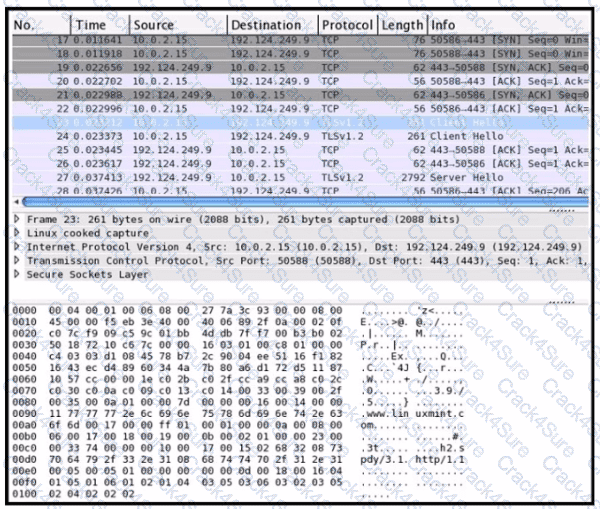
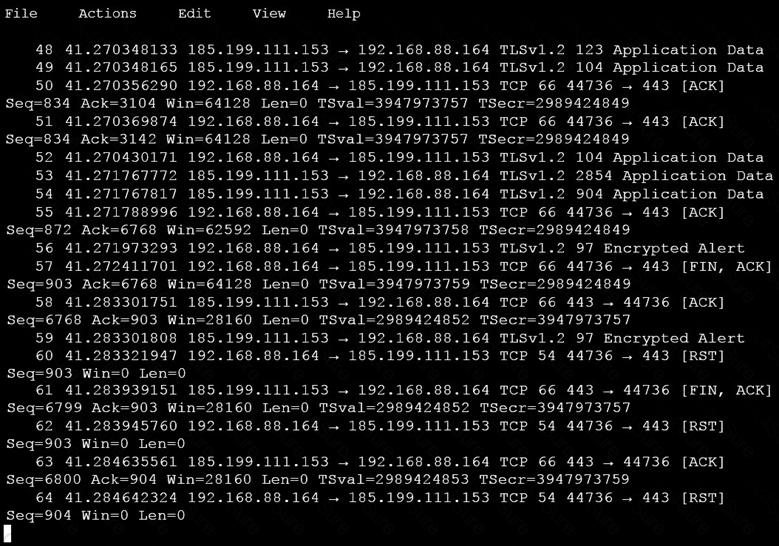
An analyst is investigating a host in the network that appears to be communicating to a command and control server on the Internet. After collecting this packet capture, the analyst cannot determine the technique and payload used for the communication.
200-201 question answer

Which obfuscation technique is the attacker using?

A.

Base64 encoding

B.

TLS encryption

C.

SHA-256 hashing

D.

ROT13 encryption

Question # 122

What describes the defense-m-depth principle?

A.

defining precise guidelines for new workstation installations

B.

categorizing critical assets within the organization

C.

isolating guest Wi-Fi from the focal network

D.

implementing alerts for unexpected asset malfunctions

Question # 123

What is a benefit of agent-based protection when compared to agentless protection?

A.

It lowers maintenance costs

B.

It provides a centralized platform

C.

It collects and detects all traffic locally

D.

It manages numerous devices simultaneously

Question # 124

200-201 question answer

Refer to the exhibit. What type of event is occurring?

A.

Legitimate web browsing activity

B.

Distributed Denial of Service (DDoS) attack

C.

User trying to access a file share

D.

Malware attempting to spread laterally

Question # 125

Which data format is the most efficient to build a baseline of traffic seen over an extended period of time?

A.

syslog messages

B.

full packet capture

C.

NetFlow

D.

firewall event logs

Question # 126

Refer to the exhibit.

200-201 question answer

During the analysis of a suspicious scanning activity incident, an analyst discovered multiple local TCP connection events Which technology provided these logs?

A.

antivirus

B.

proxy

C.

IDS/IPS

D.

firewall

Question # 127

What is a difference between SOAR and SIEM?
A.

SOAR platforms are used for threat and vulnerability management, but SIEM applications are not

B.

SIEM applications are used for threat and vulnerability management, but SOAR platforms are not

C.

SOAR receives information from a single platform and delivers it to a SIEM

D.

SIEM receives information from a single platform and delivers it to a SOAR

Question # 128

200-201 question answer

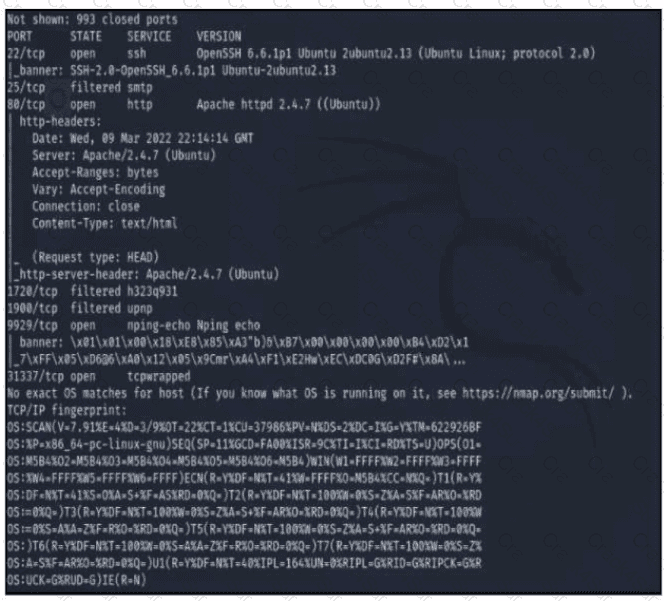
Refer to the exhibit A penetration tester runs the Nmap scan against the company server to uncover possible vulnerabilities and exploit them Which two elements can the penetration tester identity from the scan results? (Choose two.)

A.

UIDs and group identifiers

B.

number of concurrent connections the server can handle

C.

running services and applications

D.

server uptime and internal clock

E.

server purpose and functionality

Question # 129

Which type of access control depends on the job function of the user?

A.

discretionary access control

B.

nondiscretionary access control

C.

role-based access control

D.

rule-based access control

Question # 130

An investigator is examining a copy of an ISO file that is stored in CDFS format. What type of evidence is this file?

A.

data from a CD copied using Mac-based system

B.

data from a CD copied using Linux system

C.

data from a DVD copied using Windows system

D.

data from a CD copied using Windows

Question # 131

A threat actor penetrated an organization's network. Using the 5-tuple approach, which data points should the analyst use to isolate the compromised host in a grouped set of logs?

A.

event name, log source, time, source IP, and host name

B.

protocol, source IP, source port, destination IP, and destination port

C.

event name, log source, time, source IP, and username

D.

protocol, log source, source IP, destination IP, and host name

Question # 132

According to the September 2020 threat intelligence feeds a new malware called Egregor was introduced and used in many attacks. Distnbution of Egregor is pnmanly through a Cobalt Strike that has been installed on victim's workstations using RDP exploits Malware exfiltrates the victim's data to a command and control server. The data is used to force victims pay or lose it by publicly releasing it. Which type of attack is described?

A.

malware attack

B.

ransomware attack

C.

whale-phishing

D.

insider threat

Question # 133

Which data capture includes payload and header information?

A.

frame check sequence

B.

full packet

C.

alert data

D.

session logs

Question # 134

What is the difference between mandatory access control (MAC) and discretionary access control (DAC)?

A.

MAC is controlled by the discretion of the owner and DAC is controlled by an administrator

B.

MAC is the strictest of all levels of control and DAC is object-based access

C.

DAC is controlled by the operating system and MAC is controlled by an administrator

D.

DAC is the strictest of all levels of control and MAC is object-based access

Question # 135

What is the difference between discretionary access control (DAC) and role-based access control (RBAC)?

A.

DAC requires explicit authorization for a given user on a given object, and RBAC requires specific conditions.

B.

RBAC access is granted when a user meets specific conditions, and in DAC, permissions are applied on user and group levels.

C.

RBAC is an extended version of DAC where you can add an extra level of authorization based on time.

D.

DAC administrators pass privileges to users and groups, and in RBAC, permissions are applied to specific groups

Question # 136

What is a Heartbleed vulnerability?

A.

information disclosure

B.

buffer overflow

C.

denial of service

D.

command injection

Question # 137

What is the dataflow set in the NetFlow flow-record format?

A.

Dataflow set is a collection of HEX records.

B.

Dataflow set provides basic information about the packet such as the NetFlow version

C.

Dataflow set is a collection of binary patterns

D.

Dataflow set is a collection of data records.

Question # 138

Which evasion method involves performing actions slower than normal to prevent detection?

A.

timing attack

B.

traffic fragmentation

C.

resource exhaustion

D.

tunneling

Question # 139

Which action matches the weaponization step of the Cyber Kill Chain Model?

A.

Develop a specific malware to exploit a vulnerable server

B.

Match a known script to a vulnerability.

C.

Construct a trojan and deliver l! to the victim.

D.

Scan open services and ports on a server.

Question # 140

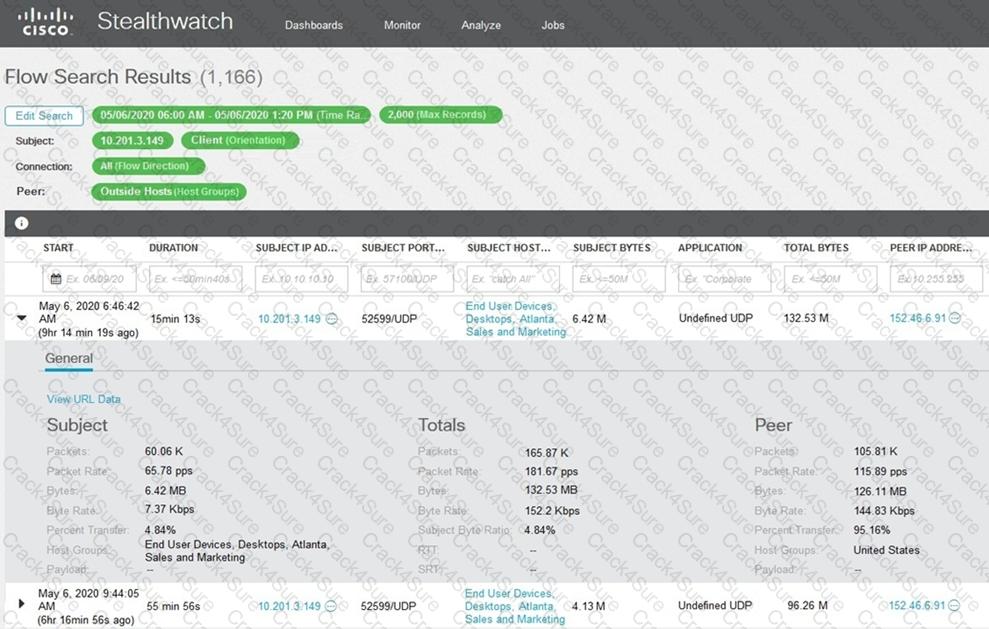
Refer to the exhibit.

200-201 question answer

What is the potential threat identified in this Stealthwatch dashboard?

A.

Host 10.201.3.149 is sending data to 152.46.6.91 using TCP/443.

B.

Host 152.46.6.91 is being identified as a watchlist country for data transfer.

C.

Traffic to 152.46.6.149 is being denied by an Advanced Network Control policy.

D.

Host 10.201.3.149 is receiving almost 19 times more data than is being sent to host 152.46.6.91.

Question # 141

What is an incident response plan?

A.

an organizational approach to events that could lead to asset loss or disruption of operations

B.

an organizational approach to security management to ensure a service lifecycle and continuous improvements

C.

an organizational approach to disaster recovery and timely restoration of operational services

D.

an organizational approach to system backup and data archiving aligned to regulations

Question # 142

What is the difference between deep packet inspection and stateful inspection?

A.

Deep packet inspection gives insights up to Layer 7, and stateful inspection gives insights only up to Layer 4.

B.

Deep packet inspection is more secure due to its complex signatures, and stateful inspection requires less human intervention.

C.

Stateful inspection is more secure due to its complex signatures, and deep packet inspection requires less human intervention.

D.

Stateful inspection verifies data at the transport layer and deep packet inspection verifies data at the application layer

200-201 PDF

$42

$139.99

3 Months Free Update

  • Printable Format
  • Value of Money
  • 100% Pass Assurance
  • Verified Answers
  • Researched by Industry Experts
  • Based on Real Exams Scenarios
  • 100% Real Questions

200-201 PDF + Testing Engine

$57

$189.99

3 Months Free Update

  • Exam Name: Understanding Cisco Cybersecurity Operations Fundamentals (CBROPS)
  • Last Update: Feb 24, 2026
  • Questions and Answers: 476
  • Free Real Questions Demo
  • Recommended by Industry Experts
  • Best Economical Package
  • Immediate Access

200-201 Engine

$48

$159.99

3 Months Free Update

  • Best Testing Engine
  • One Click installation
  • Recommended by Teachers
  • Easy to use
  • 3 Modes of Learning
  • State of Art Technology
  • 100% Real Questions included