Crack4sure Logo

We at Crack4sure are committed to giving students who are preparing for the Huawei H12-831_V1.0 Exam the most current and reliable questions . To help people study, we've made some of our HCIP-Datacom-Advanced Routing & Switching Technology V1.0 exam materials available for free to everyone. You can take the Free H12-831_V1.0 Practice Test as many times as you want. The answers to the practice questions are given, and each answer is explained.
A network engineer deletes the IP address of an interface by mistake using a command. To view the deleted IP address, which of the following information should be queried?
RD and RT are introduced to BGP/MPLS IP VPN networks. Which of the following statements are true about RD and RT?
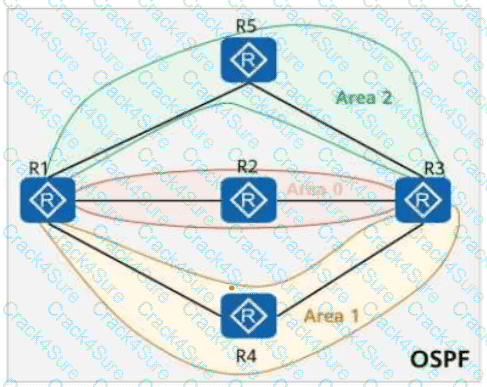
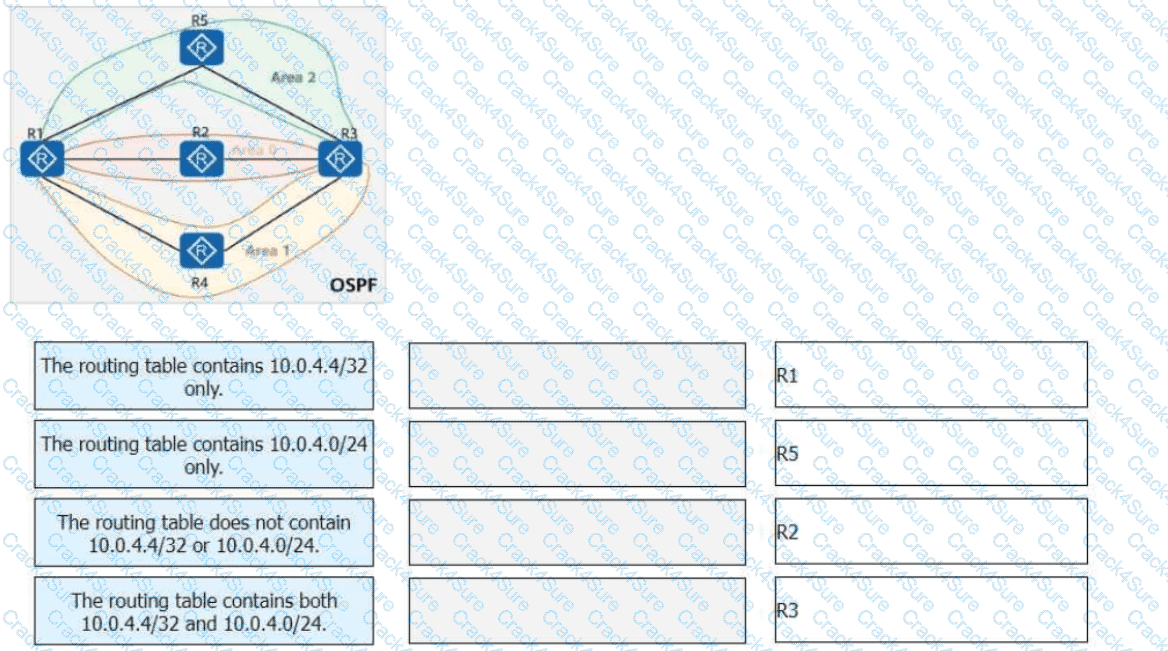
On the OSPF network shown in the figure, area 1 is an NSSA, area 2 is a common area, and R4 imports an external route 10.0.4.4/32. The router ID of each router is 10.0.X.X, where X is the router number. If the asbr-summary 10.0.4.0 255.255.255.0 command is run in the OSPF processes of R1 and R3, which of the following routers have the route 10.0.4.0/24 in their routing tables?
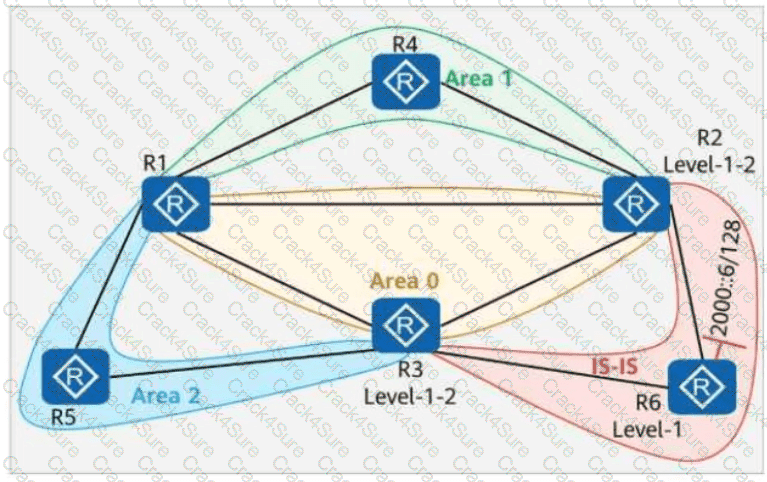
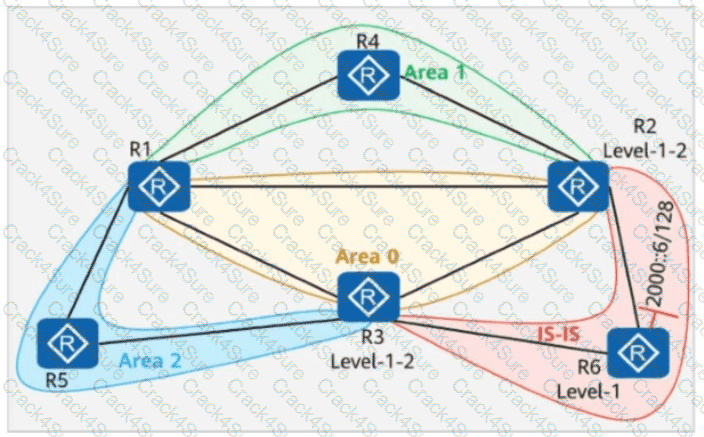
On the network shown in the figure, IS-IS IPv6 runs on R2, R6, and R3, and the IPv6 address of Loopback0 on R6 is 2000::6/128. OSPFv3 runs on other links. Area 1 is a stub area, and Area 2 is an NSSA. IS-IS routes are imported to OSPFv3 on R2 and R3. Which of the following statements are false?
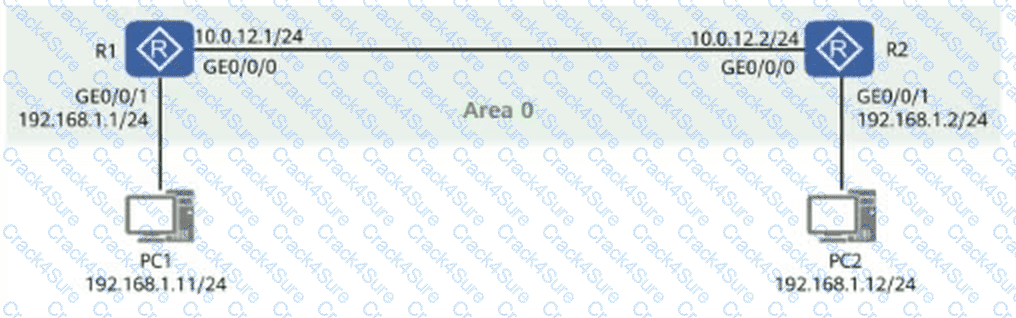
A network engineer provides a troubleshooting report after rectifying a fault. The actual network is simplified into the one shown in the figure, where R1 and R2 both have OSPF enabled, and function as the gateways of PC1 and PC2, respectively. Given this, which of the following statements are true?
A network engineer enters dir on the device to obtain the following file names. Which is most likely to be the version file of the device?
If end-to-end QoS is configured on an MPLS network, the penultimate hop device on the MPLS network can pop MPLS labels from packets based on penultimate hop popping (PHP), so that the egress node can process packets based on the QoS priority in inner packets.
A network engineer checks LLDP neighbor information on R1. The output is shown below.
Which of the following statements are true?
LLDP Output:
yaml
CopyEdit
< R1 > display lldp neighbor interface GE0/0/0
------------------------------------------------
GE0/0/0 has 1 neighbor(s):
Neighbor index: 1
Chassis type: MAC Address
Chassis ID: faed-ad04-0010
Port ID subtype: Interface Name
Port ID: GE0/0/0
System name: R2
System description: Huawei YunShan OS
Version 1.22.01 (AR8000 V100R002C200)
Copyright (C) 2021-2022 Huawei Technologies Co., Ltd.
HUAWEI AR8140-12G10XG
System capabilities supported: bridge router
System capabilities enabled: bridge router
Management address type: IPv4
Management address: 192.168.1.1
Expired time: 107s
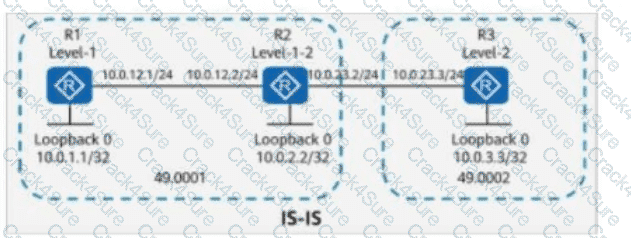
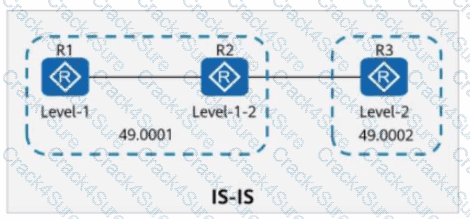
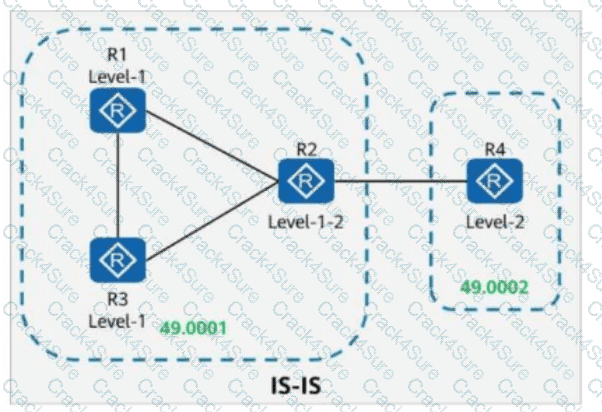
On the IS-IS network shown in the figure, R1 imports a default route using the default-route-advertise always level-1 command. Which of the following statements is false?
A network engineer obtains a multicast data frame whose destination MAC address is 01-00-5e-00-01-01. Given this, which of the following cannot be the destination IPv4 address of this frame?
Options:
On the OSPFv3 network shown in the figure:
OSPFv3 is enabled on the interfaces connecting R1, R2, and R3.
The router ID of each router is 10.0.X.X, where X is the number of the router.
When checking detailed information about an LSA on R3, the command output shows that the LSA is generated by R2 and describes the IPv6 prefix address associated with the Network-LSA.
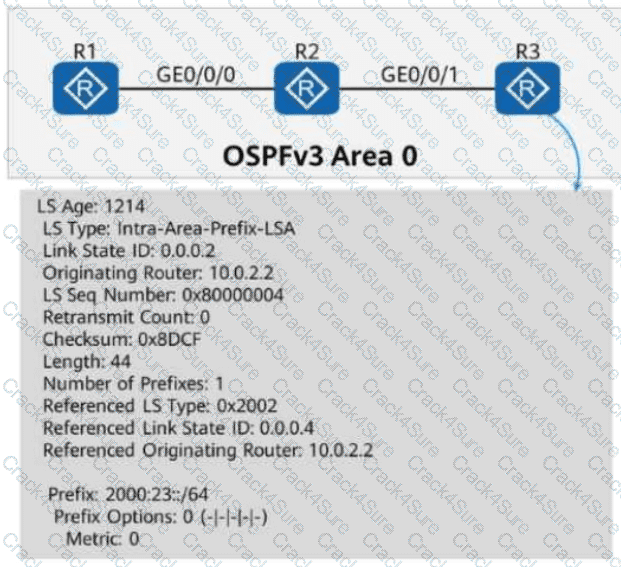
Based on this information, which of the following statements is correct?
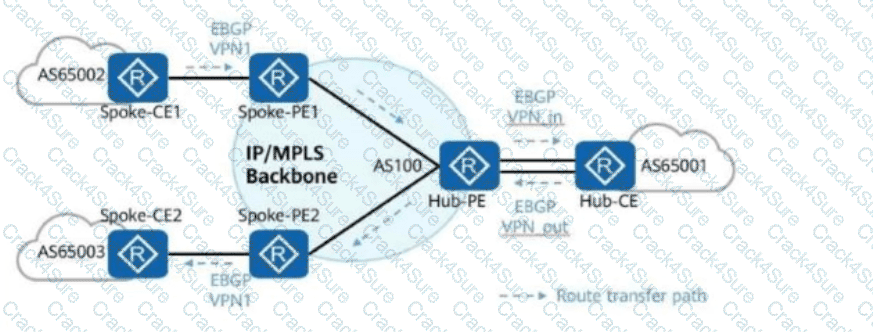
In the hub-spoke networking shown in the figure, which of the following commands must be configured on the Hub-PE to ensure correct route transmission?
MPLS supports nesting of multiple labels. After receiving an MPLS packet, a device first processes the label next to the Layer 2 header, that is, the top MPLS label.
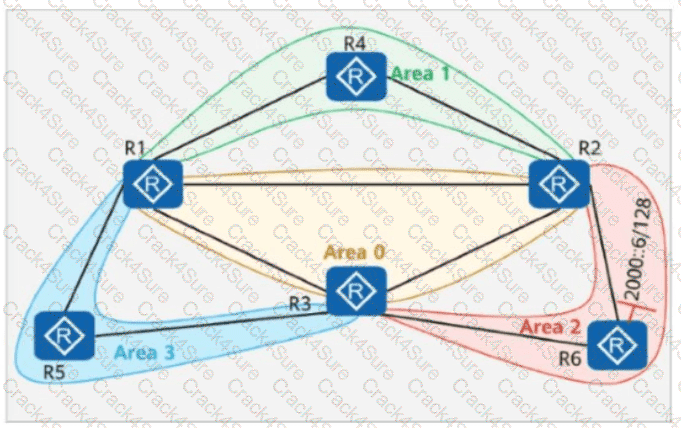
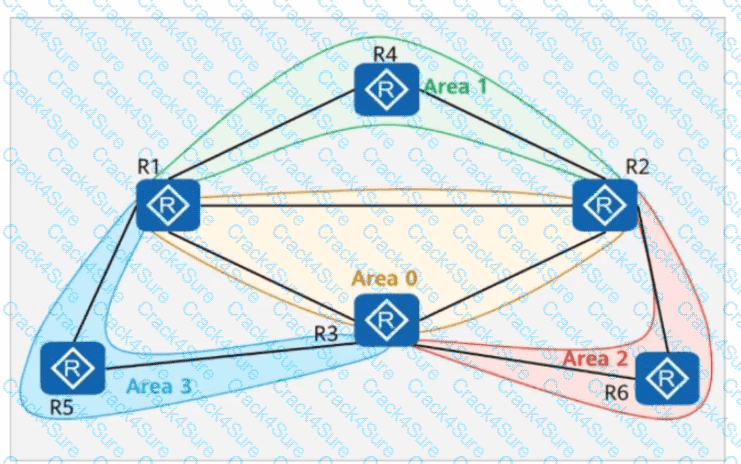
On the OSPFv3 network shown in the figure, area 1 is a totally stub area, area 2 is a common area, and area 3 is a totally NSSA. The IPv6 address of Loopback0 on R6 is 2000::6/128. The router ID of each router is 10.0.X.X, where X is the number of the router. When all links are normal, which of the following statements are true?
On a BGP/MPLS IP VPN network, which of the following are carried when a PE advertises VPNv4 routes?
By default, a P2P or broadcast interface sends OSPF Hello packets at an interval of 10s, and the neighbor dead interval is 40s.
The device operating environment is crucial for stable device operating, including the equipment room, power supply, and heat dissipation. Maintenance personnel must be on site to maintain the device operating environment.
VLAN aggregation is configured on a switched network. Sub-VLAN 2 and Sub-VLAN 3 are added to Super-VLAN 10.
To enable hosts in different Sub-VLANs to communicate with each other, run the _____ inter-sub-vlan-proxy enable command in the view of VLANIF 10, corresponding to the Super-VLAN.
(Enter the answer in lowercase letters only.)
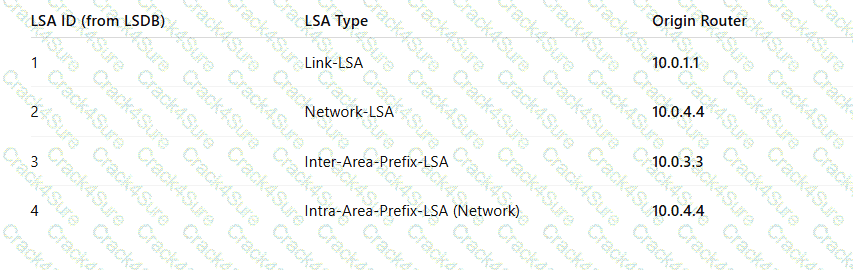
The router ID of R4 is 10.0.4.4. The LSA shown in the figure is displayed in the LSDB of R4.
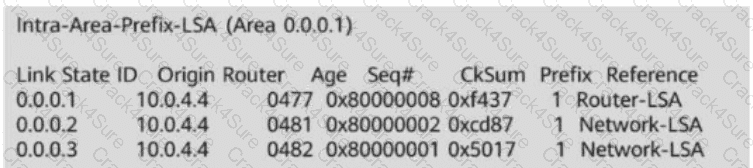
Which of the following statements are true about the LSA?
The figure shows an MPLS packet with multiple labels.
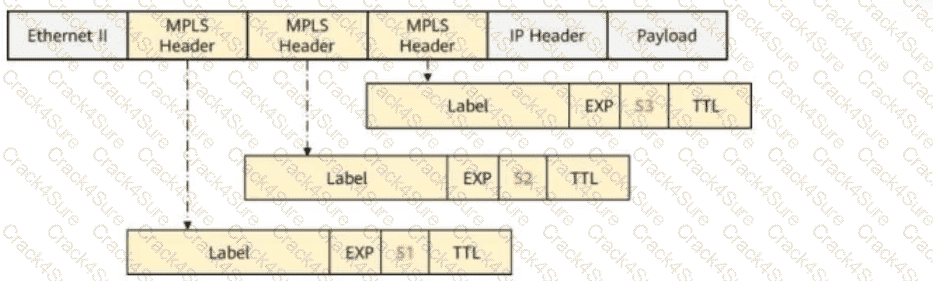
Which of the following values for the S field is correct?
On a BGP/MPLS IP VPN network, _ _ is used to distinguish IPv4 prefixes with the same address space. In this case, IPv4 addresses are called VPNv4 addresses. (Enter the acronym in uppercase.)
On the OSPFv3 network shown in the figure:
Area 1 is a stub area
Area 2 is a common area
Area 3 is an NSSA
The IPv6 address of Loopback0 on R6 is 2000::6/128.
The router ID of each router is 10.0.X.X, where X is the router number.
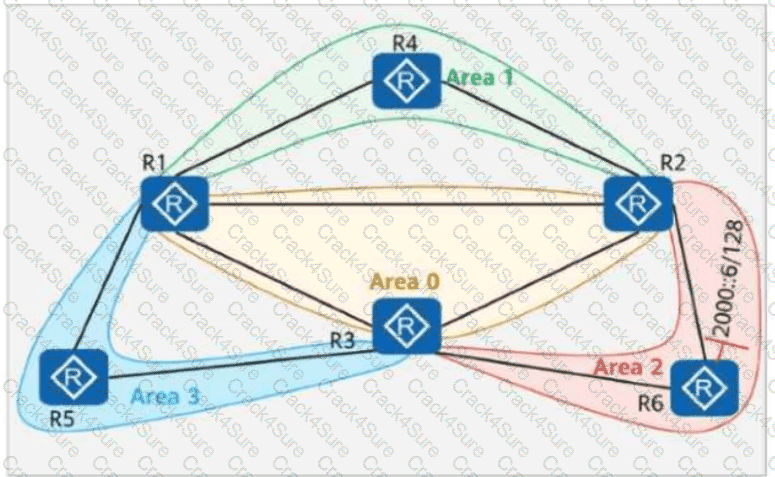
Which of the following statements are true?
On the OSPFv3 network shown in the figure, the IPv6 address of Loopback0 on R3 is 2000-3/128, and OSPFv3 is enabled. Which of the following statements are true?
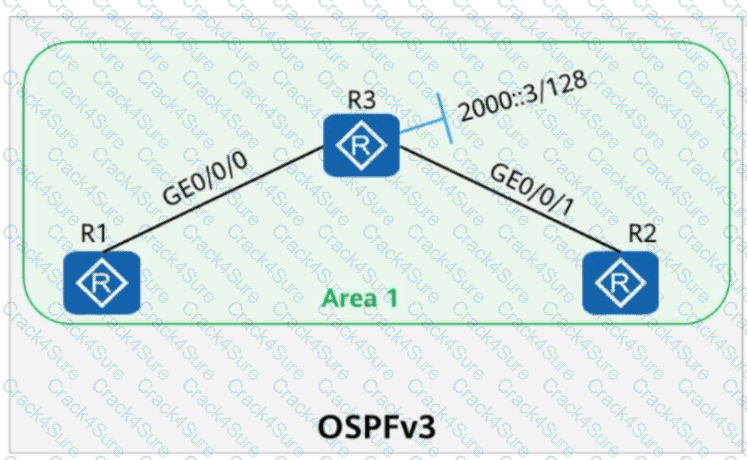
On the OSPFv3 network shown in the figure, area 1 is an NSSA. R1 imports the external route 2000::1/128 to OSPFv3. Which of the following LSAs does not exist in area 1?
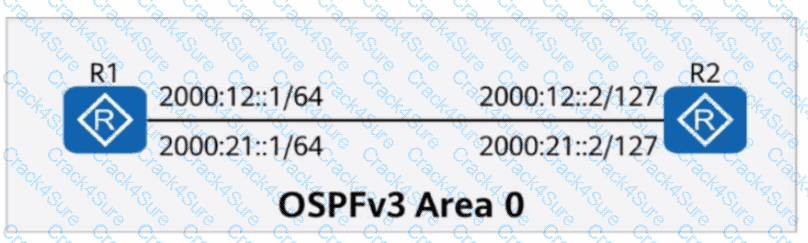
On the 05PFv3 network shown in the figure, each interface of R1 and R2 has two IPv6 addresses. Although the IPv6 address prefixes of R1 and R2 are different, they can still be used to establish an OSPFv3 neighbor relationship. If R2 is the DR, the Intra-Area-Prefix-LSA generated by R2 contains four prefixes.
Using the display startup command, you can view the running system software, running configuration file, startup system software, and startup configuration file, as well as the paths where these files are stored.
Options:
On the same switch interface, the administrator can configure traffic suppression for only one of the following packet types: broadcast, unknown multicast, unknown unicast, known multicast, and known unicast packets.
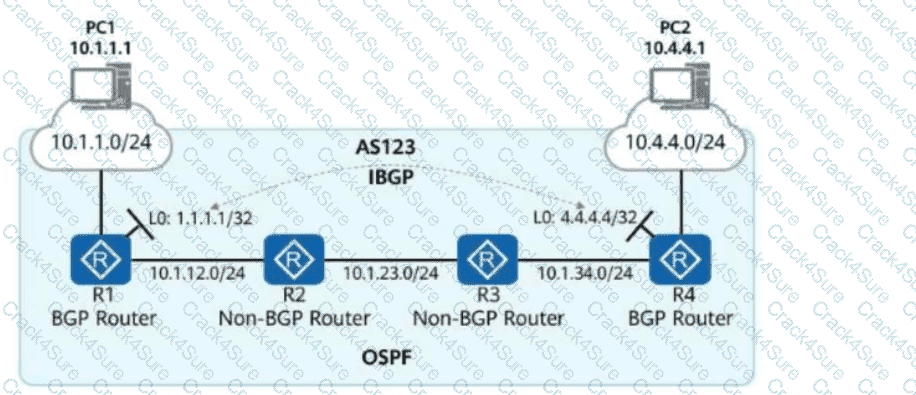
As shown in the figure, R1 to R4 are four routers in AS123. They all run OSPF to implement route reachability within the AS.
Network segments 10.1.1.0/24 and 10.4.4.0/24 are not advertised into OSPF.
R1 and R4 establish an IBGP peer relationship using Loopback0 and advertise network segments 10.1.1.0/24 and 10.4.4.0/24 into BGP.
Which of the following methods can be used to implement communication between PC1 and PC2?
Options:
On the OSPFv3 network shown in the figure, area 1 is a stub area, area 2 is a common area, and area 3 is an NSSA. Which of the following LSAs is displayed only in area 2?
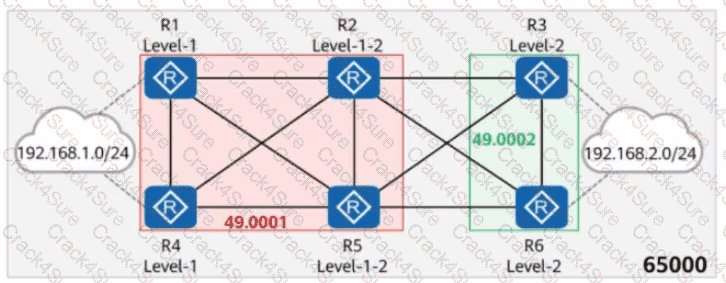
On the network shown in the figure, IS-IS runs on Rl, R2, R4, and R5, and the area ID is 49.0001. IS-IS runs on R3 and R6, and the area ID is 49.0002. In AS 65000, Ri, R3, R4, and R6 each establish IBGP peer relationships with R2 and R5. R2 and R5 are RRs, and Rl, R4, R3, and R6 are clients. The IBGP peer relationships are established using LoopbackO. The IP address of LoopbackO on each router is 10.0.X.X/32, and the router ID is 10.0.X.X, where X is the number of the router. Rl and R4 import the external route 192.168.1.0/24 to BGP through the import-route command, and R3 and R6 import the external route 192.168.2.0/24 to BGP through the import-route command. Which of the following statements are true?
Which of the following is not added for IS-IS to support IPv6 route processing and calculation?
The source IP address of IS-IS Hello packets is changed to the link-local address.
TLV 232, which is equivalent to the IP Interface Address TLV in IPv4, except that the original 32-bit IPv4 address is changed to a 128-bit IPv6 address.
On the ISIS network shown in the figure, R1 imports a default route using the default-route-advertise always level-1 command. In this case, R3 can learn this default route through IS-IS.
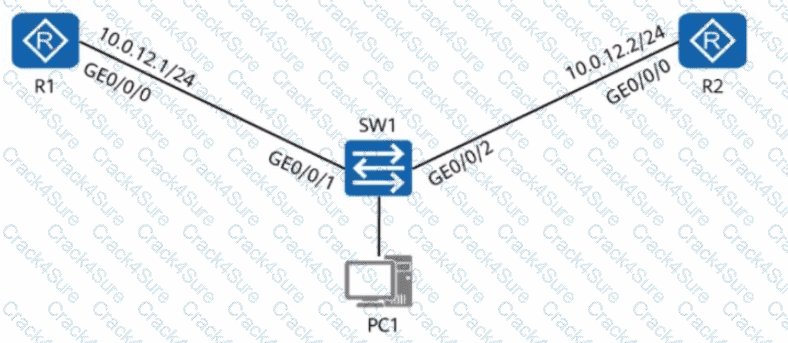
On the network shown in the figure, VRRP is configured on Rl and R2, and the virtual IP address is 10.0.12.254. After the configuration is complete, the network engineer checks the VRRP status on R1 and R2, and finds that both devices are in the Master state. Which of the following is not a possible cause of this problem?
In the BFD (Bidirectional Forwarding Detection) mechanism, two systems establish a BFD session and periodically send BFD control packets along the path between them. If one system does not receive BFD control packets within a specified period, the path is considered faulty.
Which of the following is NOT a possible cause of the BFD session down event?
Options:
On a BGP/MPLS IP VPN network, CEs at two sites need to establish MP-BGP peer relationships to transmit VPN routes.
After port isolation is configured on a switch, hosts in the same VLAN cannot communicate with each other at Layer 2 or Layer 3 by default.
The configuration of an interface on a switch is shown below. Which of the following average rates of broadcast packets received by the interface trigger the storm control action?

If the display ospfv3 peer verbose command is run to check OSPFv3 neighbor information, the command output contains information such as the peer router ID, global unicast address of the peer interface, and neighbor status.
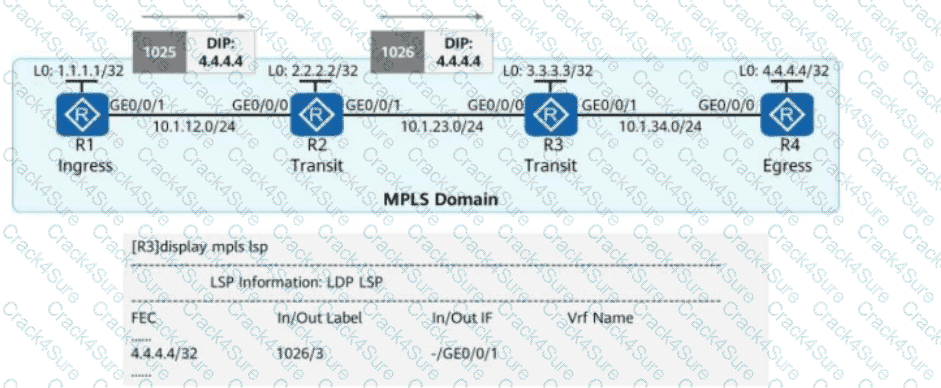
R1 forwards the packet with the destination IP address of 4.4.4.4 on an MPLS network. Some LSP information of R3 is shown in the figure. During packet transmission, which of the following devices perform MPLS label operations?
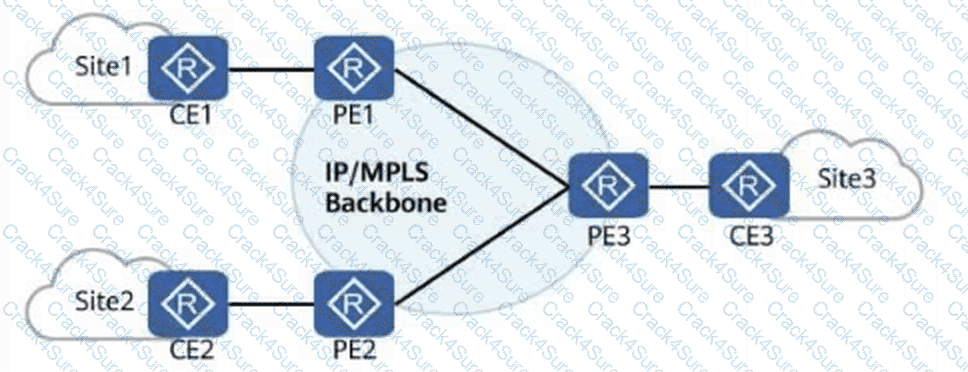
On the BGP/MPLS IP VPN network shown in the figure, which of the following RT settings can enable Site1 and Site2 to communicate with Site3 but prevent Site1 and Site2 from communicating with each other?
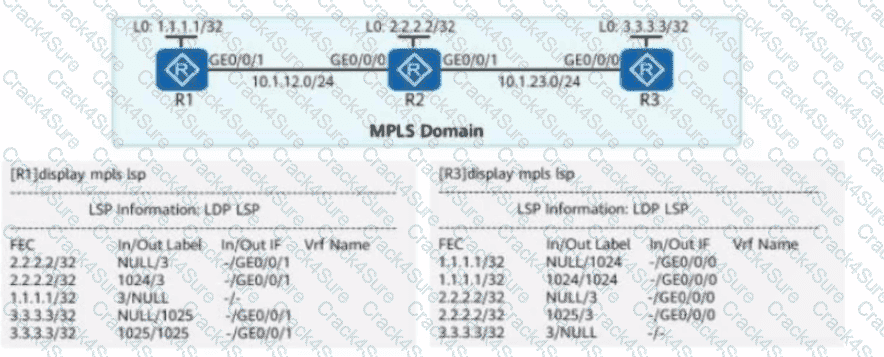
The figure shows the LSP information of R1 and R3 on an MPLS network. An administrator runs the ping -a 1.1.1.1 3.3.3.3 command on R1. Given this, which of the following statements is true?
On a BGP/MPLS IP VPN network, PEs can use BGP-4 to advertise VPNv4 routes to each other.
A large-scale BGP network has a large number of peers. Configuring and maintaining these peers is difficult. You can add the BGP peers with the same configurations to a BGP peer group and then configure the BGP peers in batches to simplify peer management and improve route advertisement efficiency. When configuring an IBGP peer group, you do not need to specify an AS number for the peer group. When configuring an EBGP peer group, you must specify an AS number for the peer group.
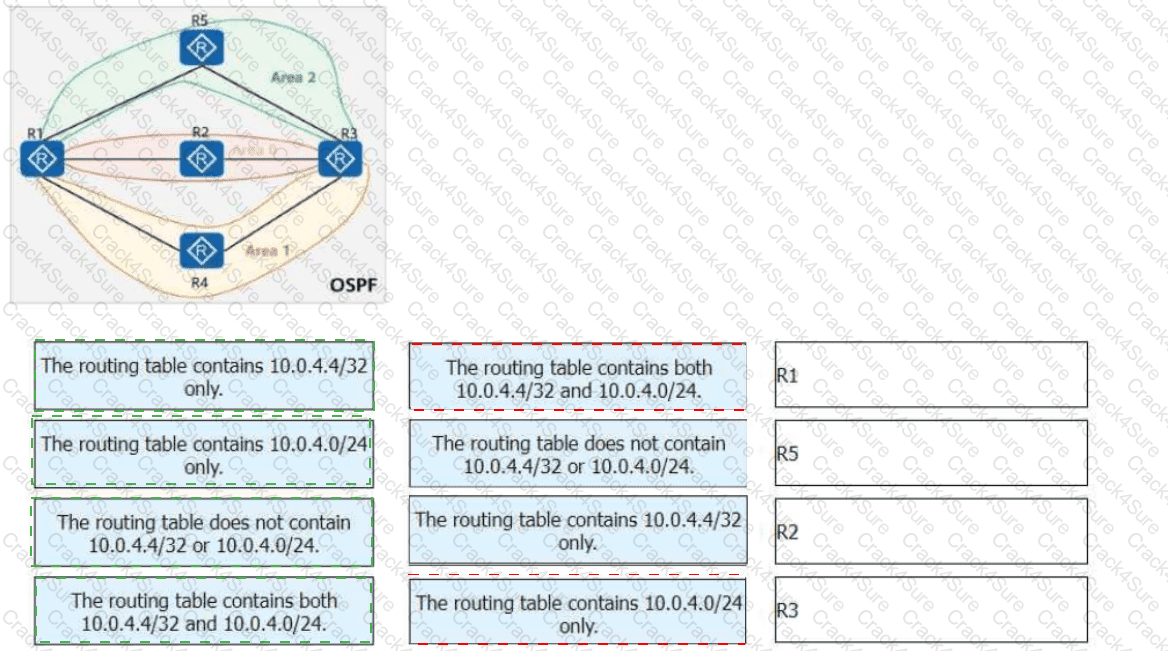
On the OSPF network shown in the figure, area 1 is an NSSA, area 2 is a stub area, and R4 imports an external route 10.0.4.4/32. The router ID of each router is 10.0.X.X, where X is the router number. The asbr-summary 10.0.4.0 255.255.255.0 command is configured in the OSPF processes of R1 and R3.
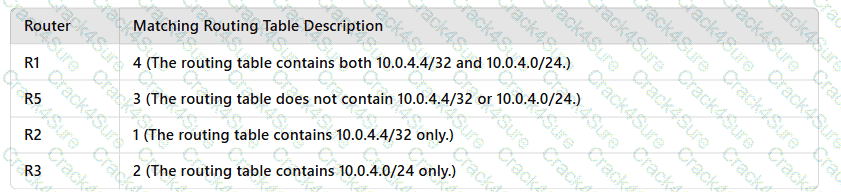
Match the following descriptions of routing tables with the corresponding routers:
On an enterprise network shown in the figure, if CE2 is dual-homed to PE2 and PE3, a routing loop may occur during the exchange of Type 5 LSAs (External LSAs in OSPF).
To prevent the loop, the route-tag command can be run on PE2 and PE3.
In this way, if the route tag of the route received by PE3 is the same as that configured locally, the route is ignored.
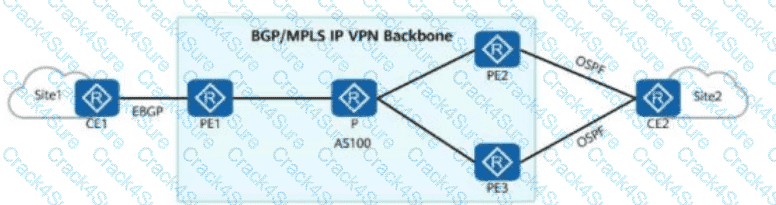
Is this statement True or False?
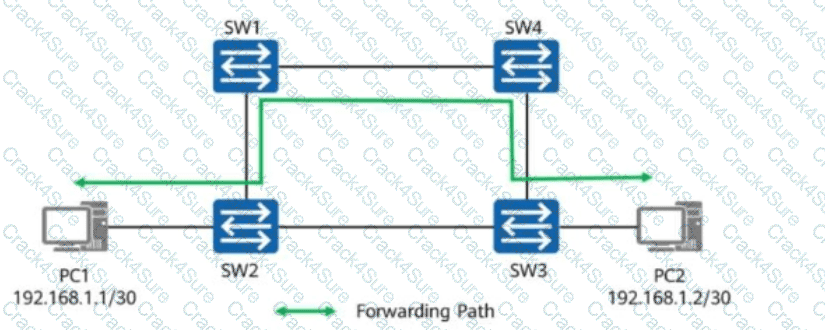
On the network shown in the figure, a network engineer finds that the path between PC1 and PC2 is not the optimal path, and all links along the path have the same cost.
Given this, which of the following routers may be the root bridges of the Layer 2 network?
Options:
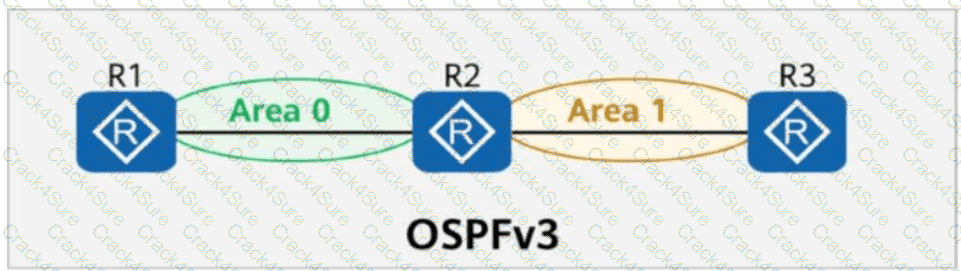
On the OSPFv3 network shown in the figure, area 1 is a common area. R2 generates an Inter-Area-Prefix-LSA to describe the routes of a network segment in the area. Such an LSA exists in both area 0 and area 1.
OSPF supports equal-cost load balancing. When the number of equal-cost routes on the network is greater than the number specified in the maximum load-balancing command and the candidate routes have the same priority (weight value), the routes with larger interface indexes are selected for load balancing.
On the network shown in the figure, IS-IS runs on R1, R2, R4, and R5, and the area ID is 49.0001. IS-IS runs on R3 and R6, and the area ID is 49.0002. The import-route isis level-2 into level-1 command is configured on R2.
In AS 65000, R1, R3, R4, and R6 each establish iBGP peer relationships with R2 and R5. R2 and R5 are Route Reflectors (RRs), and R1, R4, R3, and R6 are clients.
An iBGP peer relationship is established between R2 and R5, and the same cluster ID is configured. The iBGP peer relationships are established using Loopback0. The IP address of Loopback0 on each router is 10.0.X.X/32, where X is the router number.
R1 and R4 import the external route 192.168.1.0/24 to BGP through the import-route command, and R3 and R6 import the external route 192.168.2.0/24 to BGP through the import-route command.
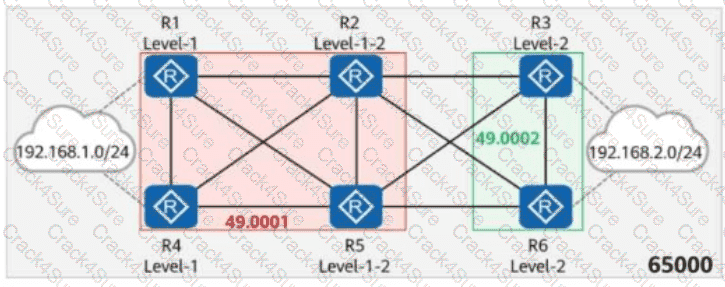
Which of the following statements are true?
The figure shows the logical network architecture of a migration project. The purpose of the migration is to add network device R4 between R2 and R3. OSPF runs between network devices. After the physical network is connected, a network engineer incorrectly imports the backup configuration of R3 to R4 during the migration. Given this, which of the following statements are true?
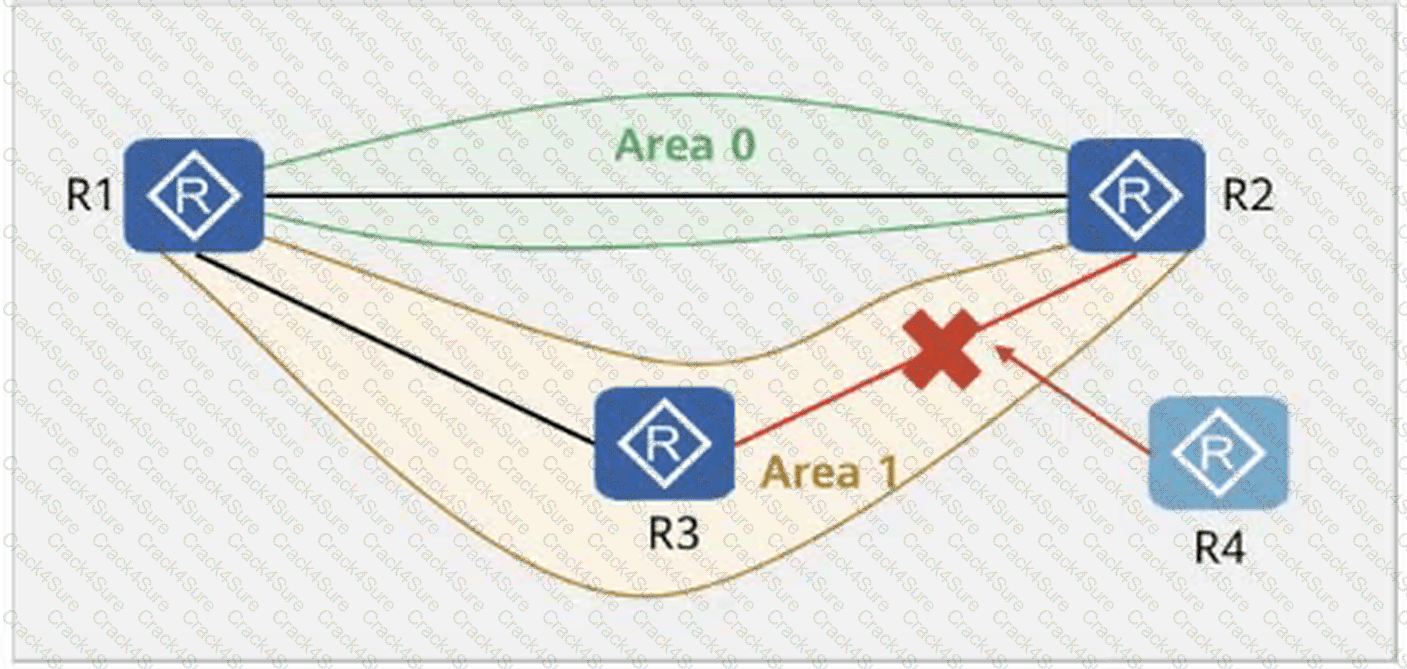
On the IS-IS network shown in the figure, R1 imports a default route using the default-route-advertise always level-1 command. Which of the following statements are true?
Huawei NetEngine AR6120 and AR6121 each have two slots for accommodating service interface cards, and the two slots can be combined into one.
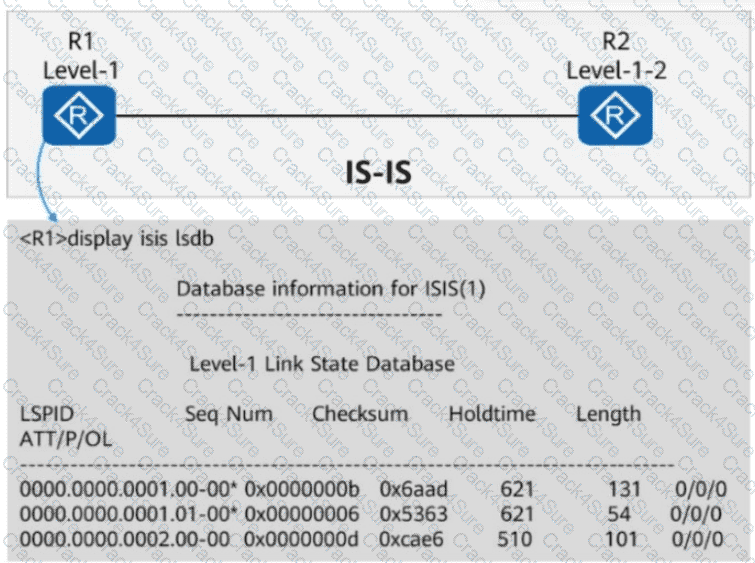
On the IS-IS IPv6 network shown in the figure, if you check the LSDB on R1, the command output shows that R1 is the DIS.
IS-IS LSP fragments are identified by the LSP Number field in their LSP IDs. This field is 4 bits long. Therefore, an IS-IS process can generate a maximum of 256 LSP fragments, which means only a limited amount of information can be carried. By adding additional system IDs, you can enable the IS-IS process to generate more LSP fragments.
Options:
There are two types of network maintenance: routine maintenance and troubleshooting. Skilled maintenance personnel can maintain the network based on their experience, without needing to comply with the operation guidelines.
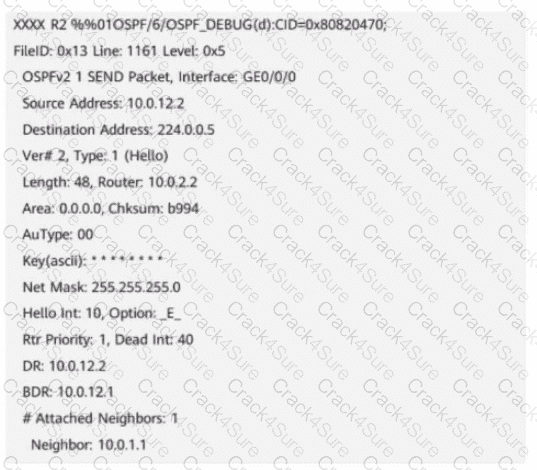
The figure shows the debugging information on an OSPF router. Which of the following is the router ID of this router?
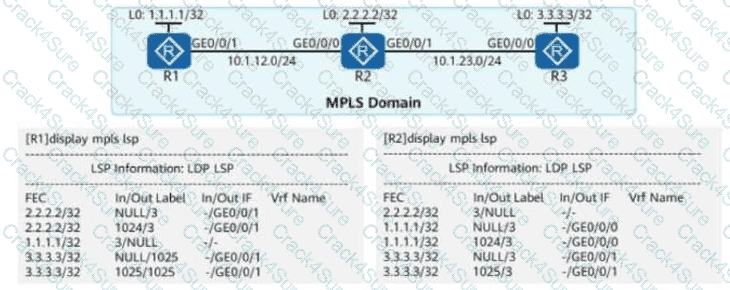
The figure shows the LSP information of R1 and R2 on an MPLS network. An administrator runs the ping 3.3.3.3 command on R1. Given this, which of the following statements is true?
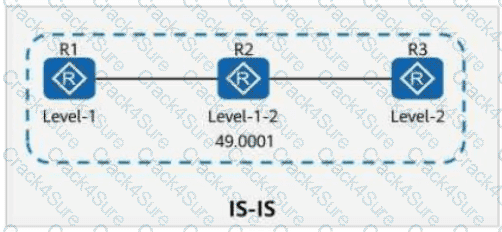
On the IS-IS network shown in the figure, R1 imports a default route using the default-route-advertise always level-1 command. Which of the following routers have the default route in their routing tables?
In the hub-spoke networking shown in the figure, the Hub-PE can be configured to allow repetitive local AS numbers for correct route transmission.
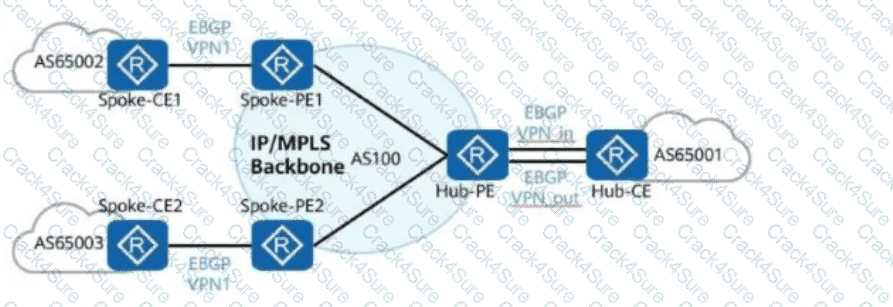
Is this statement TRUE or FALSE?
Options:
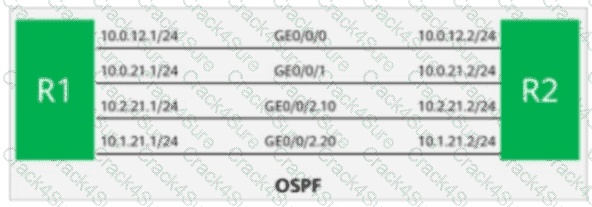
On the OSPF network shown in the figure, R1 and R2 are connected through four links. OSPF is enabled on Loopback0 of R2, and the maximum load-balancing 1 command is run in the OSPF process of R1. Which of the following is the outbound interface from R1 to Loopback0 of R2?
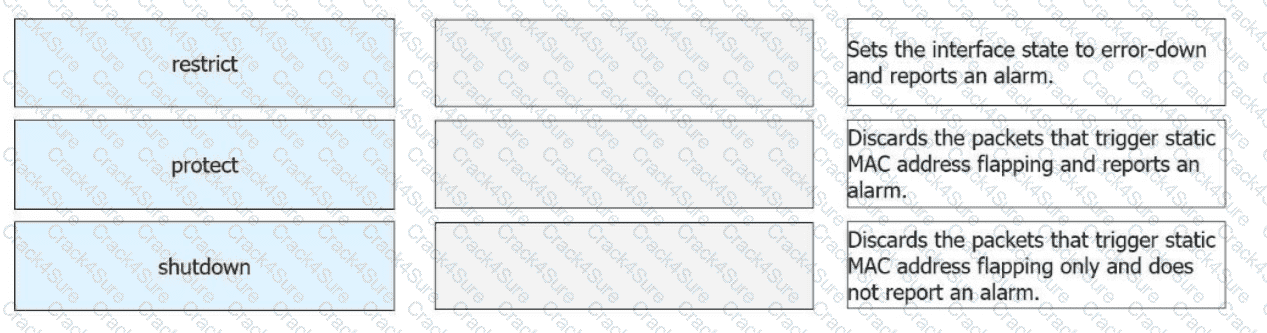
Entries in a MAC address table are classified into dynamic, static, and blackhole entries. In addition, the MAC address table of a switch also contains service MAC address entries, which are typically converted from dynamic entries.
When configuring port security on a switch, the administrator also enables static MAC address flapping detection. If static MAC address flapping occurs, the switch takes the configured action to protect the interface.
Match the names of interface security protection actions with corresponding operations.
On the network shown in the figure, IS-IS IPv6 runs on R2, R6, and R3, and the IPv6 address of Loopback0 on R6 is 2000::6/128. OSPFv3 runs on other links. Area 1 is a common area, and area 2 is an NSSA. IS-IS routes are imported to OSPFv3 on R2 and R3. Which of the following statements are true?
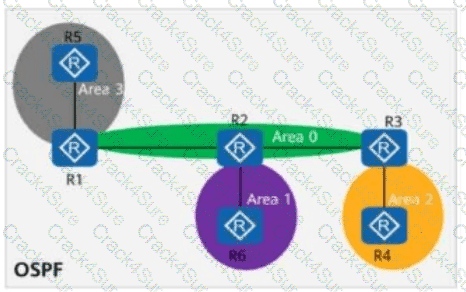
On the OSPF network shown in the figure:
Area 1 is a common area.
Area 2 is a totally NSSA (Not-So-Stubby Area).
Area 3 is an NSSA.
R5 imports the external route 10.0.5.5/32 into OSPF.
Which of the following routers have the route 10.0.5.5/32 in their routing tables?
On the IS-IS IPv6 network shown in the figure, multi-topology is enabled on all routers.
The IPv6 address of Loopback0 on R4 is 2000::4/128.
The command ipv6 summary 2000::/64 level-1-2 is configured in the IS-IS process of R4.
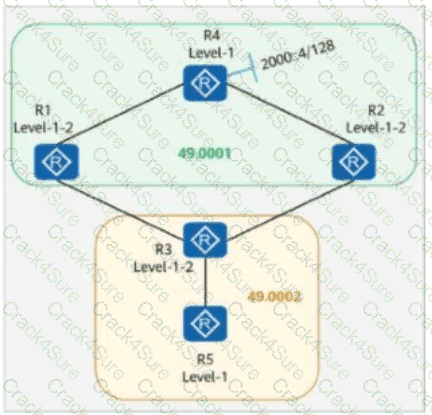
Which of the following statements is false?
Which of the following is not included in OSPF Hello packets?
Options:
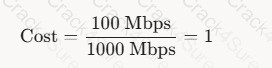
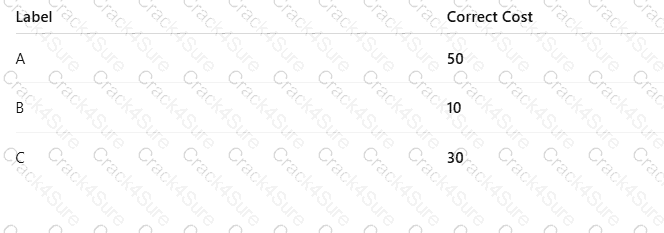
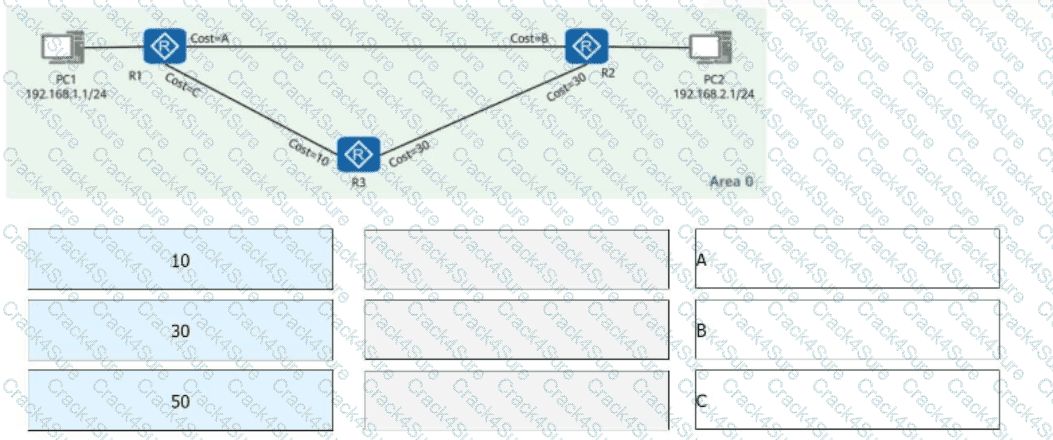
On the OSPF network shown in the figure, drag the values on the left to the correct positions so that the traffic from PC1 to PC2 is sent along the path PC1 ? R1 ? R3 ? R2 ? PC2, and the traffic from PC2 to PC1 is sent along the path PC2 ? R2 ? R1 ? PC1.
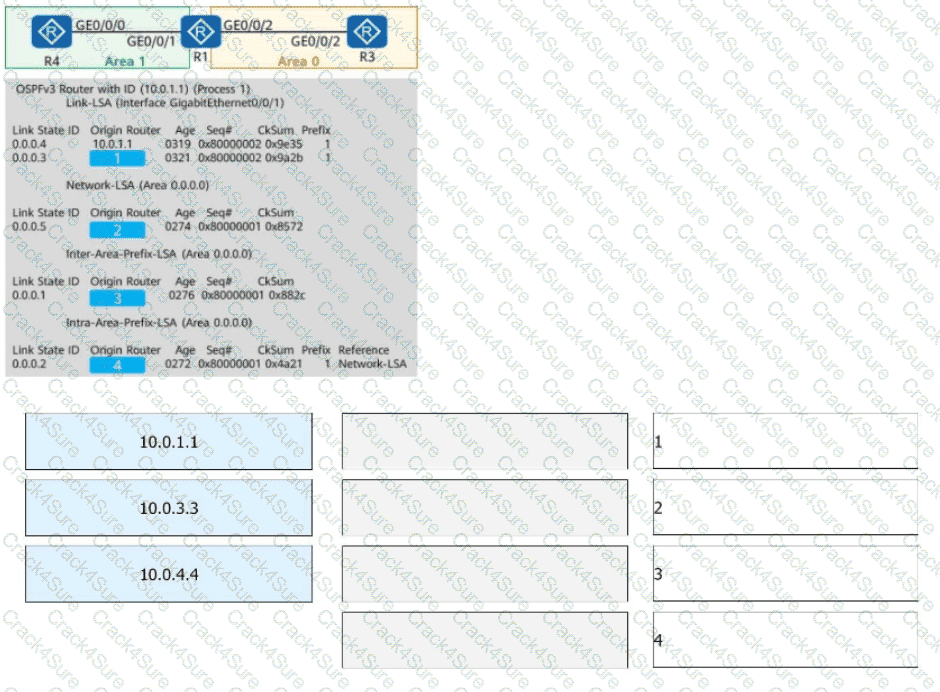
On the OSPFv3 network shown in the figure, OSPFv3 parameters use default values. The LSDB is checked on one of the devices. The router IDs of R1, R3, and R4 are 10.0.1.1, 10.0.3.3, and 10.0.4.4 respectively. The Origin Router part of some LSAs is hidden. Complete this part. (Tokens can be reused.)
Match the Origin Router ID to the correct LSA entry below:
3 Months Free Update
3 Months Free Update
3 Months Free Update



TESTED 21 Nov 2026