Crack4sure Logo

We at Crack4sure are committed to giving students who are preparing for the Microsoft AZ-140 Exam the most current and reliable questions . To help people study, we've made some of our Configuring and Operating Microsoft Azure Virtual Desktop exam materials available for free to everyone. You can take the Free AZ-140 Practice Test as many times as you want. The answers to the practice questions are given, and each answer is explained.
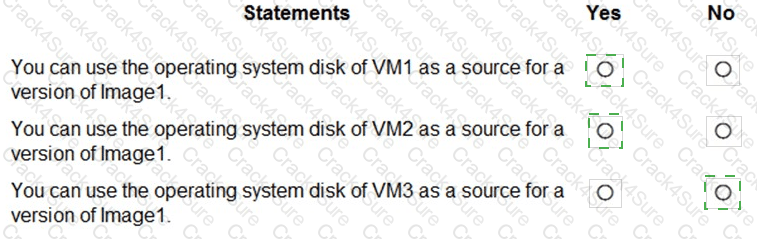
You have an Azure subscription that contains the virtual machines shown in the following table.
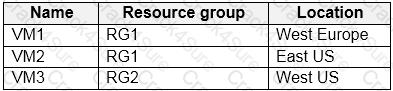
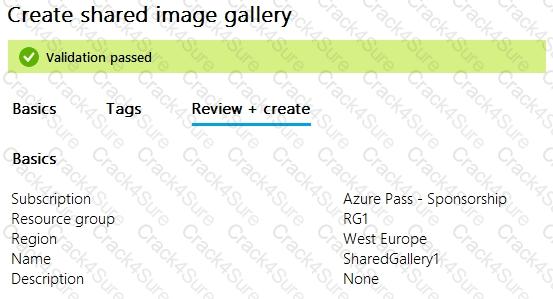
You create a shared image gallery as shown in the SharedGallery1 exhibit. (Click the SharedGallery1 tab.)
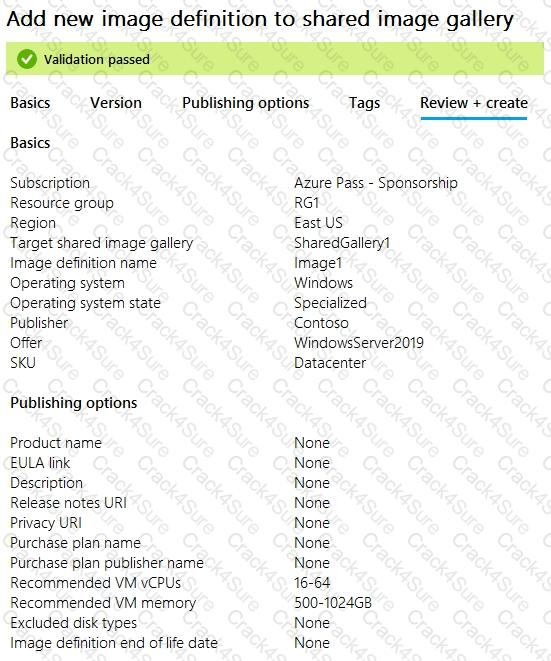
You create an image definition as shown in the Image1 exhibit. (Click the Image1 tab.)
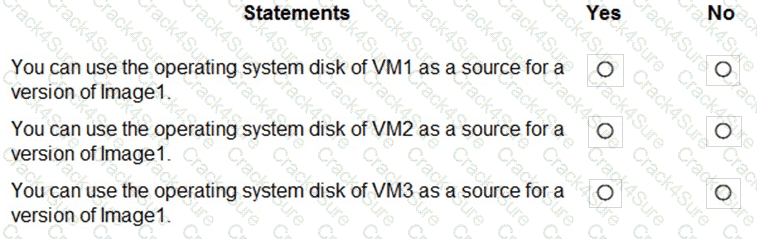
For each of the following statements, select Yes if the statement is true. Otherwise, select No.
NOTE: Each correct selection is worth one point.
You have an Azure Virtual Desktop deployment that contains a host pool named Pool1. Pool1 contains three session hosts.
You need to implement a private endpoint connection for Pool1.
Which two actions should you perform? Each correct answer presents part of the solution.
NOTE: Each correct selection is worth one point.
You have an on-premises network and an Azure subscription. The subscription contains the following:
• A virtual network
• An Azure Firewall instance
• A Azure Virtual Desktop host pool
The virtual network connects to the on-premises network by using a site-to-site VPN.
You need to ensure that only users from the on-premises network can connect to the Azure Virtual Desktop managed resources in the host pool. The solution must minimize administrator effort.
What should you configure?
You have an Azure subscription that contains an Azure Virtual Desktop deployment and the storage accounts shown in the following table.
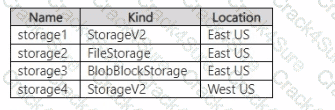
You plan to deploy a host pool named Poo 11 to the East US Azure region. Poo 11 will use FSLogix Profile Containers and Office Containers.
Which storage accounts can Pool! use?
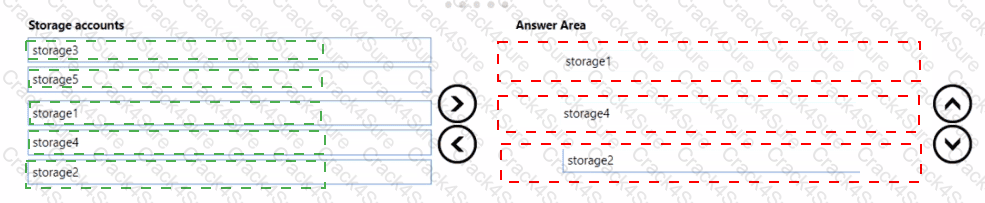
You have an Azure Virtual Desktop deployment and the Azure Storage accounts shown in the following table.
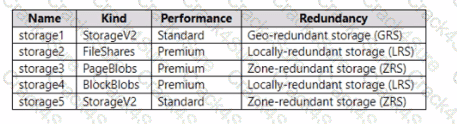
You plan to create FSLogix profile containers and store the containers in the storage accounts.
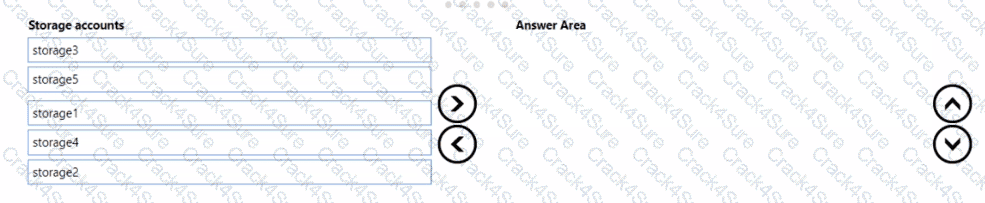
You need to identify which storage accounts support the FSlogix profile containers, and then order the accounts from highest to lowest redundancy.
Which three storage accounts should you identify in sequence? To answer, move the appropriate accounts from the list of accounts to the answer area and arrange them in the correct order.
You have a Windows Virtual Desktop deployment that contains the following:
A host pool named Pool1
Two session hosts named Host1 and Host2
An application group named RemoteAppGroup1 that contains a RemoteApp named App1
You need to prevent users from copying and pasting between App1 and their local device.
What should you do?
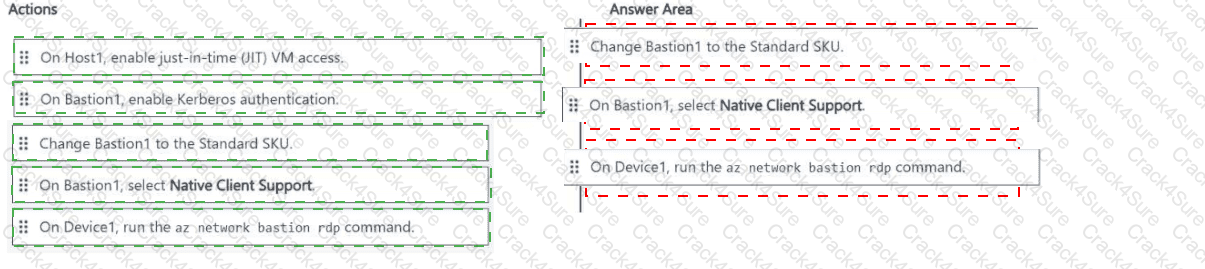
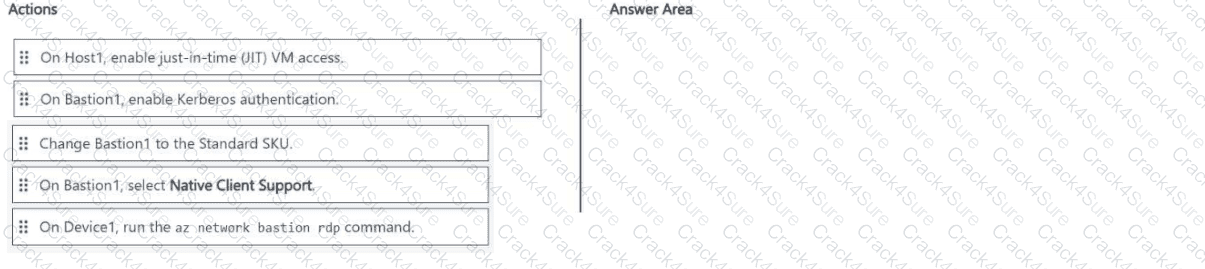
You have an Azure Virtual Desktop deployment that contains the resources shown in the following table.

You have a Windows 11 device named Device1 that has Azure Command-Line Interface (CLI) installed.
You need to use Remote Desktop Connection (mstsc.exe) on Device1 to connect to Host1.
Which three actions should you perform in sequence? To answer, move the appropriate actions from the list of actions to the answer area and arrange them in the correct order.
You have an Azure virtual machine named VM1 that runs Windows 10 Enterprise multi-session.
You plan to add language packs to VM1 and create a custom image of VM1 for a Windows Virtual Desktop host pool.
You need to ensure that modern apps can use the additional language packs when you deploy session hosts by using the custom image.
Which command should you run first? To answer, select the appropriate options in the answer area.
NOTE: Each correct selection is worth one point.

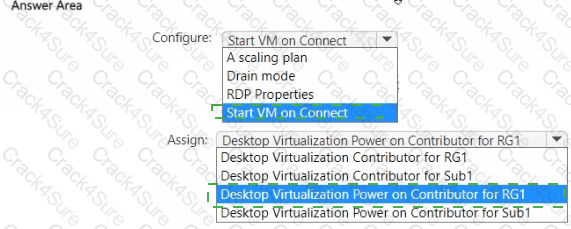
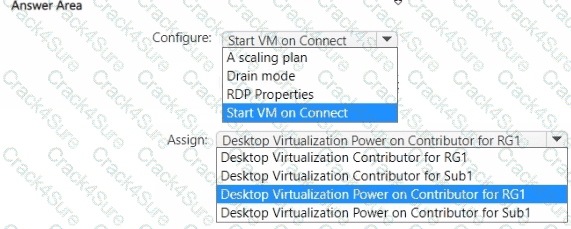
You have an Azure subscription named Sub1 that contains a resource group named RG1. RG1 contains an Azure Virtual Desktop deployment. The deployment contains a host pool named Pool1.
You plan to configure Pool1 to meet the following requirements:
• Session hosts must start automatically as user demand increases.
• Azure Virtual Desktop must have permission to turn on session host virtual machines.
What should you configure, and which role should you assign to the Azure Virtual Desktop service principal? To answer, select the appropriate options in the answer area.
NOTE: Each correct selection is worth one point.
You have an Azure subscription that contains an Azure Virtual Desktop session host named VM1. You plan to deploy an app named App1 that will process Personally Identifiable Information (Pll) data.
You need to ensure that App1 is deployed to a confidential virtual machine. The solution must minimize administrative effort What should you do?
Note: This question is part of a series of questions that present the same scenario. Each question in the series contains a unique solution that might meet the stated goals. Some question sets might have more than one correct solution, while others might not have a correct solution.
After you answer a question in this section, you will NOT be able to return to it. As a result, these questions will not appear in the review screen.
You have an Azure Virtual Desktop deployment.
You need to ensure that users are signed out automatically when they disconnect from a session.
Solution: From the Local Group Policy Editor, you configure the Session Time Limits settings.
Does this meet the goal?
You have an Azure Virtual Desktop deployment.
You plan to deploy the host pools shown in the following table.
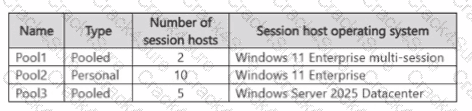
For which host pools can you configure a load-balancing algorithm?
-
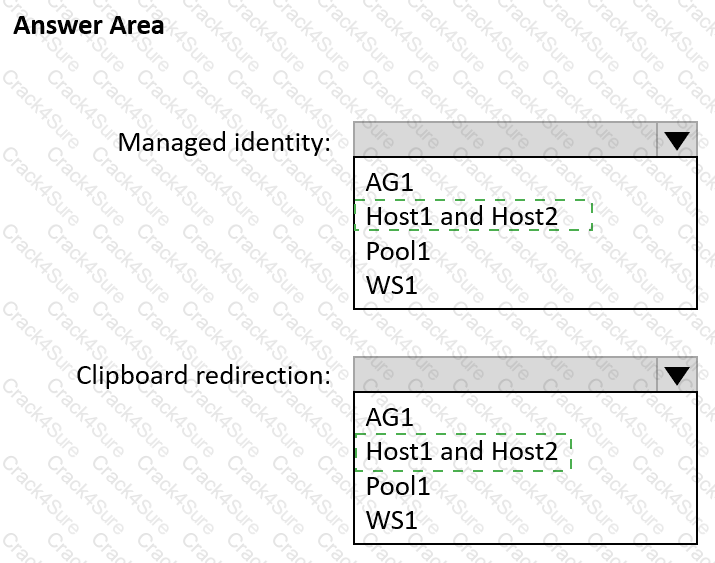
You have an Azure Virtual Desktop deployment that contains the resources shown in the following table.
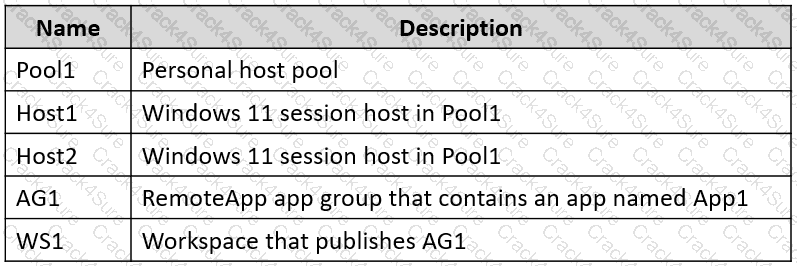
You need to perform the following configurations:
• Enable a managed identity for App1.
• Enable Clipboard redirection for App1.
On which resources should you perform the configurations? To answer, select the appropriate options in the answer area.
NOTE: Each correct selection is worth one point.
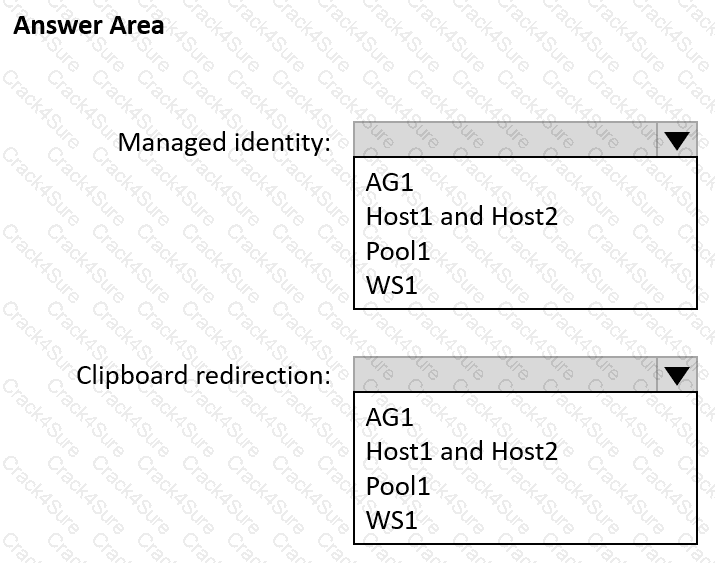
You have an Azure Virtual Desktop deployment that contains the host pools shown in the following table.

You need to create a disaster recovery environment in the West US region. The solution must minimize costs and administrative effort.
What should you do?
Which monitoring solution should you configure to meet the security requirements?
You have an Azure Virtual Desktop host pool named Pool1. Pool1 contains session hosts that have a third-party application named App1. App1 is published by using a RemoteApp group.
A new MSI-based version of App1 is installed each month to each host. The name of the executable file is different for each version of App1.
You need to automate the process of making a new version of App1 available via RemoteApp. The process must ensure that the user experience remains the same when launching the application from the Windows Desktop client.
Which two cmdlets should you run? Each correct answer presents part of the solution.
NOTE: Each correct selection is worth one point.
You have an Azure Virtual Desktop deployment.
You need to recommend a solution to run containerized applications without installing the applications on the session hosts.
What should you include in the recommendation?
You have an Azure Virtual Desktop deployment that contains a host pool. The host pool contains 15 session hosts. All the sessions hosts have FSLogix installed.
You need to configure the path to where the user profiles are stored. The solution must minimize administrative effort.
Which registry setting should you use?
You have an Azure Virtual Desktop deployment.
You plan to deploy Update Management to manage automated updates for server-based session hosts.
You need to configure the prerequisites for Update Management.
Which two actions should you perform? Each correct answer presents part of the solution.
NOTE: Each correct selection is worth one point.
What should you do to ensure that the session hosts meet the application requirements for App1?
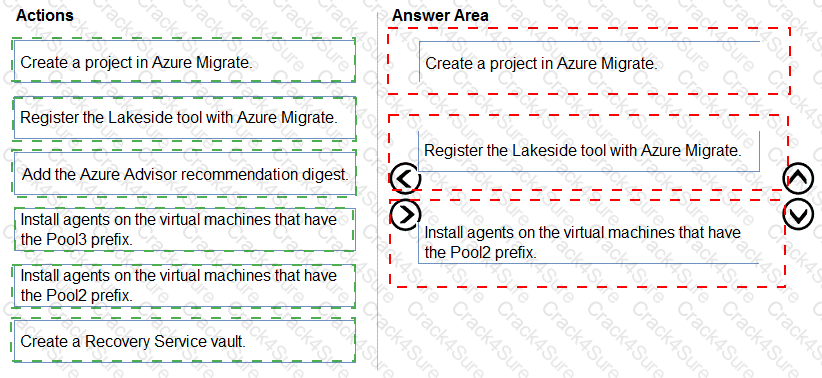
You need to evaluate the RDS deployment in the Seattle office. The solution must meet the technical requirements.
Which three actions should you perform in sequence? To answer, move the appropriate actions from the list of actions to the answer area and arrange them in the correct order.
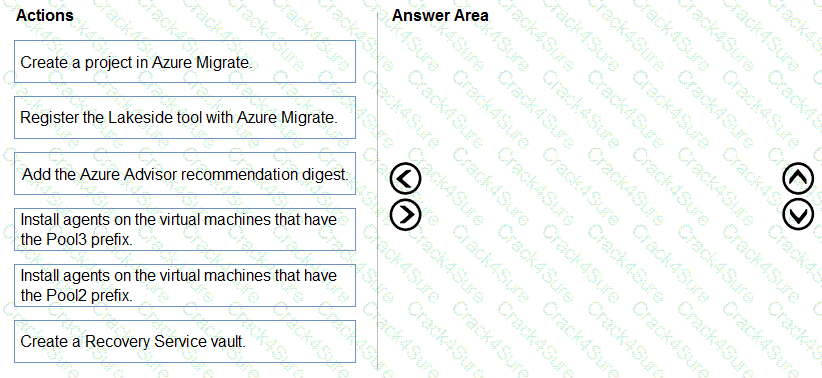
You need to prepare the disk on VM1 for use with the Azure Virtual Desktop deployment. Which two actions should you perform? Each correct answer presents part of the solution. NOTE: Each correct selection is worth one point.
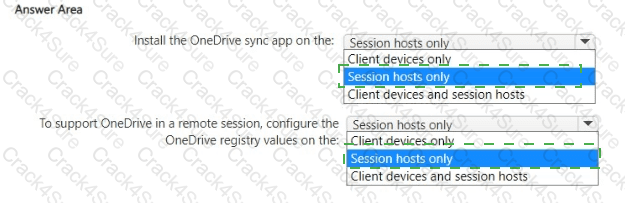
What should you do to meet the application requirements? To answer, select the appropriate options in the answer area.
NOTE: Each correct selection is worth one point.
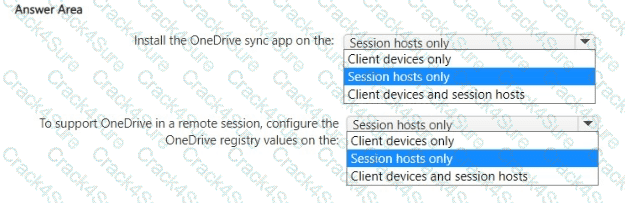
What should you do to meet the user profile requirements?
You need to configure the device redirection settings. The solution must meet the technical requirements.
Where should you configure the settings?
What should you configure to meet the networking requirements?
Which settings should you configure to meet the performance requirements?
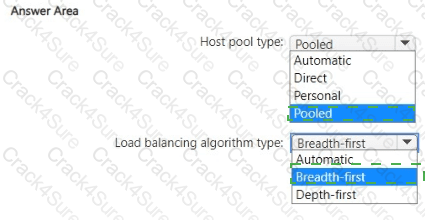
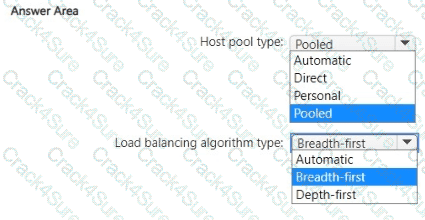
Which type of host pool and load balancing algorithm should you configure to meet the performance requirements? To answer, select the appropriate options in The answer area.
NOTE: Each correct selection is worth one point.
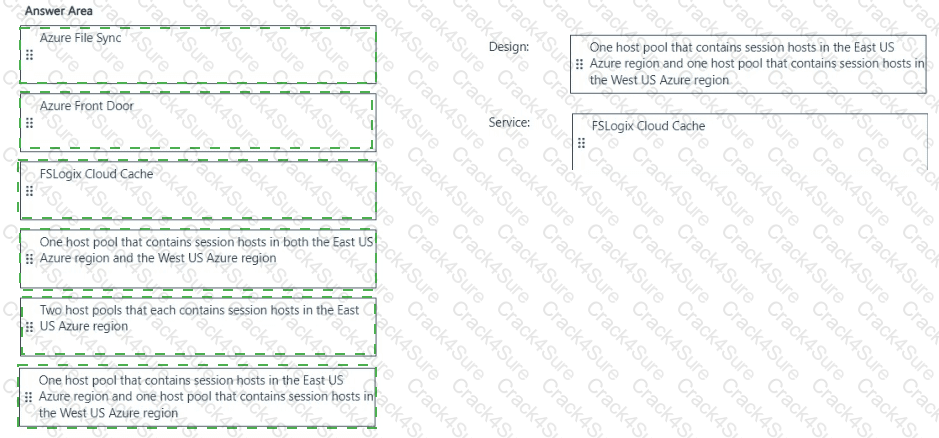
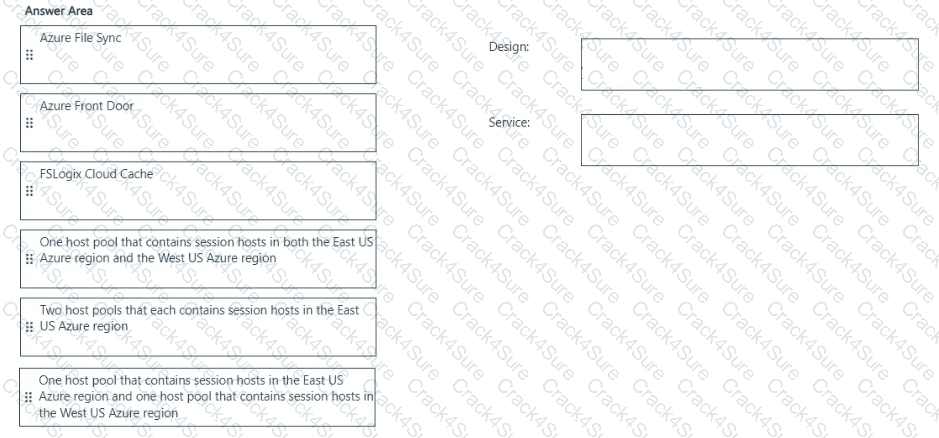
Which host pool design and which service should you configure to meet the disaster recovery requirements? To answer, drag the appropriate solution to the correct requirements. Each solution may be used once, more than once, or not at all. You may need to drag the split bar between panes or scroll to view content
NOTE: Each correct selection is worth one point.
Which two actions should you perform to meet the security requirements for Defender for Endpoint? Each correct answer presents a complete solution.
NOTE: Each correct selection is worth one point.
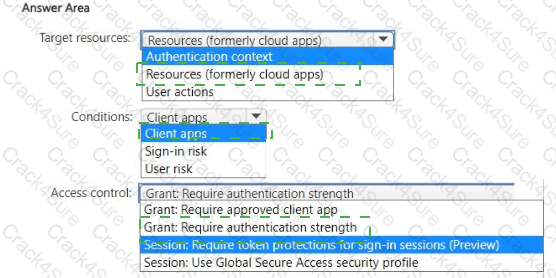
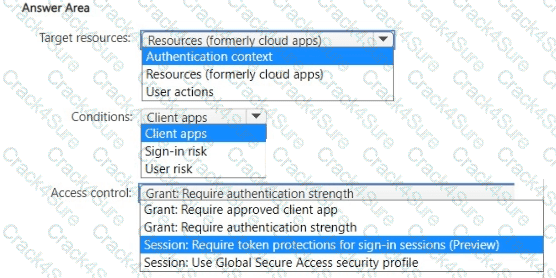
You need to create a Conditional Access policy to meet the security require-ments.
How should you configure the policy? To answer, select the appropriate options in the answer area.
You need to implement network security to meet the security requirements and the performance requirements.
Which two actions should you perform? Each correct answer presents a complete solution.
NOTE: Each correct selection is worth one point.
You need to modify the custom virtual machine images to meet the deployment requirements.
What should you install?
You need to ensure the resiliency of the user profiles for the Boston office users. The solution must meet the user performance requirements.
What should you do?
You need to recommend a DNS infrastructure that meet the performance requirements. What should you recommend? To answer, select the appropriate options in the answer area. NOTE: Each correct selection is worth one point.

Which two roles should you assign to Admin2 to meet the security requirements? Each correct answer presents part of the solution.
NOTE: Each correct selection is worth one point.
You need to recommend an authentication solution that meets the performance requirements.
Which two actions should you include in the recommendation? Each correct answer presents part of the solution.
NOTE: Each correct selection is worth one point.
You need to configure the user settings of Admin1 to meet the user profile requirements.
What should you do?
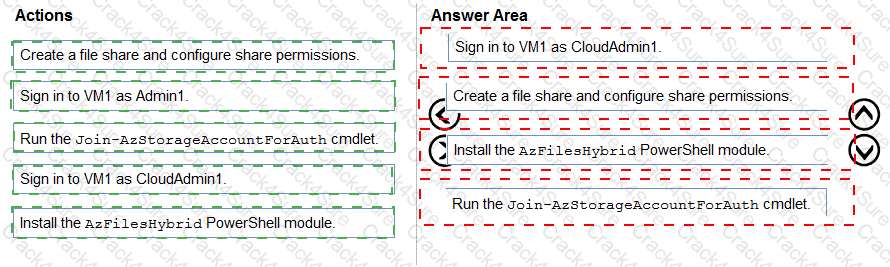
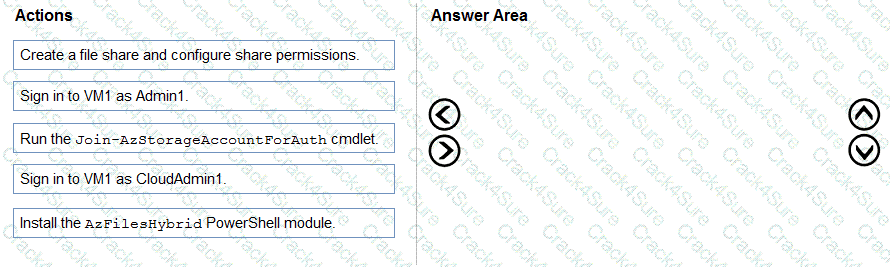
You need to ensure that you can implement user profile shares for the Boston office users. The solution must meet the user profile requirements.
Which four actions should you perform in sequence? To answer, move the appropriate actions from the list of actions to the answer area and arrange them in the correct order.
You need to configure a conditional access policy to meet the authentication requirements.
What should you include in the policy configuration? To answer, select the appropriate options in the answer area.
NOTE Each correct selection is worth one point.

You need to deploy the session hosts to meet the deployment requirements Which PowerShell cmdlel should you run first?
3 Months Free Update
3 Months Free Update
3 Months Free Update



TESTED 08 Oct 2026