Crack4sure Logo

We at Crack4sure are committed to giving students who are preparing for the NCCT TS-C Exam the most current and reliable questions . To help people study, we've made some of our Tech in Surgery - Certified (NCCT), TS-C (NCCT) exam materials available for free to everyone. You can take the Free TS-C Practice Test as many times as you want. The answers to the practice questions are given, and each answer is explained.
A surgical technologist is expected to have dual setups for the abdominal and vaginal portions of a laparoscopic-assisted vaginal hysterectomy. What should be the process for converting from the vaginal procedure back to the abdominal laparoscopic procedure?
Change the surgeon ' s gloves and ask the circulating nurse for new sterile instruments.
Remove or change any soiled gloves, then use only instruments from the laparoscopic back table.
Wipe any instruments used vaginally to avoid cross-contamination.
Dip any used instruments in a Betadine solution and place them back on the laparoscopic back table.
During a laparoscopic-assisted vaginal hysterectomy (LAVH), the surgical technologist must maintain appropriate separation between instruments used during the vaginal portion of the procedure and those reserved for abdominal laparoscopic surgery.
The vaginal canal contains endogenous microorganisms and is considered a clean-contaminated operative environment. Instruments introduced into the vaginal canal may become contaminated with vaginal flora and should not subsequently be transferred to the designated abdominal laparoscopic instrument setup.
Option B is the most appropriate answer because it preserves the separation of instrument sets and addresses glove contamination during the transition between operative approaches.
Under conventional dual-field protocols, surgical personnel change gloves when returning from vaginal manipulation to the abdominal laparoscopic field. Instruments designated for the vaginal portion must remain separate from the abdominal instruments.
Basicmedical Key+1
Option A is incomplete because changing the surgeon ' s gloves does not address proper segregation of the existing instrument sets. Option C is incorrect because wiping instruments does not constitute validated sterilization or appropriate decontamination. Option D is incorrect because immersion in povidone-iodine does not make contaminated instruments sterile.
Contemporary gynecologic protocols may permit a unified surgical field following validated preparation procedures. However, this question explicitly specifies dual setups, making separation of instruments and appropriate glove changes the applicable standard.
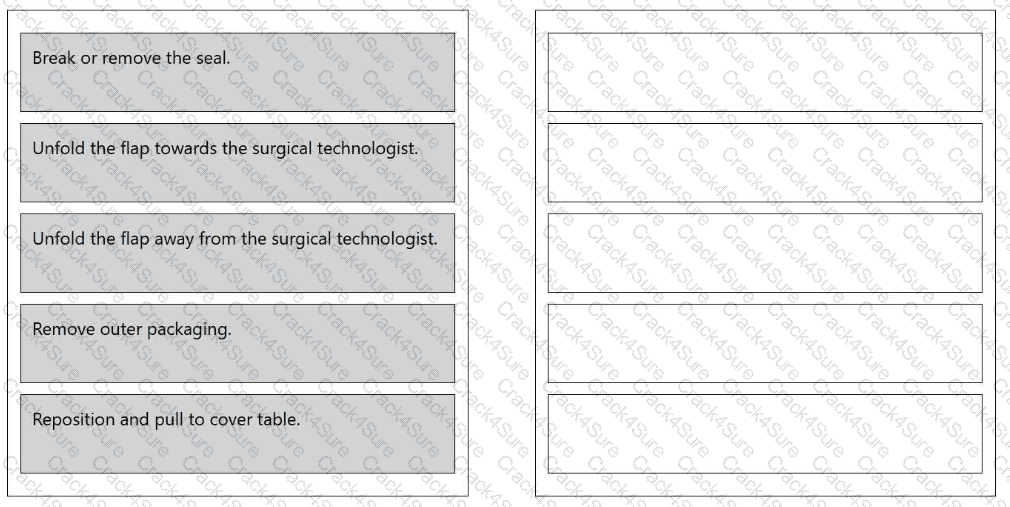
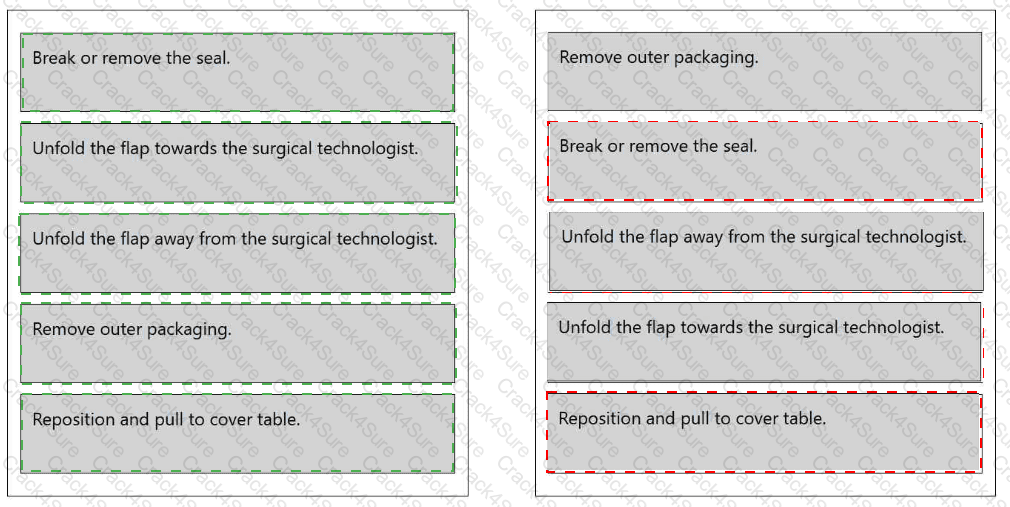
A surgical technologist is opening the operating room for a surgical procedure. Arrange the following steps for opening the sterile back-table pack in the correct sequence.
1
Remove outer packaging.
2
Break or remove the seal.
3
Unfold the flap away from the surgical technologist.
4
Unfold the flap toward the surgical technologist.
5
Reposition and pull to cover the table.
Establishing the sterile back table requires a systematic opening sequence that preserves packaging integrity and prevents contamination. The surgical technologist must follow aseptic technique while ensuring that the sterile table covering is fully extended before instruments and supplies are introduced.
First, remove the outer packaging after inspecting it for damage, moisture, and expiration information. The protective outer covering is considered nonsterile and must be discarded without contaminating the inner sterile package.
Second, break or remove the seal securing the inner package. The seal should be opened carefully to avoid tearing the sterile material.
Third, unfold the flap away from the surgical technologist. This prevents the operator from reaching across exposed sterile surfaces.
Fourth, unfold the flap toward the surgical technologist, handling only the designated nonsterile edges of the wrapper.
Fifth, reposition and pull the remaining covering over the table. The technologist moves around the table as necessary, extending the drape over its surfaces without reaching across the sterile field or allowing the drape to contact unsterile objects.
The Association of Surgical Technologists emphasizes inspection of packaging integrity, correct placement of sterile supplies, and strict aseptic technique when establishing the sterile field.
ast.org+1
Following this sequence helps maintain sterile-field integrity and minimizes the risk of surgical site contamination.
With regard to the use of a fire extinguisher, what does PASS stand for?
Pull, Aim, Squeeze, and Swipe
Pull, Alert, Squeeze, and Sweep
Pull, Aim, Squeeze, and Sweep
Push, Aim, Squeeze, and Sweep
PASS stands for Pull, Aim, Squeeze, and Sweep , a standardized technique for operating a portable fire extinguisher during a fire emergency.
The Occupational Safety and Health Administration (OSHA) identifies PASS as the recommended operational sequence for portable fire extinguishers.
Occupational Safety and Health Administration
Pull: Remove the safety pin to unlock the extinguisher ' s operating mechanism.
Aim: Direct the nozzle or hose toward the base of the fire rather than the upper flames.
Squeeze: Compress the operating handle to release the extinguishing agent.
Sweep: Move the nozzle from side to side across the base of the fire until the flames are extinguished.
Option A is incorrect because the final step is Sweep, not Swipe. Option B is incorrect because Alert is not the second step of PASS. Option D is incorrect because the initial action is Pull rather than Push.
Operating room fire safety additionally requires recognition of the fire triangle: an ignition source, an oxidizer, and fuel. Lasers and electrosurgical devices can provide ignition, supplemental oxygen can intensify combustion, and surgical drapes or preparation solutions may act as fuel.
The surgical technologist must understand both PASS and the institution ' s emergency response procedures, including immediate communication, removal of burning materials when appropriate, and protection of the patient.
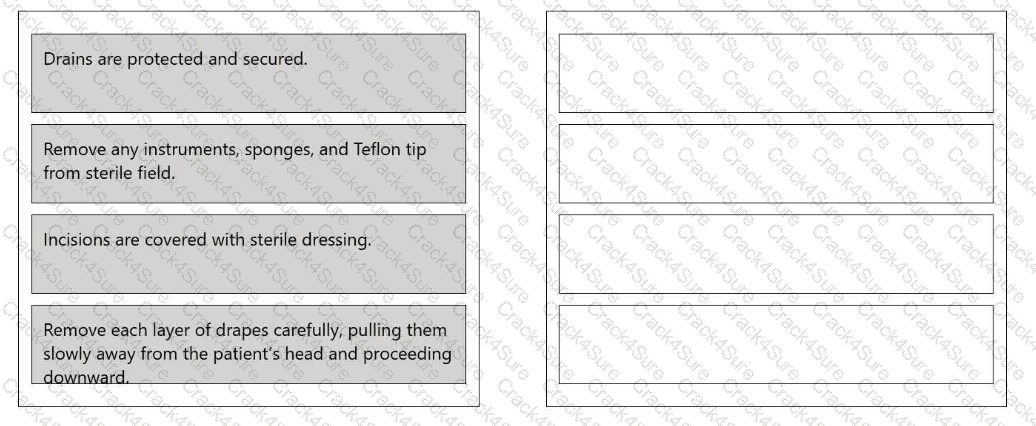
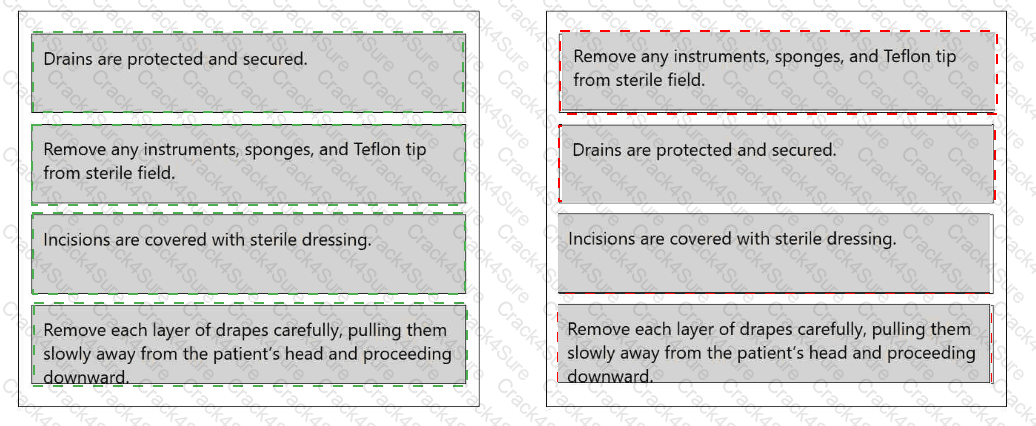
Place the following options in the correct order for removal of surgical drapes after a laparotomy procedure.
1
Remove any instruments, sponges, and Teflon tip from the sterile field.
2
Drains are protected and secured.
3
Incisions are covered with sterile dressings.
4
Remove each layer of drapes carefully, pulling them slowly away from the patient ' s head and proceeding downward.
Following a laparotomy, surgical drapes must be removed in a controlled sequence to prevent surgical site contamination, accidental drain displacement, and injuries from retained sharp instruments.
First, remove instruments, sponges, and the Teflon electrosurgical tip from the patient-associated sterile field. This prevents surgical equipment or sharps from becoming trapped within discarded drapes. The Association of Surgical Technologists recommends clearing instruments, sharps, and nondisposable items before applying the sterile dressing.
Second, protect and secure surgical drains. Drains must remain correctly positioned and secured to prevent accidental dislodgement during drape removal. Drain tubing should be identified and protected from traction or compression.
Third, cover the surgical incisions with sterile dressings. The surgical technologist assists in cleaning and drying the surrounding skin and applying the prescribed wound dressing. This protects the incision from contamination during subsequent handling.
Fourth, carefully remove the surgical drapes , working slowly away from the patient ' s head toward the lower body as described in the question. Drapes should be gathered and rolled inward to contain contaminated surfaces and prevent blood or body fluid splashing.
The fundamental safety principles are to clear hazardous items, protect drains and the wound, and remove drapes without disturbing the patient or spreading contamination.
ast.org+1
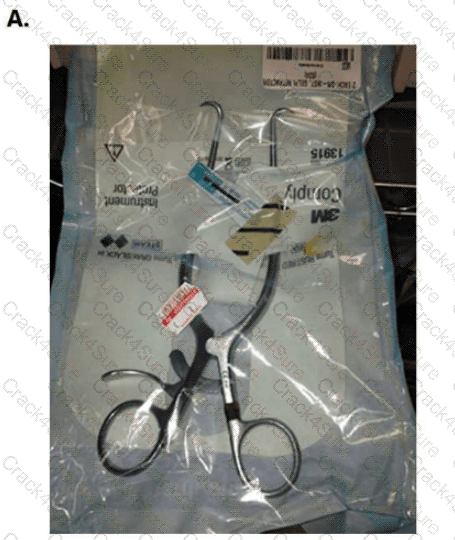
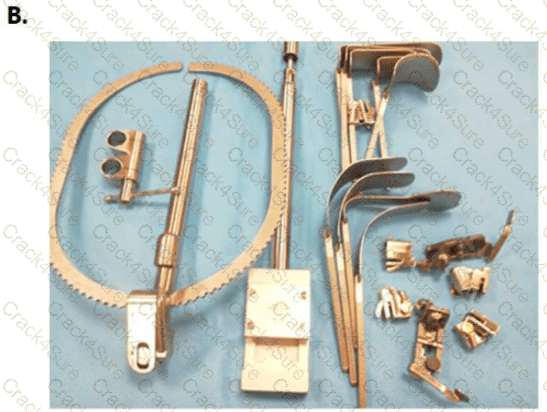
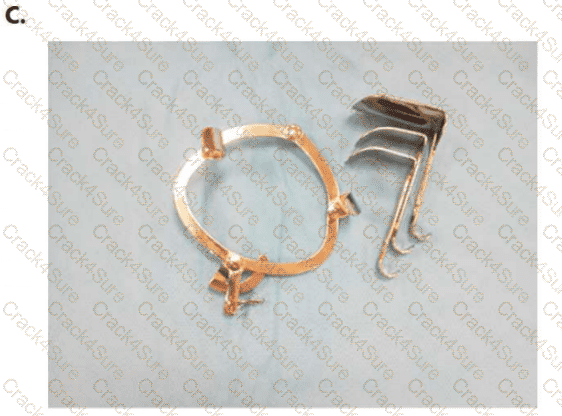
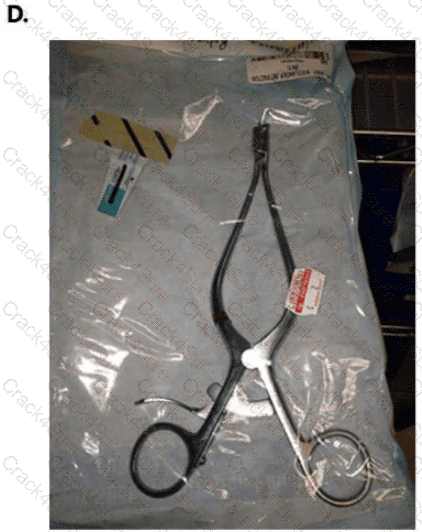
When exposing the abdominal cavity during a right hemicolectomy, which of the following should the surgical technologist anticipate the surgeon needing?
User attachment
Instrument shown in Option A — Surgical clamp.
Instrument shown in Option B — Bookwalter self-retaining retractor system.
Instrument shown in Option C — O ' Sullivan–O ' Connor-type retractor system.
Instrument shown in Option D — Surgical clamp.
The Bookwalter self-retaining retractor system , illustrated in Option B, is the most appropriate instrument for establishing and maintaining abdominal exposure during an open right hemicolectomy.
A right hemicolectomy involves removing the cecum, ascending colon, and potentially portions of the terminal ileum and transverse colon. Adequate visualization is essential for mobilization of the right colon, vascular ligation, bowel division, and intestinal anastomosis.
The Bookwalter system consists of an adjustable ring, table-mounted support, interchangeable retractor blades, and locking mechanisms. These components provide stable, hands-free retraction of the abdominal wall and surrounding tissues. The surgeon can adjust blade position and depth to obtain appropriate exposure throughout the operation. Surgical references specifically describe using the Bookwalter for open abdominal procedures, including right-sided colonic surgery.
StudFiles+1
Option A depicts a clamp rather than a comprehensive abdominal retraction system.
Option C depicts a smaller ring-style self-retaining retractor system, which may be used in abdominal or pelvic procedures, but is less characteristic of the extensive exposure required for this operation.
Option D depicts another clamp and does not provide the broad, sustained abdominal wall retraction required.
The surgical technologist must verify the retractor components, assemble the system correctly, and anticipate blade adjustments throughout the procedure.
What is the correct sequence when draping a patient for a laparotomy? Arrange the following steps in their proper order.
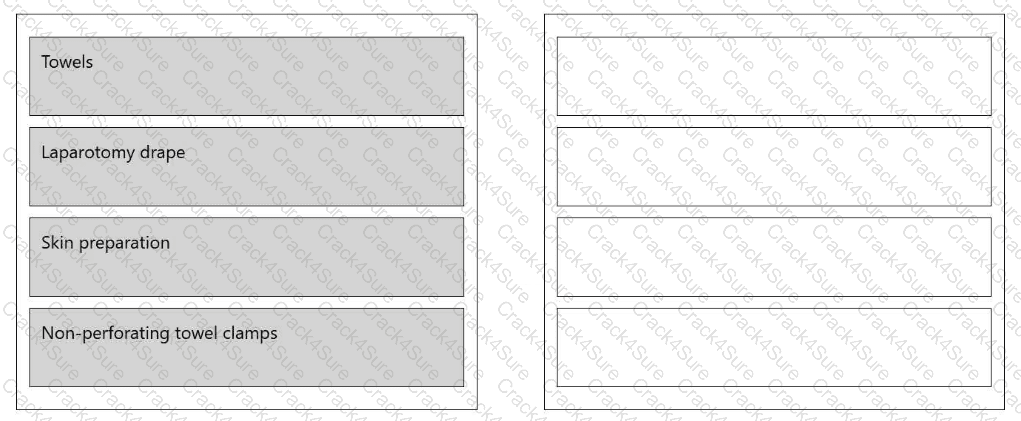
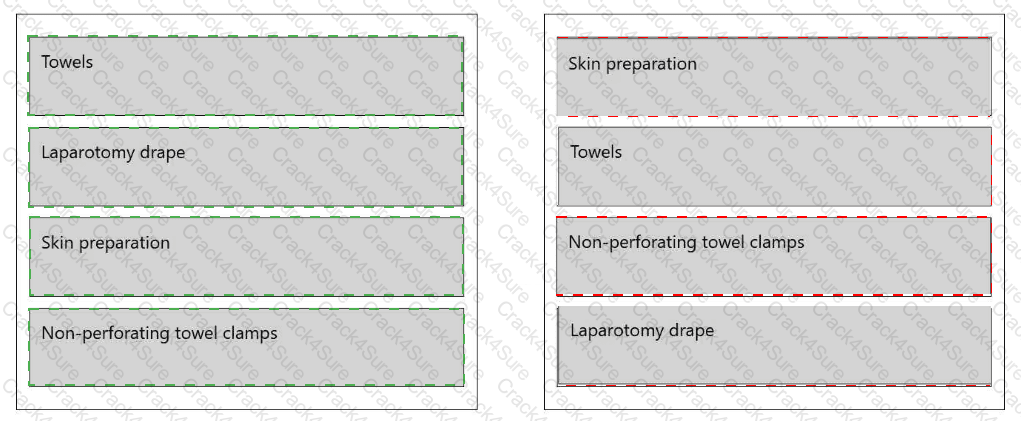
1
Skin preparation
2
Towels
3
Non-perforating towel clamps
4
Laparotomy drape
Proper draping for laparotomy follows a systematic sequence designed to establish a sterile operative field, minimize microbial contamination, and provide adequate abdominal exposure.
First, skin preparation is performed using an appropriate antiseptic solution. The prepared area must extend sufficiently beyond the anticipated incision to accommodate surgical manipulation or extension. Alcohol-based preparations must dry completely before draping to reduce surgical fire risk.
Second, sterile towels are positioned around the intended incision site to establish the boundaries of the operative field. This technique is commonly described as squaring off the incision.
Third, non-perforating towel clamps are applied to secure the towels without puncturing the draping material. This helps preserve barrier integrity and prevents displacement during surgery.
Fourth, the laparotomy drape is placed over the patient, aligning its fenestration with the prepared operative site. The drape is carefully unfolded toward the foot and head of the operating table without contaminating sterile surfaces.
The surgical technologist must avoid reaching across nonsterile areas, prevent drape contact with unprepared skin, and maintain aseptic technique throughout the procedure.
This sequence is consistent with established surgical draping instruction and the surgical assisting competency standards for abdominal procedures.
ARC/STSA+2
A surgeon schedules a right hemicolectomy. Which stapling device is needed for the anastomosis?
Ligating and dividing stapler
Intraluminal circular stapler
Linear stapler
Skin stapler
A linear stapler is commonly used to construct a side-to-side ileocolic anastomosis following a right hemicolectomy.
During right hemicolectomy, the surgeon removes the affected right-sided colon, usually including the cecum, ascending colon, and an appropriate portion of the terminal ileum. The remaining small intestine and colon must then be reconnected to restore gastrointestinal continuity.
A linear cutting stapler, such as a gastrointestinal anastomosis (GIA) stapler, can create parallel staple lines while simultaneously dividing tissue. For a side-to-side ileocolic anastomosis, the stapler is introduced into aligned openings in the ileum and transverse colon, creating a common intestinal channel.
Published right hemicolectomy techniques describe the use of linear staplers for constructing functional end-to-end or side-to-side ileocolic anastomoses.
PubMed+1
Option A is incorrect because ligating and dividing staplers are primarily intended for selected vascular pedicles and tissue bundles rather than conventional ileocolic reconstruction.
Option B is not the preferred examination answer, although circular staplers can be used for end-to-side ileocolic anastomoses.
Option D is incorrect because skin staplers approximate external wound edges rather than intestinal segments.
The surgical technologist must anticipate the correct stapler, cartridge size, tissue thickness, and device compatibility according to the surgeon ' s planned anastomotic technique.
The surgical technologist notices that the electrosurgical generator ' s power cord is frayed near the plug inserted into the electrical outlet. Meanwhile, the surgeon and surgical assistant are discussing the next steps of the procedure. What should the surgical technologist do?
Interrupt the surgeon and surgical assistant to inform them about the frayed cord.
Remove the machine after surgery is completed so that it can be repaired.
Ask the circulating nurse to obtain a replacement electrosurgical generator.
Ask the circulating nurse to contact Biomedical Engineering to come into the operating room.
The surgical technologist must immediately communicate the electrical safety hazard to the surgeon and surgical assistant , even if this requires interrupting their discussion.
A frayed power cord presents a significant risk of electrical shock, short circuit, equipment malfunction, or operating room fire. Because the electrosurgical generator is connected to an electrical outlet and may be activated during the procedure, the hazard requires immediate intervention.
AORN recommends removing damaged electrosurgical equipment from service immediately and reporting the defect through the appropriate equipment-maintenance process.
Recommended Practices for Electrosurgery+1
Option A is correct because immediate disclosure prevents the surgical team from inadvertently continuing to use potentially hazardous equipment.
Option B is incorrect because leaving the defective equipment in use until the procedure is completed exposes the patient and healthcare personnel to unnecessary electrical risks.
Option C describes an appropriate subsequent action. The circulating nurse should arrange for a functioning replacement generator once the hazard has been communicated.
Option D is also a subsequent corrective action, but waiting for Biomedical Engineering to inspect the device should not delay its removal from clinical use.
The damaged equipment should be taken out of service safely, labeled according to institutional policy, and referred for technical inspection.
The surgical technologist must demonstrate surgical conscience by identifying hazards and communicating concerns immediately, regardless of professional hierarchy.
While the surgeon is performing blunt dissection during an abdominal procedure, it becomes necessary to ligate a vessel before continuing the dissection. Which sequence of steps should the surgical technologist anticipate NEXT?
Tie, clamp, clamp, cut
Clamp, tie, cut
Tie, clamp, cauterize
Clamp, clamp, cut, tie
The expected sequence for controlling and dividing a vessel during dissection is clamp, clamp, cut, and tie .
This traditional technique is used to achieve hemostasis while dividing vascular structures. The surgeon applies hemostatic clamps on opposite sides of the intended division point to control blood flow before transection.
First, the proximal side is clamped to control blood flow toward the intended division.
Second, the distal side is clamped to secure the opposite vessel segment.
Third, the vessel is divided between the two clamps using appropriate surgical scissors.
Fourth, the divided vessel ends are ligated with suitable suture ties to maintain hemostasis after the clamps are removed.
A surgical instrumentation teaching reference describes applying proximal and distal hemostatic clamps before dividing a vessel, followed by controlled ligation.
Educational Resources
Option A is incorrect because tying before establishing appropriate vascular control does not represent the described sequence.
Option B may be used for certain individual bleeding points but does not describe the standard two-clamp vessel-division technique.
Option C is incorrect because cauterization is not a universal substitute for secure vessel ligation.
The surgical technologist should anticipate appropriate hemostats, scissors, and ligature materials and ensure that both divided ends are secured before dissection continues.
When preparing dressings for the end of the surgical case, what should the surgical technologist do FIRST?
Remove overgloves.
Cut the dressing to the size of the wound.
Begin breaking down the instrument setup.
Remove the surgical drapes.
The surgical technologist should remove the outer pair of sterile gloves before handling the clean postoperative dressing , assuming double gloving has been used during the procedure.
During surgery, the outer gloves may become contaminated with blood, tissue debris, irrigation fluid, and other biological materials. Removing the outer gloves before dressing application reduces the likelihood of transferring these contaminants to the freshly closed incision or sterile dressing materials.
The Association of Surgical Technologists specifically recommends removing the outer gloves before assisting with dressing application when the surgical technologist is double gloved.
FlipHTML5
Option B is not the best immediate response under the question ' s intended sequence. Dressing materials may be sized or arranged beforehand using appropriate sterile technique, but potentially contaminated outer gloves should be removed before handling the final wound dressing.
Option C is incorrect because the sterile instrument setup must remain available until the patient has been transported out of the operating room.
Option D is incorrect because surgical drapes should generally remain in place while the incision is protected with the prescribed dressing.
The incision and surrounding skin should be cleaned and dried appropriately before dressing application. The sterile team then applies the prescribed dressing while protecting drains and maintaining aseptic technique.
What degree of laparoscope is commonly used in laparoscopic cholecystectomy?
70 degrees
10 degrees
30 degrees
5 degrees
A 30-degree laparoscope is commonly used during laparoscopic cholecystectomy because its angled optical system improves visualization of the gallbladder, hepatocystic triangle, and surrounding biliary anatomy.
Laparoscopic cholecystectomy involves removal of the gallbladder through small abdominal incisions using a camera, laparoscopic instruments, and carbon dioxide insufflation.
A 30-degree laparoscope provides an oblique viewing angle that allows the surgeon to inspect anatomical structures from different perspectives by rotating the scope. This is useful when identifying the cystic duct, cystic artery, and the anatomical landmarks necessary to establish the critical view of safety.
The angled lens permits visualization around tissues without requiring excessive movement of the trocar or additional manipulation of vulnerable structures.
Option A is incorrect because 70-degree optics are primarily associated with other endoscopic applications and are not the conventional choice for laparoscopic cholecystectomy.
Options B and D are incorrect because 10-degree and 5-degree laparoscopes are not standard viewing angles for this procedure.
A 0-degree laparoscope may also be used, but the 30-degree scope is a frequently selected instrument. Both approaches are recognized in published surgical guidance.
NCBI+1
The surgical technologist must confirm the correct scope, camera head, light cable, insufflation equipment, and optical compatibility before the procedure begins.
What is the purpose of raising and lowering both legs simultaneously when positioning a patient in the lithotomy position?
Avoid hypertensive events.
Relieve pressure on the sciatic nerve.
Keep the hips in alignment.
Relieve pressure on the sacrum.
Maintaining proper hip and pelvic alignment is the primary reason for raising and lowering both legs simultaneously during lithotomy positioning.
The lithotomy position involves placing the patient supine with the hips and knees flexed and the legs supported in stirrups. It is commonly used during gynecological, urological, and selected colorectal procedures.
Moving one leg independently can produce uneven loading of the pelvis, excessive hip rotation, and torsional stress on the lumbosacral spine. These forces may result in nerve injury, joint strain, or musculoskeletal complications, particularly in anesthetized patients who cannot communicate discomfort.
The Association of Surgical Technologists explicitly recommends that two surgical personnel raise and lower the patient ' s legs simultaneously to prevent lumbosacral injury and excessive hip flexion.
Standard Surgical Positioning
Option A is incorrect because simultaneous leg movement is not primarily intended to prevent hypertension.
Option B is incomplete because sciatic nerve protection depends on avoiding excessive hip flexion and inappropriate positioning, not simply simultaneous movement.
Option D is incorrect because sacral protection requires adequate padding and pressure redistribution.
The surgical technologist must ensure that both stirrups are adjusted equally, the hips remain aligned, and the lower extremities are supported throughout positioning.
Which of the following is the primary responsibility of the surgical technologist during a cardiac arrest in the operating room?
Ready the crash cart.
Administer medications as directed by the surgeon.
Ask the circulating nurse for cold saline for irrigation.
Protect the sterile field from contamination.
The surgical technologist ' s primary responsibility during an intraoperative cardiac arrest is to preserve the integrity of the sterile field while remaining prepared to assist with emergency resuscitation .
Cardiac arrest requires immediate activation of the emergency response system, cardiopulmonary resuscitation, appropriate defibrillation, and advanced cardiovascular life support. During these interventions, multiple healthcare professionals may enter the operating room, increasing the risk of accidental contamination.
The Association of Surgical Technologists (AST), in its Guidelines for Best Practices in the Surgical Technologist ' s Role During a Code Blue in the Operating Room , specifically establishes sterile-field preservation as the surgical technologist ' s primary responsibility during intraoperative cardiac arrest.
ast.org
The technologist should maintain the sterility of the back table, Mayo stand, and operative site; protect exposed tissues using sterile moist sponges and drapes; and maintain accountability for surgical instruments and sharps.
Option A is incorrect because preparing emergency equipment is important but is not the primary responsibility of the scrubbed technologist.
Option B is incorrect because medication administration must follow professional authorization and institutional scope-of-practice requirements.
Option C is incorrect because cold irrigation is not a routine first-line intervention during cardiac arrest.
The technologist may assist with resuscitation when directed and appropriately trained. Lifesaving interventions take precedence over preserving sterility when these responsibilities conflict.
When breaking down the sterile field to prepare the operating room for another case, what is the FIRST action the surgical technologist should take?
Throw all drapes away.
Start the turnover of the room.
Place all sharps in the sharps container.
Spray the instruments with enzymatic spray.
Securing and disposing of contaminated sharps is the first equipment-handling action among the available choices when dismantling the sterile surgical field after completion of a procedure.
Surgical sharps include scalpel blades, suture needles, hypodermic needles, and other devices capable of puncturing the skin. Improper disposal exposes surgical personnel and sterile processing staff to accidental injury and bloodborne pathogens.
Before disposal, all countable sharps must be reconciled according to institutional surgical counting procedures. Following final count verification, disposable sharps should be placed into appropriate puncture-resistant containers.
The Association of Surgical Technologists ' guidelines for breaking down the sterile field emphasize safe sharps handling, appropriate personal protective equipment, and systematic instrument processing.
ast.org
Option A is incorrect because drapes should not be discarded before instruments and sharps have been removed.
Option B is incorrect because environmental turnover should proceed only after the patient has been transferred and the sterile field has been safely dismantled.
Option D is incorrect as the first listed action because enzymatic instrument pretreatment should follow appropriate sharps segregation.
AST guidance also specifies that the scrubbed technologist must maintain sterile readiness until the patient leaves the operating room. Formal breakdown involves removal of the sterile gown, appropriate glove management, hand hygiene, and donning protective equipment before handling contaminated instruments.
Therefore, option C is the correct first action among the four listed equipment-handling tasks .
A surgical technologist is properly gowned and gloved and ready to assist other surgical team members with gowning and gloving. The surgical technologist notices another team member going back over an already dried area of their arm with the same towel. How should the surgical technologist react?
Advise the team member that they need to don a new gown and gloves.
Notify the nurse anesthetist.
Make the team member aware that they need to perform another surgical hand scrub.
Help with the gowning and gloving of the team member.
The surgical technologist should inform the team member of the improper drying technique and instruct them to repeat surgical hand preparation before gowning and gloving , consistent with the conservative aseptic protocol assumed by the question.
Following a surgical hand scrub, the hands and forearms must be dried using an approved sterile towel technique. Drying proceeds from the fingertips toward the elbows, maintaining a clean-to-less-clean sequence.
Returning toward an already dried area with the same portion of a towel may transfer microorganisms from the more proximal arm toward the cleaner hand or distal forearm. This reverses the intended direction of the drying process and may compromise aseptic preparation.
Option A is incorrect because the team member has not yet donned the gown and gloves.
Option B is incorrect because notifying the nurse anesthetist does not directly address the observed breach.
Option D is incorrect because assisting with gowning and gloving before addressing the questionable technique would permit the individual to enter the sterile field without appropriate corrective action.
The surgical technologist must demonstrate surgical conscience by identifying and addressing potential contamination rather than overlooking an observed procedural error.
Validated hand-drying protocols require unidirectional drying from the hands toward the elbows.
Cornwall NHS Document Library+1
What is another term for sterile technique?
DeBakey Crohn ' s Technique
Surgical Technique
Aseptic Technique
Conscious Surgical Technique
Aseptic technique is the intended examination answer because sterile technique is a form of surgical asepsis designed to prevent microorganisms from contaminating the operative field.
Surgical asepsis involves a collection of practices used to establish and maintain the sterility of instruments, supplies, personnel attire, and the operative environment.
These practices include surgical hand antisepsis, sterile gowning and gloving, sterile draping, aseptic instrument transfer, appropriate movement around sterile fields, and immediate correction of contamination.
A fundamental distinction exists between medical asepsis and surgical asepsis. Medical asepsis reduces the number and spread of microorganisms, whereas surgical asepsis is intended to prevent microorganisms from entering sterile tissues or equipment.
NCBI
Option A is incorrect because DeBakey and Crohn ' s are associated with surgical instrumentation and medical terminology, not an established sterile-technique method.
Option B is incorrect because surgical technique describes the methods used to perform an operation and includes many activities beyond infection prevention.
Option D is incorrect because conscious surgical technique is not an established term for maintaining sterility.
The surgical technologist must apply aseptic principles continuously, recognizing that sterile technique is not limited to preparing instruments before incision.
Terminology distinction: Surgical aseptic technique or surgical asepsis is more precise than the broader expression aseptic technique , which can also describe nonsterile medical asepsis.
Which of the following are types of surgical drains? (Select the three correct answers.)
Hemovac
Vessel loop
T-tube
Penrose
Endotracheal (ET) tube
Surgical drains are devices used to evacuate accumulated blood, bile, serous fluid, purulent material, or other secretions from operative sites. Their function is to prevent unwanted fluid accumulation, facilitate monitoring, and support postoperative recovery.
Option A — Hemovac: A closed-suction drainage system that uses negative pressure to remove blood and serous fluid from operative wounds. It is commonly associated with orthopedic and other procedures requiring postoperative fluid evacuation.
Option C — T-tube: A specialized biliary drainage device inserted into the common bile duct, typically following duct exploration. Its transverse segment lies within the duct, while the longitudinal segment permits bile to drain externally.
Option D — Penrose: A soft, flexible, passive drainage device that allows fluid to escape through gravity and capillary action. It is commonly used for selected superficial wounds and surgical spaces.
ACS+2
Option B is not classified as a conventional surgical drain in this question. Vessel loops are primarily used to identify, isolate, or retract vessels and other structures, although they can also be employed as temporary loop drains in selected abscess procedures.
Option E is incorrect because an endotracheal tube maintains airway access and facilitates ventilation rather than draining a surgical wound.
Reference Topics: NCCT TS-C Detailed Test Plan, Section 3A3 — Preparation of Surgical Devices, Including Drains, Catheters, and Tubing; Surgical Instrumentation and Postoperative Care.
ncctinc.com
During a low anterior colon resection, the surgeon requests a circular stapler to complete the anastomosis. Which stapling device should the surgical technologist give to the surgeon?
GIA stapler
Endo GIA stapler
TA stapler
EEA stapler
The EEA (End-to-End Anastomosis) stapler is the appropriate instrument for constructing a circular colorectal anastomosis following a low anterior resection.
Low anterior resection involves removing a segment of the rectum or rectosigmoid colon while preserving intestinal continuity when clinically feasible. Following resection, the remaining proximal colon is connected to the distal rectal segment.
The EEA stapler contains a circular stapling mechanism and a detachable anvil. During a typical double-stapled colorectal reconstruction, the anvil is secured within the proximal bowel, and the stapler is introduced transanally. Once the components are connected and appropriately approximated, the device deploys circular staple rows and removes tissue rings to establish the anastomosis.
Published surgical techniques specifically describe EEA circular staplers for colorectal reconstruction following low anterior resection.
PubMed
Option A is incorrect because the GIA stapler is a linear cutting stapler.
Option B is incorrect because the Endo GIA is a laparoscopic linear cutting stapling system rather than a circular anastomotic device.
Option C is incorrect because the TA stapler places linear staple rows without performing the specified circular anastomosis.
The surgical technologist must verify device size, anvil compatibility, and cartridge specifications. After firing, the surgeon assesses the tissue rings and performs appropriate anastomotic integrity testing.
The surgeon is performing a cesarean section. After the baby has been delivered, the surgeon is preparing to close the uterine incision but states that the uterus is not firm. Which medication should the surgical technologist anticipate?
Pitressin
Propofol
Pitocin
Prednisone
Pitocin (oxytocin) is the appropriate medication because it promotes uterine contraction following delivery and helps prevent or treat uterine atony.
Uterine atony occurs when the myometrium fails to contract adequately after childbirth. Normally, contraction of uterine muscle fibers compresses blood vessels at the placental implantation site, producing physiological hemostasis. Inadequate contraction may result in excessive bleeding and postpartum hemorrhage.
Oxytocin is a uterotonic medication that stimulates specific receptors on uterine smooth muscle, increasing intracellular calcium activity and promoting effective myometrial contractions.
The World Health Organization recommends intravenous oxytocin as a first-line uterotonic treatment for postpartum hemorrhage associated with uterine atony.
NCBI
Option A is incorrect because Pitressin contains vasopressin, a medication with vasoconstrictive and antidiuretic properties rather than the standard uterotonic action required in this scenario.
Option B is incorrect because propofol is an intravenous anesthetic agent and does not promote uterine contraction.
Option D is incorrect because prednisone is a corticosteroid used for anti-inflammatory and immunosuppressive effects.
The surgical technologist must recognize the significance of poor uterine tone, anticipate the surgical team ' s requirements, and communicate promptly with the circulating nurse and anesthesia provider.
Medication preparation and administration must follow authorized clinical responsibilities and institutional medication-safety protocols.
Which of the following steps should be performed IMMEDIATELY before gowning and gloving?
Perform hand hygiene.
Check the sterility of all items.
Talk to the circulating nurse.
Prepare the operating room for the case.
Surgical hand hygiene, specifically surgical hand antisepsis, must be performed before donning a sterile gown and gloves. This essential infection prevention measure reduces microorganisms on the hands and forearms and minimizes the risk of introducing contamination into the sterile surgical field.
The Association of Surgical Technologists (AST), in its Standards of Practice for Surgical Attire, Surgical Scrub, Hand Hygiene, and Handwashing , specifies that members of the sterile surgical team must perform surgical hand antisepsis before gowning and gloving.
ast.org
Surgical hand antisepsis removes transient microorganisms, substantially reduces resident skin flora, and suppresses microbial regrowth beneath surgical gloves. It may be performed using an approved antimicrobial scrub or an alcohol-based surgical hand rub with persistent antimicrobial activity.
Following an aqueous surgical scrub, the hands and forearms are dried using appropriate sterile towels. Alcohol-based surgical hand preparations must dry completely before sterile gloves are donned.
Option B is incorrect because checking sterile supplies is an important preparation activity but does not replace surgical hand antisepsis.
Option C is incorrect because communication with the circulating nurse is not the required immediate preparation.
Option D is incorrect because operating room preparation occurs earlier in the preoperative workflow.
Correct hand preparation supports aseptic technique and reduces surgical site infection risk.
A surgical technologist is setting up the back table for a tympanoplasty. The circulating nurse advises the surgical technologist that two medications are required for the procedure: lidocaine 1% with epinephrine 1:100,000 and epinephrine 1:1,000. The surgical technologist draws epinephrine 1:1,000 into a syringe. Which condition might occur if the medication in the syringe is injected?
Local numbing
Vasodilation
Tachycardia
Hypotension
Tachycardia is a potential consequence of systemic exposure to concentrated epinephrine because the medication stimulates adrenergic receptors that increase heart rate, myocardial contractility, and vascular resistance.
Epinephrine 1:1,000 contains 1 mg/mL, whereas epinephrine 1:100,000 contains 0.01 mg/mL. Therefore, the 1:1,000 preparation is 100 times more concentrated than the 1:100,000 formulation.
When epinephrine is inadvertently injected intravascularly or administered in an inappropriate amount, excessive beta-1 adrenergic stimulation can produce tachycardia, palpitations, and potentially dangerous cardiac dysrhythmias. Alpha-adrenergic stimulation may additionally cause marked hypertension.
The FDA ' s prescribing information identifies tachycardia, arrhythmias, and excessive blood pressure elevation as potential cardiovascular effects of epinephrine exposure.
DailyMed+1
Option A is incorrect because local anesthesia results from lidocaine rather than epinephrine.
Option B is incorrect because epinephrine generally causes alpha-mediated vasoconstriction in the operative tissues at relevant local concentrations.
Option D is not the expected primary cardiovascular response to an excessive epinephrine dose.
The surgical technologist must verify the medication name, concentration, route, syringe label, and intended use with the licensed clinical team. Concentrated epinephrine must never be confused with the diluted formulation.
When is the proper time to complete the FIRST surgical count for a surgical case?
When all items are opened on the back table.
After the first incision is made.
When the patient enters the room.
When closing the incision.
The initial surgical count should be completed after the required instruments, sponges, sharps, and other countable supplies have been opened and organized, but before the surgical procedure begins .
This count establishes the baseline inventory against which subsequent counts are reconciled. The surgical technologist and circulating nurse perform the count together, visually and verbally confirming each accountable item.
The Association of Surgical Technologists ' Standards of Practice for Surgical Counts requires an initial count before the start of surgery. Items introduced subsequently must be counted and added to the recorded totals.
Standard Counts
Option B is incorrect because performing the first count after incision increases the potential for surgical items to enter the operative wound before their quantities have been documented.
Option C is incorrect because patient arrival does not establish that instruments and supplies are ready for counting.
Option D is incorrect because counting during wound closure is an additional reconciliation step rather than the initial count.
The initial count should be completed in a controlled environment with minimal distractions. Count discrepancies must be investigated and resolved according to institutional policy.
Instruments that come into contact with the interior of the small bowel should be:
Left out on the field
Isolated in a basin
Placed on the back table
Placed on the Mayo stand
Instruments that contact the interior of the small bowel must be isolated from clean surgical instruments , with a designated contaminated basin representing the most appropriate option provided.
The intestinal lumen contains microorganisms capable of contaminating surgical instruments during gastrointestinal procedures. Once the bowel is opened, instruments, sponges, suction tips, and other equipment contacting its contents are considered contaminated under bowel isolation principles.
The Association of Surgical Technologists recommends separating instruments used on the open gastrointestinal tract from those reserved for clean dissection and abdominal closure. Its bowel technique guidelines describe the use of a contaminated Mayo setup and designated basin to support isolation and specimen transfer.
ast.org
Option A is incorrect because leaving contaminated instruments in the general operative field increases the potential for cross-contamination.
Option C is incorrect because placing contaminated instruments directly on the clean back table compromises the integrity of the closure instruments.
Option D is incorrect if it refers to the clean Mayo stand. A separate, designated contaminated Mayo stand is acceptable within a validated bowel isolation protocol.
Following closure of the gastrointestinal tract, contaminated instruments must remain segregated, and the surgical team should implement the required gown and glove changes before clean closure.
The objective is to reduce microbial transfer to the abdominal incision and prevent postoperative surgical site infection.
Assuming all healthcare providers return to the operating room at the same time after completing their surgical hand scrubs, who should be the FIRST person to be gowned and gloved?
First assistant
Surgeon
Physician assistant
Surgical resident
The surgeon is the conventional examination answer when several surgical team members are simultaneously ready to be assisted with gowning and gloving.
Gowning and gloving are performed to establish a sterile barrier between surgical personnel and the operative field. The surgical technologist in the first scrub role ordinarily completes their own gowning and gloving before assisting other sterile team members.
When the surgeon, first assistant, physician assistant, and surgical resident are waiting simultaneously, priority may be given to the primary surgeon to facilitate draping and preparation for the operation.
Surgical training guidance recognizes the practice of allowing the operating surgeon to gown and glove before less senior personnel when everyone is ready simultaneously.
McGraw Hill Medical+1
Option A is not the conventional examination selection because the first assistant supports the surgeon but does not necessarily receive priority.
Option C is incorrect as a universal priority because a physician assistant ' s gowning sequence depends on their assigned role.
Option D is incorrect because a surgical resident does not automatically receive priority over the operating surgeon.
All team members must complete appropriate surgical hand antisepsis, maintain aseptic positioning, and avoid contaminating the sterile field while awaiting assistance.
Clinical qualification: There is no universal infection-control requirement establishing that the surgeon must always be gowned first. Actual gowning order depends on operating room workflow, staffing, and institutional policy. The essential requirement is aseptic gowning and gloving of every participating sterile team member.
ast.org
If a biological indicator shows bacterial growth, any instrument sets processed at the same time can be located using the:
Lot control number
Julian date of processing
Initials of the processor
Name of the item
The lot control number provides essential traceability for instrument sets processed within a particular sterilization load. It enables sterile processing personnel to identify and investigate items potentially affected by a sterilization failure.
Biological indicators contain highly resistant bacterial spores used to assess the effectiveness of sterilization processes. A positive biological indicator demonstrates survival of the test microorganisms and requires investigation according to the sterilization method and institutional protocols.
Lot control identification typically incorporates information identifying the sterilizer, processing date, and cycle or load number. This allows personnel to trace instruments from a specific sterilization cycle and determine which sets require quarantine, recall, investigation, or reprocessing.
The Centers for Disease Control and Prevention recommends labeling sterilized items with a load number identifying the sterilizer, cycle, and processing date.
CDC+1
Option B is incorrect because the Julian date identifies a calendar day but does not independently distinguish individual sterilization loads.
Option C is incorrect because processor initials establish personnel accountability rather than complete load traceability.
Option D is incorrect because an instrument ' s name does not identify its sterilization history.
The surgical technologist must understand biological monitoring, package identification, and appropriate reporting procedures when sterilization integrity is questioned.
A single positive steam-sterilization biological indicator does not automatically require recalling every nonimplantable item; the CDC specifies investigation and recall criteria according to the circumstances.
Which of the following are purposes of pressure dressings? (Select the three correct answers.)
To eliminate dead space
To prevent dehiscence of an abdominal wound
To dress a wound around a drain
To seal a colostomy bag
To reduce the formation of hematomas
Pressure dressings provide external compression over selected surgical wounds to support tissue approximation, minimize fluid accumulation, and reduce postoperative bleeding complications.
Option A — Eliminate dead space: Controlled compression may bring adjacent tissue planes into closer contact, reducing potential spaces where blood or serous fluid can accumulate. Pressure dressings are particularly useful following extensive tissue dissection.
Option B — Prevent abdominal wound dehiscence: An appropriately selected supportive dressing can provide supplementary external support, reduce movement-related tension, and help protect the healing incision. However, a conventional pressure dressing does not reliably prevent fascial dehiscence, which depends primarily on secure surgical closure and patient-related factors.
Option E — Reduce hematoma formation: External compression may help reduce low-volume postoperative bleeding and limit the accumulation of blood within operative spaces.
Clinical wound-management literature supports the use of compressive dressings to reduce hematoma formation and dead space.
Clinical Gate+1
Option C is not a conventional primary indication for a pressure dressing. Drain sites are generally covered using appropriate drain sponges or other dressings that permit drainage without obstructing the device.
Option D is incorrect because colostomy appliances require an appropriate adhesive skin barrier and pouching system rather than a pressure dressing.
Excessive compression must be avoided because it can compromise perfusion and increase the risk of tissue injury.
Which of the following factors increase the risk of surgical site infections? (Select the three correct answers.)
Obesity
Duration of the surgical procedure
Eating before surgery
Compromised immune systems
Height
Surgical site infections (SSIs) develop when microorganisms contaminate the operative site and overcome the patient ' s local and systemic immune defenses. Several patient-related and procedure-related factors influence this risk.
Option A — Obesity: Excess adipose tissue may impair wound oxygenation and perfusion, increase incision depth, and contribute to wound complications. Obesity can also complicate antimicrobial dosing and surgical exposure.
Option B — Duration of the surgical procedure: Longer operations increase exposure time, tissue manipulation, and the opportunity for microbial contamination. Prolonged procedures may also increase physiological stress and contribute to tissue hypoperfusion.
Option D — Compromised immune systems: Immunosuppression reduces the patient ' s ability to recognize and eliminate microorganisms. Conditions associated with impaired immune function and certain immunosuppressive therapies increase susceptibility to postoperative infection.
The 2022 update to the Strategies to Prevent Surgical Site Infections in Acute-Care Hospitals identifies obesity, immunosuppressive therapy, and operative duration as recognized SSI risk factors.
PMC
Option C is incorrect because eating before surgery primarily raises concerns regarding aspiration during anesthesia rather than independently establishing an SSI risk.
Option E is incorrect because patient height is not an established independent SSI risk factor.
The surgical technologist helps reduce infection risk by maintaining aseptic technique, protecting sterile supplies, minimizing contamination, and supporting appropriate surgical preparation.
A surgical technologist is preparing to sterilize instruments in the last load of the day. Which of the following should the surgical technologist add to the exterior of the package?
Date of manufacture and date of sterilization
Lot control number and biological indicator
Biological indicator and date of manufacture
Lot control number and date of sterilization
The lot control number and date of sterilization are essential package-identification elements used to support sterilization documentation, instrument traceability, and potential product recalls.
The lot control number connects a sterilized package to a particular sterilizer and processing cycle. This identification allows sterile processing personnel to determine which items were processed together if a sterilization failure or equipment malfunction is subsequently discovered.
The sterilization date identifies when the package was processed and contributes to load tracking, quality assurance, and inventory management.
The Centers for Disease Control and Prevention recommends labeling sterilized items with a load number that identifies the sterilizer, processing cycle, and sterilization date. Expiration information should also be included when applicable.
CDC
Option A is incorrect because the manufacturer ' s production date does not establish the instrument ' s sterilization history.
Option B is incorrect because biological indicators are placed in appropriate test configurations or monitoring devices rather than being added routinely to the exterior of every instrument package.
Option C is incorrect because it does not provide the necessary load traceability.
The fact that this is the final sterilization load of the day does not alter standard package-labeling requirements.
External chemical process indicators must also be used when required, but they serve a different purpose from the lot control identification.
When assisting the surgeon with skin closure, which of the following sutures would MOST likely be used as a skin suture?
PDS
Ti-Cron
Silk
Monocryl
Monocryl (poliglecaprone 25) is a synthetic absorbable monofilament suture frequently used for subcuticular skin closure because of its favorable handling characteristics, relatively low tissue reactivity, and predictable absorption profile.
Subcuticular closure involves placing sutures within the dermal layer to approximate wound edges without leaving exposed external stitches. This technique can provide satisfactory cosmetic results while reducing the need for postoperative suture removal.
Monocryl maintains temporary tensile support during early wound healing and is subsequently absorbed through hydrolysis. Its smooth monofilament construction facilitates passage through tissue and generally produces less tissue drag than braided suture materials.
Clinical surgical references specifically identify poliglecaprone 25 as a preferred material for running subcuticular skin closure.
NCBI+1
Option A is less appropriate because PDS (polydioxanone) is a longer-lasting absorbable monofilament often selected for deeper tissue approximation and fascial closure.
Option B is incorrect because Ti-Cron is a braided, nonabsorbable polyester suture generally associated with procedures requiring durable tissue support.
Option C is not preferred for routine skin closure because silk is a braided natural suture that can produce comparatively greater tissue reactivity.
The surgical technologist must anticipate appropriate needle configurations, suture sizes, and cutting instruments according to the surgeon ' s closure technique.
Once the bone saw is passed to the surgeon, the surgical technologist should be prepared to do which of the following to prevent thermal necrosis of the bone?
Apply bone wax
Retract
Suction
Irrigate
Irrigation with an appropriate sterile solution is an important measure for preventing thermal necrosis during bone cutting with a powered surgical saw.
Powered oscillating and reciprocating saws generate heat through friction between the cutting blade and bone. Excessive heat can damage osteocytes, disrupt bone proteins, impair microcirculation, and produce thermal osteonecrosis.
Thermal injury is particularly concerning during orthopedic procedures involving prosthetic implantation because viable bone is important for biological healing and stable implant fixation.
Irrigation helps dissipate the heat generated during bone cutting, removes particulate debris, and improves visualization of the operative site. Experimental studies demonstrate that saline irrigation significantly reduces bone temperature during sawing and may decrease the severity of thermal injury.
PubMed+1
Option A is incorrect because bone wax is a mechanical hemostatic agent used to control bleeding from exposed cancellous bone. It does not prevent thermal necrosis.
Option B is incorrect because retraction provides surgical exposure but does not directly control heat generation.
Option C is incorrect because suction removes accumulated fluid and debris but is not the primary cooling method.
The surgical technologist should anticipate irrigation needs, prepare suitable sterile fluid, and coordinate irrigation with suction without compromising visualization or instrument operation.
After an adenotonsillectomy, while the patient is still waking up in the operating room, the surgical technologist is:
Spraying instrument cleaner onto the dirty instruments.
Waiting until the patient leaves to break down the sterile field.
Disposing of the sharps book.
Breaking down the sterile field.
Following an adenotonsillectomy (surgical removal of the adenoids and palatine tonsils), the surgical technologist must maintain the sterile field until the patient has been transported out of the operating room . This precaution ensures that sterile instruments and supplies remain immediately available if an emergency develops during emergence from general anesthesia.
Adenotonsillectomy carries particular postoperative risks, including oropharyngeal hemorrhage, airway obstruction, laryngospasm, aspiration, and respiratory compromise. During anesthetic emergence, coughing, agitation, or airway manipulation may precipitate complications requiring urgent surgical intervention. Maintaining the sterile back table, Mayo stand, and essential instruments allows the surgical team to respond without delays associated with establishing another sterile setup.
The Association of Surgical Technologists (AST), in its Guidelines for Breaking Down the Sterile Field , specifically recommends maintaining sterile readiness until the patient leaves the operating room. Its guidance identifies emergency airway intervention following tonsillectomy and adenoidectomy as a relevant clinical consideration.
ast.org+1
Option A is incorrect because instrument decontamination activities must not compromise an active sterile environment. Option C is incorrect because sharps must remain accounted for and be disposed of according to established safety and counting protocols. Option D is incorrect because premature dismantling eliminates immediate access to sterile instruments during potential emergencies.
Once the patient leaves the operating room, the surgical technologist can safely dismantle the sterile field, segregate contaminated instruments, and facilitate environmental turnover.
Which of the following is an example of a postoperative complication?
The patient is kicking and screaming following extubation.
The patient ' s blood pressure drops after extubation.
The patient moves over to the stretcher following extubation.
The patient ' s dentures are misplaced following extubation.
A decrease in blood pressure following extubation may indicate postoperative hypotension, a potentially serious complication requiring prompt assessment and intervention.
Following surgery, patients may experience cardiovascular instability resulting from residual anesthetic effects, blood loss, hypovolemia, vasodilation, cardiac dysfunction, or medication-related reactions. Significant hypotension can compromise perfusion of vital organs, including the brain, heart, and kidneys.
The anesthesia provider must promptly evaluate the patient ' s blood pressure, heart rate, oxygenation, ventilation, and overall clinical condition to identify the cause and determine appropriate treatment.
Clinical anesthesia literature recognizes hypotension as a complication that may occur during emergence from anesthesia and following extubation.
PubMed Central (PMC)
Option A may represent emergence agitation or postoperative delirium, which can also constitute an anesthetic recovery complication. However, the blood pressure reduction in option B is the clearest physiological complication in this examination question.
Option C describes a normal postoperative transfer activity when the patient is sufficiently stable.
Option D represents a patient-property management incident rather than a physiological postoperative complication.
The surgical technologist should promptly report abnormal clinical observations, maintain the sterile field until patient transfer, and assist the responsible clinical personnel as directed.
When passing an " armed " needle holder, the surgical technologist must do which of the following?
Pass it to the surgeon when the circulating nurse says the surgeon is ready.
Pass it to the surgeon so that the surgeon may reposition it for its intended use.
Pass it to the surgeon so that the needle does not have to be repositioned.
Pass it to the surgeon only when the surgeon is looking and ready.
An armed needle holder is a needle-driving instrument loaded with a surgical suture needle. The surgical technologist must ensure that the needle is correctly positioned and securely grasped within the jaws of the needle holder before transferring it for surgical use.
The needle should be oriented according to the surgeon ' s handedness, operative approach, and intended direction of suturing. Correct positioning enables the surgeon to begin the suturing maneuver immediately without unnecessary manipulation or repositioning.
The Association of Surgical Technologists specifically emphasizes correct needle positioning and secure clamping to prevent the surgeon from having to reposition the needle holder. This improves procedural efficiency and reduces avoidable handling of sharp instruments.
Guideline_Neutral_Zone
Option A is incorrect because the circulating nurse ' s announcement does not independently establish readiness for a safe transfer. Option B is incorrect because unnecessary repositioning increases instrument handling and potential needlestick exposure. Option D describes an important safety consideration for direct hand-to-hand transfer, but visual attention alone does not address the correct preparation and orientation of the armed needle holder.
Current sharps-safety guidance favors using a designated neutral zone whenever clinically feasible. When direct transfer is necessary, clear communication and appropriate instrument orientation are essential.
Which of the following sterilization methods used in hospitals is preferred for heat-sensitive instruments and materials?
Flash
Sterrad
Ionizing radiation
Steam
STERRAD is a low-temperature sterilization system designed for medical devices and surgical instruments that cannot tolerate the elevated temperatures or moisture associated with conventional steam sterilization.
STERRAD systems use hydrogen peroxide vapor and, in applicable systems, a gas-plasma phase to achieve microbial inactivation. Hydrogen peroxide produces oxidative damage to essential microbial components, enabling the sterilization of compatible medical devices without exposing them to conventional high-temperature steam conditions.
The Centers for Disease Control and Prevention recommends low-temperature sterilization technologies, including hydrogen peroxide gas plasma, for critical patient-care equipment that is sensitive to heat or moisture.
CDC
Option A is incorrect because flash sterilization, now generally termed immediate-use steam sterilization, uses elevated temperatures and is not intended as a routine substitute for properly planned instrument processing.
Option C is incorrect because ionizing radiation is primarily used for industrial sterilization of packaged medical products rather than routine hospital instrument reprocessing.
Option D is incorrect in this scenario because steam sterilization may damage heat-sensitive materials, although it remains the preferred method for compatible, heat-stable surgical instruments.
The surgical technologist must recognize instrument compatibility, follow the manufacturer ' s validated instructions for use, and verify sterilization indicators before instruments enter the sterile field.
STERRAD compatibility cannot be assumed for every heat-sensitive device.
ASP+1
Which of the following is the MOST common scope used during genitourinary surgery?
Microscope
Laparoscope
Cystoscope
Arthroscope
The cystoscope is one of the most commonly used endoscopic instruments in genitourinary surgery because it permits direct visualization of the urethra, urinary bladder, and associated anatomical structures.
Cystoscopy is performed for diagnostic and therapeutic purposes, including evaluation of hematuria, bladder tumors, urethral abnormalities, urinary obstruction, and recurrent urinary tract conditions.
Cystoscopes are available in rigid and flexible configurations. Rigid cystoscopes commonly consist of a telescope, sheath, obturator, bridge, and irrigation components. Flexible cystoscopes provide greater maneuverability and are frequently used during outpatient diagnostic procedures.
The NCBI Bookshelf identifies cystourethroscopy as one of the most frequently performed procedures in urologic practice.
NCBI
Option A is incorrect because a surgical microscope provides magnification during selected procedures but is not a genitourinary endoscope.
Option B is incorrect as the best answer because laparoscopes are used for minimally invasive abdominal and pelvic procedures across several specialties.
Option D is incorrect because an arthroscope is designed for visualization and treatment of joint structures.
The surgical technologist must ensure that the appropriate cystoscope, light source, camera, irrigation equipment, and specialized accessories are available and functioning correctly.
A pregnant patient presents to the emergency department with right upper quadrant abdominal pain and is scheduled for surgery. She is currently in the third trimester of pregnancy. Which of the following procedures should the surgical technologist anticipate?
Splenectomy
Gastrectomy
Bowel resection
Appendectomy
Appendectomy is the most appropriate examination answer because acute appendicitis may present with right upper quadrant abdominal pain during advanced pregnancy.
During pregnancy, enlargement of the uterus alters the position and relationships of abdominal organs. The appendix may be displaced upward, resulting in pain outside the conventional right lower quadrant location.
Acute appendicitis remains an important nonobstetric surgical emergency during pregnancy. Delayed diagnosis or treatment may increase the risk of appendiceal perforation, peritonitis, maternal sepsis, and adverse fetal outcomes.
The British Journal of Surgery ' s guidelines on general surgical emergencies in pregnancy recognize that the enlarging uterus can alter appendiceal position and produce right upper quadrant pain. However, right lower quadrant pain remains common, and diagnosis requires appropriate clinical assessment and imaging.
OUP Academic+1
Option A is incorrect because splenectomy primarily concerns the spleen, which lies in the left upper abdomen.
Option B is incorrect because gastrectomy involves removal of all or part of the stomach.
Option C is incorrect because bowel resection cannot be predicted from pain location alone.
The surgical technologist should anticipate appropriate appendectomy instrumentation, laparoscopic or open surgical equipment, and pregnancy-specific positioning requirements.
Clinical qualification: Right upper quadrant pain during pregnancy has several possible causes, including gallbladder disease and preeclampsia-related hepatic complications. Appendectomy is the best answer among those provided, not a diagnosis established by the symptom alone.
A surgical technologist is the second scrub on a laparotomy. While passing electrical cords off the sterile field, the back of the surgical technologist ' s elbow brushes against an IV pole. What action should the surgical technologist take FIRST?
Inform the team that the sterile field has been compromised.
Ask the circulating nurse for a sterile sleeve.
Put on a new gown and gloves.
Ask the surgeon for instructions.
The immediate action is to inform the surgical team that a breach of sterile technique has occurred . Contact between the sterile portion of the surgical gown sleeve and a nonsterile IV pole creates a potential contamination event that must be reported and corrected before the technologist resumes sterile activities.
The Association of Surgical Technologists identifies recognition and prompt communication of sterile-technique violations as essential components of surgical conscience and patient safety.
The sterile portion of the surgical gown sleeve extends from approximately two inches above the elbow to the cuff seam. Consequently, contact involving the posterior elbow region can compromise the sterile gown sleeve.
Option B identifies a possible corrective measure. An approved sterile sleeve cover may be used in certain circumstances, provided the method is consistent with institutional policy.
Option C is also a potential corrective action. Replacing the contaminated gown and gloves is appropriate when sterile integrity cannot otherwise be restored.
Option D is incorrect because the technologist should not delay reporting an observed contamination event while seeking the surgeon ' s instructions.
Professional infection-control guidance recognizes replacement of the gown or application of an approved sterile sleeve cover when a gown sleeve contacts a nonsterile object.
Infection Control.indd
Immediate disclosure allows the team to protect the operative field and select the appropriate corrective intervention.
Which of the following describes proper technique for transferring a sterile item enclosed in a peel-pack pouch onto the sterile field?
Slide the item across the peel pack to drop it onto the back table.
Use sterile forceps to remove the item and place it on the back table.
Project the item to avoid reaching over the sterile back table.
Hold the peel pack over the sterile field to drop the item onto the back table.
Using sterile forceps to remove an item from an opened peel-pack pouch and transfer it onto the sterile back table represents the most controlled aseptic technique among the available options.
Peel-pack pouches provide a sterile barrier that protects surgical instruments until they are needed. During package opening, the circulating nurse must prevent the sterile contents from contacting the exterior packaging, adhesive margins, or other potentially contaminated surfaces.
The scrubbed surgical technologist may use sterile forceps to retrieve the item from the correctly presented pouch, provided the instrument and forceps do not contact the nonsterile packaging edges.
Option A is incorrect because sliding an instrument across the packaging may cause contact with the nonsterile seal or pouch edges.
Option C is inappropriate because projecting an item toward the sterile field can result in uncontrolled placement, contamination, or instrument damage.
Option D is incorrect because positioning an opened nonsterile package directly over the sterile field creates a contamination risk.
AORN guidance favors presenting opened peel pouches to scrubbed personnel for controlled retrieval. Some AST guidance permits aseptic flipping of suitable lightweight items, but that does not justify uncontrolled throwing or package contact with the sterile field.
PLOS One+1
Proper transfer technique preserves sterile integrity and reduces the potential for surgical site infection.
When should a surgical Time Out be performed?
After the first incision is made.
Before intubation of the patient.
Before the first incision is made.
After intubation of the patient.
The surgical Time Out must be performed immediately before the surgical incision or initiation of the invasive procedure , ensuring that critical patient-safety information is confirmed by the participating surgical team.
The Joint Commission ' s Universal Protocol requires the Time Out to be conducted immediately before the procedure begins, with active involvement from all immediate members of the procedural team.
Pre procedure Verification
During this verification, the surgical team confirms the correct patient, intended surgical procedure, operative site, and laterality when applicable. The team also addresses relevant safety information, equipment readiness, and unresolved discrepancies.
Option A is incorrect because performing the Time Out after incision defeats its primary purpose of preventing wrong-patient, wrong-site, and wrong-procedure surgery.
Option B is not the correct answer because preanesthetic verification is a separate safety activity, although patient identity and procedural details should also be checked before anesthesia.
Option D is incomplete because the final surgical Time Out is determined by the timing of the invasive procedure, not simply by whether intubation has occurred.
The surgical technologist must stop other activities, participate actively, and communicate any discrepancy involving instruments, implants, procedural laterality, or equipment.
The operation must not proceed until identified inconsistencies have been resolved.
Which of the following sutures has the LARGEST diameter?
#1
#5
5-0
0
The #5 suture has the largest diameter among the listed options, according to the United States Pharmacopeia (USP) surgical suture sizing system.
The USP system classifies surgical sutures according to their nominal diameter. For sizes above zero, increasing whole numbers indicate progressively thicker suture materials. Conversely, sizes expressed with a zero suffix, such as 2-0, 3-0, or 5-0, become progressively finer as the number preceding the zero increases.
The correct order from largest to smallest is #5, #1, 0, and 5-0 .
Suture diameter is clinically important because it influences tensile strength, tissue reaction, handling characteristics, and suitability for particular anatomical structures. Larger-diameter sutures generally provide greater mechanical strength but can produce increased tissue trauma and foreign-body reaction.
Option A is incorrect because #1 is smaller than #5. Option C is incorrect because 5-0 is a fine suture commonly used for delicate tissue approximation. Option D is incorrect because size 0 is smaller than #1 and #5.
The surgical technologist must understand suture sizing to select materials accurately, anticipate the surgeon ' s requirements, and avoid inappropriate tissue approximation.
Actual diameter ranges differ according to suture material and USP classification, but the relative size ranking remains consistent.
PubMed Central (PMC)
A surgical technologist is being relieved during a procedure by another surgical technologist. Which of the following describes the correct procedure for conducting the surgical count?
The two surgical technologists conduct the count together.
Either of the surgical technologists conducts the count with the circulating nurse.
The last count conducted by the original team is sufficient for a shift change.
The circulating nurse is solely responsible for a change-of-shift count.
A surgical count must be performed through a coordinated verification process involving the scrub person and circulating nurse. When one surgical technologist relieves another during an operation, a relief count must be completed to establish accountability for instruments, sponges, needles, and other countable items.
Option B is the best answer among the choices because it preserves the requirement for a count involving the circulating nurse rather than allowing the scrub personnel to count independently.
During the handoff, the departing and incoming surgical technologists should participate in reconciling the existing count with the circulating nurse, according to institutional policy. This ensures that the incoming technologist understands the location and status of accountable items before assuming responsibility for the sterile field.
Option A is incomplete because two surgical technologists counting without the circulating nurse do not satisfy the usual two-role verification requirement.
Option C is incorrect because an earlier count does not establish accountability following a permanent personnel change.
Option D is incorrect because the circulating nurse should not independently perform and verify the surgical count.
AORN identifies permanent relief of the scrub person or circulating nurse as an indication for an additional count. The count must be performed systematically, communicated clearly, and documented in the intraoperative record.
PubMed Central (PMC)+1
A surgical technologist accidentally hits their head while cleaning up after a surgical procedure. No one witnesses the incident, and the surgical technologist does not appear to be injured immediately. Later that day, the technologist begins vomiting and develops a severe headache. The technologist presents to the emergency department for a head CT and is diagnosed with a concussion. The following day, the technologist notifies their supervisor of the incident. When should the surgical technologist have reported the incident?
After obtaining documentation from the emergency department
Immediately after hitting their head
Once symptoms began
Immediately before going to the emergency department
The surgical technologist should have reported the workplace head injury immediately after the incident, even though there were no obvious symptoms at the time.
Prompt occupational injury reporting is essential because serious neurological injuries may initially produce minimal or no observable symptoms. Concussion-related manifestations, including headache, nausea, vomiting, dizziness, confusion, and impaired concentration, can develop after the initial trauma.
Immediate reporting allows the supervisor to arrange appropriate medical assessment, document the circumstances, and investigate environmental hazards that contributed to the incident.
Option A is incorrect because medical documentation is not required before initially notifying the employer.
Option C is incorrect because delaying notification until symptoms develop may postpone clinical evaluation and workplace safety interventions.
Option D is incorrect because seeking emergency treatment should not be the first occasion on which an earlier workplace injury is disclosed, when immediate reporting was reasonably possible.
OSHA requires employers to establish reasonable procedures for reporting occupational injuries and illnesses. OSHA also recognizes that employees should not be penalized for reporting delays when they could not reasonably recognize or report an injury earlier.
Occupational Safety and Health Administration+1
A severe headache accompanied by vomiting after head trauma warrants urgent medical assessment because it may indicate a significant intracranial injury.
When performing a surgical hand scrub, which of the following should be cleaned FIRST?
Fingernails
Palms
Fingers
Knuckles
The fingernails, particularly the subungual areas beneath the nail margins, should be cleaned first when preparing for a surgical hand scrub. These areas frequently harbor substantial concentrations of microorganisms and accumulated debris that may not be adequately removed through routine handwashing.
The Centers for Disease Control and Prevention recommends removing debris beneath the fingernails using a nail cleaner under running water before performing surgical hand antisepsis.
CDC
The surgical technologist should use an appropriate disposable nail cleaner, following institutional infection prevention protocols. Fingernails must be kept short, and artificial nails should not be worn because they can harbor microorganisms and increase the likelihood of glove damage.
After nail cleaning, surgical hand antisepsis proceeds according to the approved technique, systematically covering the fingers, interdigital spaces, palms, backs of the hands, wrists, and forearms.
Option B is incorrect because the palms are cleaned after the initial fingernail preparation. Option C is incorrect because general cleansing of the fingers does not replace the preliminary removal of subungual debris. Option D is incorrect because the knuckles are cleaned as part of comprehensive hand antisepsis rather than as the first dedicated step.
Proper surgical hand preparation reduces transient microbial contamination and suppresses resident skin flora, thereby decreasing the risk of microorganisms entering the operative field through glove perforations.
Which of the following should be used on surgical instruments when breaking down the sterile field?
Sterile water
Chlorhexidine gluconate
Enzymatic solution
Isopropyl alcohol
An enzymatic solution is the most appropriate choice for point-of-use instrument treatment during sterile-field breakdown, provided it is compatible with the instruments and their manufacturers ' instructions for use.
Enzymatic cleaning products contain substances designed to break down organic material, including proteins, fats, and other biological residues. These products help prevent blood, tissue, and body fluids from drying onto instruments before formal decontamination.
The Centers for Disease Control and Prevention recommends prompt instrument cleaning and appropriate use of enzymatic detergents according to manufacturer instructions.
CDC
Option A is not the best examination answer for the specified breakdown phase. Sterile water is appropriate for wiping and flushing instruments during surgery and may be used for point-of-use moistening when required by device instructions.
Option B is incorrect because chlorhexidine gluconate is primarily an antiseptic used on skin and is not a routine surgical instrument cleaning agent.
Option D is incorrect because isopropyl alcohol is not an appropriate general instrument pretreatment solution and does not provide the required removal of organic debris.
The surgical technologist must segregate sharps, protect delicate instrumentation, and prepare contaminated items for safe transportation.
Enzymatic pretreatment is not a substitute for validated cleaning, inspection, and sterilization in the Sterile Processing Department.
When preparing a patient for a total hip replacement, how should pressure pads be placed?
Axillary roll
Pillow under the knees
Gel pad over the kidney rest
Bilateral chest rolls
An axillary roll is an appropriate positioning device for a patient undergoing total hip arthroplasty when the procedure is performed in the lateral decubitus position.
During many posterior-approach total hip replacements, the patient is positioned on the nonoperative side to provide access to the affected hip. This position places pressure on the dependent shoulder, thorax, and upper extremity, creating a potential risk of brachial plexus compression and impaired circulation.
The axillary roll is positioned beneath the dependent thorax, just distal to the axillary fold, rather than directly within the axilla. Its purpose is to reduce pressure on the neurovascular structures and help protect the brachial plexus.
STERIS positioning guidance recommends placing the roll at approximately the seventh to ninth rib level and verifying bilateral radial pulses after positioning.
steris.com
Option B is incorrect because placing a pillow under both knees does not address the principal pressure risks associated with lateral hip positioning.
Option C is incorrect because a kidney rest is associated with selected lateral kidney procedures rather than routine total hip arthroplasty.
Option D is incorrect because bilateral chest rolls are more characteristic of selected prone-positioning techniques.
Additional padding should protect the dependent ear, shoulder, hip, knees, and ankles while maintaining neutral spinal alignment.
A surgeon plans to remove a lesion of the larynx using a laser. After intubating the patient and positioning the patient appropriately, a laryngoscope is inserted into the patient ' s mouth. The anesthesia provider identifies the fire hazards during the Time Out and reduces the oxygen concentration as the procedure begins. What is the surgical technologist ' s responsibility to ensure fire safety during this procedure?
Ask the circulating nurse to monitor laser intensity as the procedure continues.
Drape the patient ' s face with protective moistened towels.
Continuously suction any residual smoke.
Communicate to the circulating nurse that the laser is in use.
During laser surgery involving the larynx, the surgical technologist must assist in protecting the patient ' s face and surrounding exposed tissues with appropriately moistened sterile towels to reduce the risk of ignition and thermal injury.
Upper-airway laser procedures carry significant fire hazards because the operative field contains an ignition source, potentially combustible materials, and oxygen-enriched gases.
Surgical towels, drapes, sponges, and endotracheal tubes may ignite when exposed to laser energy. Moistening protective materials reduces their flammability and helps protect adjacent tissues.
AORN ' s Guideline for Laser Safety recommends protecting exposed tissues near the surgical site with moist materials and remoistening them when necessary.
AORN Periop Today | AORN
Option A is incorrect because monitoring laser settings does not replace direct patient-protection measures.
Option C is important for controlling surgical smoke, but smoke evacuation alone does not prevent ignition of combustible materials.
Option D is an appropriate communication practice; however, the entire surgical team should already be aware of laser use following the safety assessment.
Additional precautions include laser-compatible airway equipment, wavelength-specific protective eyewear, appropriate oxygen management, and immediate availability of sterile water or saline.
The surgical technologist must ensure that protective towels remain moist without obstructing the surgeon ' s operative exposure.
A surgical technologist relieves a coworker at the end of an emergency colon resection. The patient is under contact precautions. Which microorganism is the MOST likely reason for these precautions?
Clostridium difficile
Clostridium botulinum
Yersinia pestis
Mycobacterium tuberculosis
Clostridioides difficile , formerly known as Clostridium difficile , is a spore-forming bacterium associated with healthcare-associated gastrointestinal infections and is a well-established indication for contact precautions.
C. difficile infection commonly develops following disruption of normal intestinal microbiota, particularly after antimicrobial therapy. It may cause antibiotic-associated diarrhea, pseudomembranous colitis, toxic megacolon, and severe systemic illness.
Transmission occurs primarily through the fecal-oral route. Bacterial spores can contaminate healthcare workers ' hands, medical equipment, environmental surfaces, and patient-care areas.
The CDC recommends contact precautions for suspected or confirmed C. difficile infection, together with dedicated equipment and environmental cleaning using approved sporicidal disinfectants.
CDC
Option B is incorrect because botulism is caused by neurotoxins produced by C. botulinum and is not ordinarily transmitted between patients.
Option C is incorrect because pneumonic plague requires droplet precautions, while other forms require precautions appropriate to their presentation.
Option D is incorrect because pulmonary tuberculosis primarily requires airborne precautions.
The surgical technologist must use appropriate gloves, gowns, hand hygiene, and instrument-handling procedures while preventing contamination of the operating room environment.
3 Months Free Update
3 Months Free Update
3 Months Free Update



TESTED 29 Nov 2026