Crack4sure Logo

We at Crack4sure are committed to giving students who are preparing for the SAVE International CVS Exam the most current and reliable questions . To help people study, we've made some of our Certified Value Specialist exam materials available for free to everyone. You can take the Free CVS Practice Test as many times as you want. The answers to the practice questions are given, and each answer is explained.
According to the Value Methodology Job Plan.
Choose 2 answers.
Alternative solutions are evaluated based on criteria established.
Alternative solutions are generated and evaluated at the same time.
Functions are defined prior to the generation of alternative solutions.
Functions are defined prior to the VM study.
The correct answers are A and C because the VM Job Plan is a sequential, function-based process. SAVE’s study guide explains that the Job Plan guides the study team through identifying and focusing on key project functions so new ideas can be created for value improvement. It also states that Job Plan phases are performed in sequence because each phase provides the information needed for the next phase. ( )
Therefore, functions must be defined before alternative solutions are generated . This occurs in the Function Analysis Phase , where the team identifies, classifies, and models project functions, then selects value-mismatched functions to focus the Creativity Phase. ( ) The Creative Phase then generates alternative ideas for performing those functions, while the Evaluation Phase later reduces and prioritizes those ideas by considering cost, performance, and other evaluation methods. ( )
Option B is incorrect because idea generation and evaluation are intentionally separated; judgment is suspended during Creativity and applied during Evaluation. Option D is incorrect because functions are not fully defined before the VM study; they are formally developed during the Job Plan.
References/topics: VM Job Plan; Function Analysis Phase; Creativity Phase; Evaluation Phase; Sequential Job Plan Logic.
After reviewing the VM study results, the decision-makers take no action. What strategies could the VM facilitator use to engage the group?
Choose 2 answers.
Discuss allocating time and resources to implement the change.
Maintain involvement at lower level of management.
Provide only the necessary information with respect to the change.
Build a support network by developing a detailed Implementation Plan.
The correct answers are A and D . When decision-makers review VM study results but take no action, the facilitator is dealing with a change-response problem, not simply a technical presentation problem. In VM implementation guidance, this behavior aligns with the early “shock” response to change, where people may mentally shut down because the proposed change feels uncertain, risky, or disruptive. The recommended coping strategy is to create safety, structure, and visible support around the change.
Therefore, discussing allocation of time and resources is appropriate because implementation cannot move forward without clear commitment, staffing, schedule allowance, and management attention. The VM Guide identifies proper allocation of time and resources as a way to provide safety during change. It also states that shock and stress can be reduced by building a support network through a detailed implementation plan . ( pdfcoffee.com )
Option B is incorrect because the guidance emphasizes visible upper management support, not merely lower-level involvement. Option C is incorrect because limiting information increases uncertainty; the recommended approach is to provide broad, clear, and consistent information about the change.
References/topics: Implementation Phase; Change Management Strategies; Implementation Plan; Resource Allocation; Decision-Maker Engagement.
Which statement best describes the Implementation Phase?
It occurs before the Information Phase to collect user attitudes
It converts accepted value proposals into executed changes and tracks results
It is identical to the Creativity Phase
It is where all unselected ideas are formally approved
The correct answer is B . Implementation is the post-presentation activity where accepted recommendations are converted into action. Although the six-phase workshop Job Plan ends with Presentation, SAVE’s VM process recognizes post-workshop documentation and implementation activity as part of the broader value study process. The VM Standard’s process flow shows pre-workshop, workshop, and post-workshop/implementation activities.
Option A is incorrect because collecting user attitudes and study preparation occur before or during early study activities, not Implementation. Option C is wrong because Creativity generates alternatives, while Implementation executes approved proposals. Option D is wrong because unselected ideas are not automatically approved. At CVS level, Implementation requires ownership, assigned responsibilities, schedules, change management, technical follow-through, documentation, and confirmation of achieved value. A proposal has no realized value until it is adopted and executed. Weak VM programs often generate impressive workshop reports but fail during implementation because accountability, funding, decision authority, and tracking mechanisms are missing.
References/topics: Implementation Phase; Post-Workshop Activities; Value Realization.
Innovation styles, also known as creativity types, include
Visioning, modifying, and experimenting
Exploring, adapting, and brainstorming
Factfinding, brainstorming, and transforming
Analyzing, testing, and illustrating
The correct answer is A. Visioning, modifying, and experimenting . In the VM Creativity Phase, the facilitator must help the team generate a broad quantity of ideas and alternative ways to perform required functions. The SAVE Study Guide places creativity within the certification body of knowledge and emphasizes divergent thinking, unrestricted idea generation, brainstorming techniques, and suspending judgment until the Evaluation Phase. ( )
Innovation styles, also called creativity types, describe how different people naturally approach idea generation and change. The recognized Innovation Styles model includes Visioning, Modifying, Exploring, and Experimenting . Visioning focuses on ideal future possibilities; modifying improves or refines what already exists; experimenting combines and tests different factors; and exploring seeks new or novel possibilities. ( TrainingEdge )
Option A is the best match because all three listed terms are recognized innovation styles. Option B includes “exploring,” but “adapting” and “brainstorming” are not innovation styles; brainstorming is a creativity technique. Option C and D mix problem-solving or analysis activities with non-style terms.
References/topics: Creativity Phase; Innovation Styles; Divergent Thinking; Team Creativity; VM Facilitation.
SWOT stands for
strengths, weaknesses, organization, and threats.
strengths, weaknesses, opportunities, and threats.
standards, weaknesses, organization, and threats.
standards, weaknesses, organization, and thresholds.
The correct answer is B. strengths, weaknesses, opportunities, and threats . SWOT is a strategic assessment tool used to examine both internal and external conditions affecting an organization, program, project, or study subject. In the SAVE International certification study context, SWOT is identified as a tool under VM program and organizational assessment practices, specifically as Strengths, Weaknesses, Opportunities, and Threats . ( )
The distinction between the four terms is important. Strengths and weaknesses normally describe internal factors, such as organizational capability, resources, skills, process maturity, or limitations. Opportunities and threats normally describe external factors, such as market conditions, stakeholder expectations, regulatory changes, competing priorities, risks, or environmental influences. In a VM program, SWOT can help managers understand where the program is strong, where corrective improvement is needed, where expansion or innovation is possible, and where resistance or risk may affect implementation.
Options A, C, and D are incorrect because “organization,” “standards,” and “thresholds” are not part of the SWOT acronym. They may be relevant management terms, but they do not define SWOT.
References/topics: VM Programs; Strategic Assessment; SWOT Analysis; Program Planning; Organizational Readiness.
A RACI matrix identifies
Choose 3 answers.
what reasonable information is to be provided.
threats and opportunities.
weighted performance attributes.
level of stakeholder involvement in activities.
stakeholders required to provide feedback.
The correct answers are A, D, and E . A RACI matrix is a facilitation and stakeholder-management tool used to clarify how individuals or stakeholder groups participate in activities, tasks, deliverables, or decisions. In VM practice, this supports the facilitator’s responsibility to coordinate participation, communication, and accountability across the multidisciplinary study environment. The SAVE Study Guide emphasizes that VM is performed through a systematic process by a multidisciplinary team and that proper stakeholder participation is necessary to capture real needs versus wants and achieve maximum value. ( )
A RACI matrix identifies the level of stakeholder involvement in activities by assigning roles such as Responsible, Accountable, Consulted, and Informed. It also identifies stakeholders required to provide feedback, which aligns with the Consulted role. Cornell’s RACI definition describes Consulted parties as people whose opinions are sought and who provide knowledge or information before a decision is made. It also describes Informed parties as stakeholders kept updated on progress, process execution, and quality. ( it.cornell.edu ) Therefore, the matrix also helps identify what reasonable information should be provided to stakeholders. Threats and opportunities belong to risk or SWOT analysis, while weighted performance attributes belong to criteria weighting or evaluation methods.
References/topics: VM Facilitation; Stakeholder Engagement; Communication Planning; Team Roles and Responsibilities; RACI Matrix.
Which of the following is the VM facilitator’s role during the Implementation Phase?
Guide disposition
Assess VM proposals
Develop implementation plan
Sell ideas
The correct answer is A. Guide disposition . During the Implementation Phase, the VM facilitator’s role is not to make the final decision, sell the recommendations, or personally perform management’s implementation duties. The facilitator guides the structured process so that each value alternative is reviewed, assigned a disposition, and moved toward an appropriate decision. SAVE guidance states that, after delivery of the preliminary report, management and the project team should consider and agree on which value alternatives will be implemented and determine how and when implementation will occur. It also identifies a common implementation activity as conducting an implementation meeting to determine the disposition of each value alternative . ( )
Option B is incorrect because assessment and approval of VM proposals belong primarily to management and responsible project stakeholders. Option C is not the facilitator’s primary role; implementation planning is established and managed by those responsible for executing accepted changes. Option D is incorrect because VM facilitation requires objectivity. The facilitator supports informed decision-making, not advocacy or salesmanship. The facilitator keeps the process disciplined, ensures proposals receive fair consideration, and helps document acceptance, rejection, action responsibility, and follow-up.
References/topics: Implementation Phase; VM Facilitator Role; Disposition of Value Alternatives; Post-Workshop Activities; Implementation Meeting.
Which of the following strategies should be employed to enhance the VM study presentation?
Choose 2 answers.
Include a summary of key points to reinforce the message.
Design the presentation in a complex format.
Utilize visuals such as charts and graphs.
Provide handouts with detailed technical specifications.
The correct strategies are A and C because the Presentation Phase is intended to communicate value alternatives clearly enough for management and stakeholders to make informed implementation decisions. The SAVE Study Guide identifies the Presentation Phase purpose as presenting value alternatives to management, stakeholders, and decision makers, with the fundamental question focused on helping them make more informed decisions that fit strategic plans. ( ) Therefore, a concise summary of key points is essential because it reinforces the major recommendations, benefits, risks, and implementation direction without forcing decision makers to search through excessive detail.
Visuals such as charts and graphs are also appropriate because presentation products commonly include cost-versus-worth comparisons, present-worth analysis, risk analysis, and advantages-versus-disadvantages information. ( ) These items are best communicated visually when the objective is executive understanding and decision readiness. The formal VM Standard also states that the Presentation Phase involves an oral presentation followed by a written report, with the team obtaining approval or direction for additional information. ( courses.washington.edu ) A complex presentation format would reduce clarity, and detailed technical specifications belong mainly in the Development Phase technical data package, not as the primary means of enhancing the presentation.
References/topics: Presentation Phase; Value Alternatives; Management Decision Support; Oral Presentation; Formal Report.
Pareto’s law of distribution can be applied to
Choose 4 answers.
time.
standards.
quality.
risk.
costs.
performance.
The correct answers are A, C, D, and E . Pareto’s law of distribution, often expressed as the 80/20 principle , is used in Value Methodology to focus team attention on the “vital few” items that create the greatest effect. In a VM study, this principle helps the team avoid spreading effort equally across all issues and instead concentrate on the limited number of elements that drive most of the project impact.
It can be applied to time , because a small number of activities often consume most of the schedule or create major delay exposure. It can be applied to quality , because a limited group of defects, failures, or performance gaps may account for most quality problems. It can be applied to risk , because a small number of risk events often carry the largest probability-impact burden. It is also highly applicable to costs , because VM studies commonly use cost models and cost distribution to identify high-cost elements for function analysis and value improvement.
Standards are not normally treated as Pareto-distributed variables; they are requirements or constraints. Performance is important in VM, but Pareto application is more directly tied to measurable distributions such as cost, time, quality problems, and risk exposure.
References/topics: Information Phase; Pareto Analysis; Cost Modeling; Risk Identification; Quality Drivers; Schedule Drivers.
The project team expresses uncertainty about how their tasks align with the overall objectives of the VM Job Plan. What steps should the VM facilitator take to enhance understanding of the VM Job Plan?
Choose 2 answers.
Encourage a collaborative environment by pairing project and VM team members for more in-depth discussions of each other’s roles.
Facilitate a discussion to improve their understanding of how their tasks contribute to the VM Job Plan.
Present the VM Job Plan in detail with minimal interaction, allowing team members to ask questions at the end.
Establish a deadline for project members to complete their preparation.
The correct answers are A and B . The issue in the scenario is not lack of a deadline; it is lack of shared understanding of how individual responsibilities support the VM Job Plan. SAVE describes Value Methodology as a multidisciplinary team process used to improve project value through function analysis, and the VM Standard requires the Value Study Team to include experienced professionals and project stakeholders selected for their expertise and project experience. Therefore, pairing project and VM team members for deeper role discussion is appropriate because it builds cross-functional understanding, clarifies responsibilities, and improves team integration.
Option B is also correct because the facilitator should actively guide discussion so team members understand how their tasks contribute to the structured Job Plan. SAVE’s Study Guide states that the Job Plan supports team synergy within a structured process rather than a collection of individual opinions, and each phase provides information and understanding needed for the next phase. SAVE’s glossary also defines a facilitator as a substantively neutral person who enables the group to improve problem solving, decision making, and effectiveness while leading the group through the VM Job Plan.
Option C is weaker because a low-interaction lecture does not address uncertainty effectively. Option D manages schedule compliance, not understanding or alignment.
References/topics: VM Facilitation; Team Dynamics; VM Job Plan; Multidisciplinary Team; Facilitator Role.
Which of the following are key considerations when selecting an in-person meeting room?
Choose 4 answers.
Location relative to the study subject site.
Comfort of chairs.
Tables arranged in U-shape.
Availability for the duration of the workshop.
Number of windows and wall space available.
Temperature controls.
The correct answers are C, D, E, and F . Selecting an in-person VM workshop room is a Preparation Phase responsibility because the facilitator must create conditions that support team interaction, visible work products, and uninterrupted execution of the Job Plan. The SAVE Study Guide identifies Pre-Workshop activities as planning and organizing the Value Study, including determining “study dates, times, location and other logistical needs.” ( ) It also emphasizes that the VM Job Plan supports team synergy through a structured process, not isolated individual opinions. ( )
A U-shaped table arrangement supports facilitation because participants can see one another, engage in discussion, and view flip charts or projected material. Availability for the full workshop duration is essential because the Study Guide notes that sufficient time must be allotted to apply the VM process and document findings; losing the room interrupts phase continuity. ( ) Windows and wall space matter because VM workshops rely heavily on posted functions, FAST diagrams, idea lists, evaluation matrices, and proposal development materials. Temperature controls are also important because an uncomfortable environment reduces concentration and participation during long workshop sessions. Chair comfort and site proximity may be useful, but they are secondary compared with room layout, uninterrupted access, display/workspace, and environmental control.
References/topics: Preparation Phase; Pre-Workshop Logistics; VM Facilitation; Workshop Environment; Team Dynamics.
The VM study sponsor wants to limit the amount of time some of the VM team members participate. In which phases might the VM facilitator recommend these VM team members fully participate?
Choose 2 answers.
Implementation phase
Presentation phase
Function analysis phase
Creativity phase
The correct phases are Function Analysis Phase and Creativity Phase . When participation time must be limited, the VM facilitator should protect the phases where multidisciplinary team contribution has the highest effect on value improvement. The Function Analysis Phase is central because the team defines project functions in active verb / measurable noun form and analyzes which functions need improvement, elimination, or creation to meet study goals. SAVE’s Value Methodology Standard identifies this phase as the point where the team defines and analyzes functions, making it essential for shared understanding and correct problem framing. ( )
The Creativity Phase is also critical because the team uses creative techniques to identify alternative ways to perform the required functions. Diverse participation here improves idea quantity, prevents narrow technical thinking, and helps avoid premature commitment to existing solutions. The Implementation Phase occurs after proposal approval and is not normally the best place to require full participation from time-limited team members. The Presentation Phase communicates developed recommendations, but full participation by every limited-time team member is less essential than their contribution during function definition and idea generation.
References/topics: VM Facilitation; Team Participation Planning; Function Analysis Phase; Creativity Phase; Multidisciplinary Team Dynamics.
Match each Phase with its correct question:
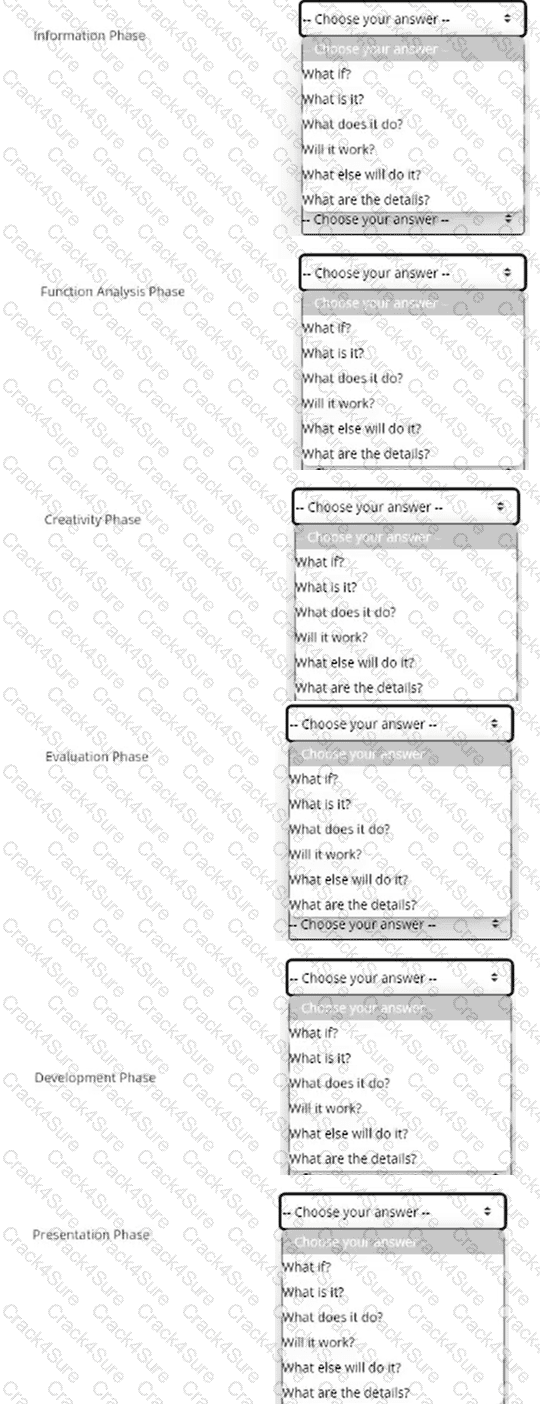
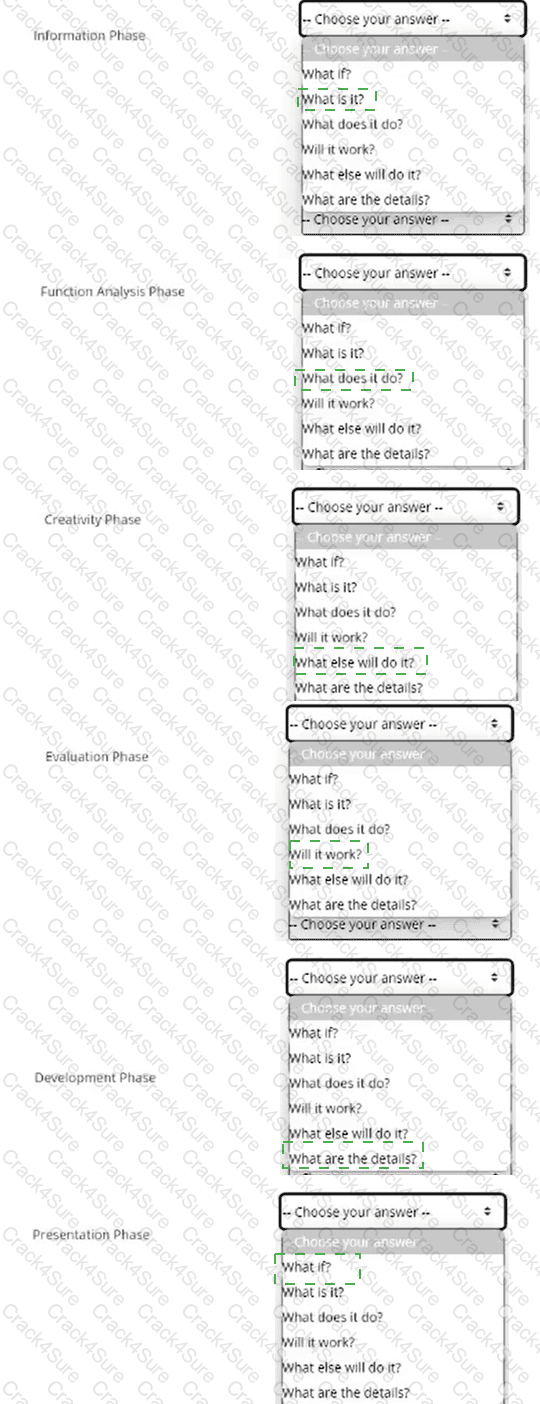
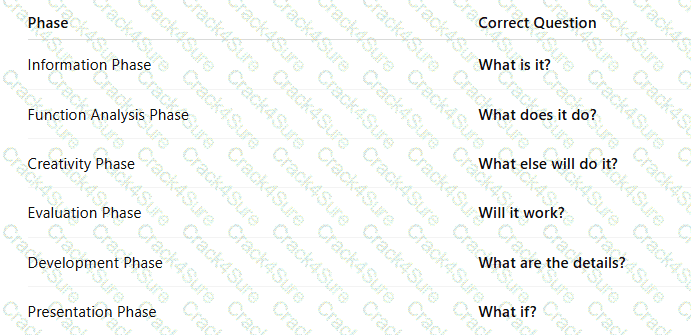
The correct matching follows the logic of the SAVE Value Methodology Job Plan. The Information Phase establishes factual understanding of the study subject, so its controlling question is “What is it?” The SAVE VM Standard describes this phase as reviewing current project conditions and identifying study goals. The Function Analysis Phase asks “What does it do?” because the team defines the project’s functions in active verb/measurable noun form and analyzes which functions require improvement, elimination, or creation. The Creativity Phase asks “What else will do it?” because the team identifies alternative ways to perform the required functions. The Evaluation Phase asks “Will it work?” because ideas are screened against value potential, performance requirements, and resource limits. The Development Phase asks “What are the details?” because selected ideas are expanded into documented alternatives or proposals. Finally, the Presentation Phase aligns with “What if?” because decision makers must understand the implications, adequacy, risks, and value improvement opportunity before approving implementation. SAVE identifies these six phases as sequential and states that each phase provides the information needed for successful execution of the next phase.
References/topics: Value Methodology and Job Plan; Information Phase; Function Analysis Phase; Creativity Phase; Evaluation Phase; Development Phase; Presentation Phase.
Other than the creative ideas list and evaluation scores, which of the following information should be included in a value study report?
Cover page, table of contents, executive summary, and planning documents
Recommended alternatives, stakeholder survey, and a list of prioritized functions
Recommended alternatives, list of information reviewed, and function analysis
Executive summary, list of information reviewed, a FAST flow chart, and VM presentation
The correct answer is C. Recommended alternatives, list of information reviewed, and function analysis . A value study report must document the technical basis of the VM study and provide management with enough objective information to make implementation decisions. The Presentation Phase requires the VM team to prepare presentation/supporting documentation, compare conclusions to success requirements from the Information and Function Analysis Phases, ensure management has full objective information, and prepare a formal report. ( )
Recommended alternatives belong in the report because the Development Phase converts selected ideas into clearly written value alternatives, supported by assumptions, sketches, calculations, cost comparisons, and implementation considerations. ( ) A list of information reviewed is also appropriate because the Information Phase gathers project data, key documents, cost data, quality data, marketing information, process flow charts, and other baseline material. ( ) Function analysis is essential because it records the functional basis of the study, including identified functions, function models, cost drivers, performance attributes, and value-mismatched functions. ( )
Option A is administrative and incomplete. Option B includes a stakeholder survey, which is not a standard core report element. Option D is weakened by “VM presentation,” because the presentation is separate from the report deliverable.
References/topics: Presentation Phase; Value Study Report; Information Phase; Function Analysis Phase; Development Phase; Recommended Alternatives.
Lower-order functions are
Choose 2 answers.
referred to as “assumed” functions.
located outside of the right scope line.
an output of the VM Study.
generally determined by the customer.
The correct answers are A and B . In FAST-based Function Analysis, lower-order functions are also known as assumed or causative functions because they represent the initiating input that causes, enables, or “turns on” the project, product, process, or service. SAVE’s Value Methodology glossary defines a lower-order function as the function selected to initiate the project, product, or process and identifies it as an input outside the subject scope. ( ) The SAVE glossary also states that lower-order functions are not part of the VM study scope and are inputs for the project, product, process, service, or organization.
In a FAST diagram, the study scope is bounded by scope lines. The subject scope lies between the higher-order and lower-order functions; therefore, lower-order functions are positioned outside the study boundary on the input side, conventionally beyond the right scope line. ( ) They are not an output of the VM Study; rather, they are boundary-condition inputs used to establish the function logic path. They are also not generally determined by the customer; customer needs are more closely associated with higher-order functions and value requirements.
References/topics: Function Analysis Phase; FAST Diagramming; Lower-Order Functions; Assumed/Causative Functions; Scope Lines.
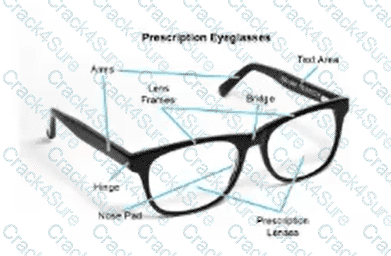
On the Function Logic Path, how do prescription eyeglasses correct vision?
Minimize weight
Secure position
Improve durability
Align focus
The correct answer is D. Align focus . In Function Analysis, the team defines what the subject must do, not what its parts are. SAVE’s study guidance states that functions are described using two-word active verb/measurable noun pairings, and FAST is used to show how project functions relate to each other. ( )
For prescription eyeglasses, the basic function is correct vision . On the Function Logic Path, the “how” question asks: How do eyeglasses correct vision? The best functional answer is align focus because prescription lenses bend and direct light so the image focuses correctly for the user. This directly supports the basic function.
The other choices are supporting or secondary functions. Secure position helps hold the glasses properly on the face, but it does not itself correct vision. Minimize weight improves comfort, and improve durability supports dependability, but neither explains the direct functional mechanism of vision correction. FAST logic is specifically used to map these function relationships through How/Why reasoning, making align focus the correct lower-order function linked to “correct vision.” ( )
References/topics: Function Analysis Phase; FAST Diagramming; Function Logic Path; Basic Function; Lower-Order Function.
Which of the following strategies should be used to enhance understanding of VM proposals presented during the Presentation Phase?
Choose 2 answers.
Rely solely on the graphics without verbal explanations.
Include as many graphics as possible to showcase creativity.
Use baseline and proposed graphics at a similar level of complexity.
Provide clear explanations and context for each graphic presented.
The correct answers are C and D . In the Presentation Phase, the purpose is not simply to display information, but to communicate the developed VM proposals clearly enough for decision makers to understand the recommendation, its basis, and its value improvement opportunity. SAVE’s Value Methodology Standard states that the Presentation Phase should develop a report and/or presentation that documents and conveys the adequacy of the developed alternatives and their associated value improvement opportunity. ( )
Using baseline and proposed graphics at a similar level of complexity helps the audience compare the current condition against the recommended alternative without distortion. If one graphic is overly detailed and the other is simplified, the comparison may become misleading or difficult to evaluate. Providing clear explanations and context is equally important because graphics alone rarely communicate assumptions, functional trade-offs, cost implications, risks, or implementation constraints.
Option A is incorrect because relying only on graphics removes the technical reasoning needed for acceptance. Option B is also incorrect because excessive graphics can dilute the message and distract from the proposal’s functional and value basis.
References/topics: Presentation Phase; VM Proposal Communication; Baseline vs Proposed Comparison; Decision-Maker Understanding; VM Report and Presentation.
What is the ultimate objective of the Function Analysis Phase?
To allocate resources to functions.
To organize functions.
To classify functions.
To prioritize functions.
The correct answer is D. To prioritize functions . The Function Analysis Phase includes several important activities: identifying functions, defining them in active verb/measurable noun form, classifying them as basic or secondary, organizing their relationships, and relating cost or worth where required. However, these activities are not the final purpose by themselves. Their purpose is to determine which functions deserve the team’s focused attention for value improvement.
SAVE’s Value Methodology guidance explains that during Function Analysis, the team defines project functions and reviews them to determine which need improvement, elimination, or creation to meet study goals. ( WSDOT ) The Study Guide also states that functions performed inefficiently or at more than expected cost become the focus of the VM team’s improvement effort. ( ) This means the ultimate output is a prioritized understanding of where value improvement opportunities exist.
Option A may occur in advanced function-cost analysis, but it is not the ultimate objective. Options B and C are necessary intermediate steps, but they support the larger goal of prioritizing functions for creativity, evaluation, and development.
References/topics: Function Analysis Phase; Function Definition; Function Classification; Function Organization; Function Prioritization; Value Improvement Opportunities.
Which of the following are the outputs of the Presentation Phase?
Choose 2 answers.
List of participants
Schedule the VM presentation
The VM study report
List of VM proposals and results
The correct answers are C and D . The Presentation Phase is where the VM facilitator and study team formally communicate the conclusions of the VM study to decision makers. SAVE’s VM Standard Reference states that, in this phase, the facilitator develops a report and/or presentation that documents and conveys the conclusions and results of the VM study.
Therefore, the VM study report is a direct output of the Presentation Phase. It records the developed value alternatives, supporting analysis, cost/performance implications, and the basis for management review. The list of VM proposals and results is also an output because decision makers must understand what proposals were generated, what benefits they offer, and what outcomes or decisions are associated with them.
Option A, list of participants, may appear in a report appendix or study record, but it is not a primary Presentation Phase output. Option B is incorrect because scheduling the VM presentation is a planning/logistics activity, not an output of the phase. The phase produces documented results and communicates VM proposals for decision and follow-up.
References/topics: Presentation Phase; VM Study Report; VM Proposals; Study Results; VM Job Plan.
Which of the following actions would be appropriate for creating an effective evaluation framework?
Choose 2 answers.
Conduct evaluations during the Creativity Phase.
Define clear objectives and success criteria that align with the subject goals.
Use the VM team's gut feel index.
Involve stakeholders in the evaluation process.
The correct answers are B and D . An effective evaluation framework in Value Methodology must be structured, objective, and aligned with the subject’s purpose. The SAVE Value Methodology Standard describes the Evaluation Phase as the point where the team follows a structured process to select ideas with value-improvement potential while delivering required functions and considering performance requirements and resource limits. ( )
Therefore, the facilitator and team must first define clear objectives and success criteria that align with the study subject’s goals. Evaluation cannot be based on preference alone; criteria should connect to function, performance, cost, schedule, risk, quality, user needs, and implementation feasibility. Involving stakeholders is also appropriate because stakeholders help confirm whether the evaluation criteria reflect actual project, customer, owner, or user priorities. Their participation improves acceptance of selected ideas and reduces resistance during later development and implementation.
Option A is incorrect because the Creativity Phase is intended for generating ideas, not judging them. Introducing evaluation too early suppresses divergent thinking. Option C is incorrect because a “gut feel index” is informal and subjective, while VM requires disciplined, traceable evaluation methods.
References/topics: Evaluation Phase; Evaluation Criteria; Stakeholder Engagement; VM Job Plan; Structured Idea Screening.
SMART stands for
Specific, Measureable, Attainable, Reasonable, and Timebound.
Specific, Measureable, Accountable, Relevant, and Timebound.
Standards, Measureable, Attainable, Relevant, and Timebound.
Standards, Measureable, Accountable, Relevant, and Timebound.
Standards, Measureable, Attainable, Reasonable, and Timebound.
Specific, Measureable, Attainable, Relevant, and Timebound.
The correct answer is F: Specific, Measurable, Attainable, Relevant, and Timebound . In Value Methodology, SMART thinking is used to make recommendations, implementation actions, objectives, and follow-up responsibilities clear enough to be managed. A VM proposal or implementation action should not be vague, general, or open-ended. It must state exactly what is to be done, how success will be measured, whether the action can realistically be achieved, how it supports the study objective or project need, and when it must be completed.
“Specific” requires a clear action or target. “Measurable” means the result can be checked through cost, performance, schedule, quality, or other defined criteria. “Attainable” confirms that the action is practical within available resources and constraints. “Relevant” ensures alignment with the value study objectives, functions, and stakeholder requirements. “Timebound” creates accountability through a completion date or defined time frame.
The incorrect options replace key SMART terms with weaker or incorrect words such as Standards , Accountable , or Reasonable . These may be useful concepts in management, but they do not form the standard SMART acronym used in VM action planning.
References/topics: Implementation Phase; VM Action Planning; Proposal Follow-Up; Performance Objectives; VM Programs.
Which of the following activities should a VM Facilitator recommend decision-makers conduct prior to the disposition of VM proposals?
Develop the Implementation Plan
Further develop VM proposals
Resolve VM proposals
Review VM proposals
The correct answer is D. Review VM proposals . Prior to the formal disposition of VM proposals, decision-makers must first understand what has been recommended, why each proposal was developed, what value improvement is expected, and what effects the proposal may have on cost, performance, quality, schedule, and risk. SAVE’s VM Standard Reference describes the Implementation Phase as the point where the sponsoring organization reviews the results of the VM study and decides which VM proposals to implement . ( )
This sequence is important. Review comes before disposition. Disposition means determining whether each VM proposal is accepted, rejected, deferred, modified, or requires additional study. The SAVE Study Guide also identifies common implementation activities as reviewing the preliminary report and then conducting an implementation meeting to determine the disposition of each value alternative. ( )
Option A occurs after proposals are accepted, because the implementation plan is developed for approved actions. Option B may occur only when information is incomplete, but it is not the normal decision-maker activity before disposition. Option C is essentially the disposition activity itself, not the step before it.
References/topics: Implementation Phase; VM Proposal Review; Preliminary Report; Disposition of Value Alternatives; Implementation Planning.
When selecting VM study team members, which of the following are preferable?
Choose 2 answers.
Expertise in their field
Availability to attend
Promoting their ideas
Closed-mindedness
The preferable qualities are expertise in their field and availability to attend . In the Preparation or Pre-Workshop stage, the Value Study must be properly planned, organized, staffed, and scheduled before the formal Job Plan begins. The SAVE Study Guide identifies Pre-Workshop activities such as identifying Value Team members , obtaining their commitment to project objectives, and determining study dates, times, location, and other logistical needs. ( )
Technical capability is essential because VM team members must gather and analyze information, identify functions, contribute ideas, evaluate ideas using their experience and expertise, develop alternatives, and present results. The guide specifically describes technical champions as team members selected because of their technical expertise. ( ) Availability is equally important because team members are expected to participate in all meetings, and timely attendance is listed as a responsibility. ( )
Option C is not preferred because VM requires collaborative idea generation, not personal advocacy or forcing individual solutions. Option D is directly contrary to VM team behavior, since the guide stresses open-mindedness and avoiding roadblocks.
References/topics: Preparation Phase; Pre-Workshop Activities; Value Team Member Selection; Team Member Responsibilities; VM Facilitation and Team Dynamics.
What is the role of the VM facilitator during the Development Phase?
Choose 2 answers.
Review VM proposals
Prepare VM proposals
Rewrite VM proposals
Research VM proposal background
The correct answers are A. Review VM proposals and C. Rewrite VM proposals . During the Development Phase, selected ideas are converted into formal VM proposals with enough documentation for decision makers to determine whether implementation is justified. SAVE’s VM Standard Reference states that, in this phase, the VM study team develops selected ideas into VM proposals with sufficient documentation for implementation decisions.
The facilitator’s role is not to become the technical author or researcher for each proposal. Instead, the facilitator manages the process, maintains consistency, reviews proposal quality, checks clarity, confirms that required elements are included, and helps revise or rewrite proposal narratives so they are understandable, complete, and decision-ready. This aligns with the facilitator’s broader duty to lead the multidisciplinary VM process, keep the team disciplined within the Job Plan, and ensure outputs support value-based decisions. SAVE describes VM as a systematic process used by a multidisciplinary team led by a qualified VM facilitator.
Option B is incorrect because proposal preparation is primarily the responsibility of assigned team members or technical specialists. Option D is incorrect because background research is normally performed by the proposal owner or subject-matter experts, not by the facilitator as a primary role.
References/topics: Development Phase; VM Proposal Development; VM Facilitator Role; Proposal Review and Revision; VM Job Plan.
A FAST diagram is used to
Choose 3 answers.
Identify the sequence of functions.
Test the validity of functions under study.
Illustrate the relationship of functions to each other.
Help identify missing functions.
Identify required activities.
The correct answers are B, C, and D . In the Function Analysis Phase, the FAST diagram is used as a function-logic model, not as an activity schedule or work-sequence chart. The VM Guide describes FAST, or Function Analysis System Technique, as one of the most effective methods for classifying and organizing functions and as a powerful diagramming technique for analyzing the relationship of functions . It specifically states that FAST diagrams are used to show the specific relationships of functions, test the validity of functions under study, and help identify missing functions. ( pdfcoffee.com )
Therefore, C is correct because FAST visually illustrates how functions relate through How/Why logic. B is correct because the diagram tests whether identified functions are valid within the functional logic path. D is correct because gaps in the How/Why logic expose missing functions.
Option A is not the best answer because FAST does not primarily identify a chronological sequence of functions. Option E is incorrect because FAST focuses on functions, not required activities or tasks.
References/topics: Function Analysis Phase; FAST Diagramming; Function Logic; Missing Functions; Validity of Functions.
Which function of prescription eyeglasses is located in the “When” direction?
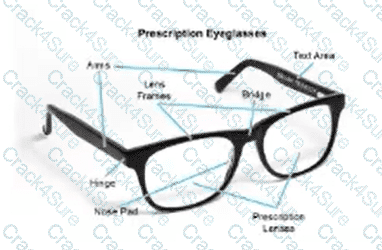
Facilitate sight
Maintain position
Modify vision
Fold eyeglasses
The correct answer is B. Maintain position . In FAST diagramming, the horizontal logic path normally answers How and Why . The vertical “When” direction is used for supporting or secondary functions that occur in relation to a function on the critical function logic path. SAVE’s VM Glossary defines a FAST diagram as a graphical representation of dependent function relationships and specifically identifies the labeled How, Why, and When arrows as FAST components. It also explains that vertical lines connect secondary functions to required secondary functions through their “When” relationships . ( )
For prescription eyeglasses, Modify vision is the core/basic function because the lenses correct or adjust the user’s vision. Facilitate sight is a higher-order purpose explaining why the basic function exists. Maintain position is a supporting function because the frame, bridge, temples, and nose pads keep the lenses properly located in front of the eyes while the eyeglasses modify vision. This function happens concurrently with the basic function, making it appropriate in the When direction. Fold eyeglasses is only a convenience/storage function, not the functional support required during vision correction.
References/topics: Function Analysis Phase; FAST Diagramming; When Relationship; Secondary Function; Prescription Eyeglasses Function Model.
A VM program’s standard operating procedures should include
a requirement that each VM team member be independent from the development team.
how subjects for VM studies are identified.
a listing of standard functions to be included in a VM study.
a required number of creative ideas to be generated in a study.
The correct answer is B . A VM program’s standard operating procedures should define how candidate subjects or projects are identified, screened, selected, prioritized, and authorized for VM studies. This belongs to VM program governance because limited VM resources must be applied to subjects with appropriate scope, timing, information availability, organizational importance, and value-improvement potential. SAVE’s Value Standard states that the standard assists managers and value program managers in applying VM within organizations in a consistent manner, and also guides practitioners and managers in determining when to apply VM to a project to maximize innovation and implementation benefits. ( wsdot.wa.gov )
Option A is too rigid. SAVE recognizes multidisciplinary teams of experienced professionals and stakeholders; people outside the project may be added for perspective, but every team member is not required to be independent from the development team. ( wsdot.wa.gov ) Option C is incorrect because functions are not pre-listed generically; they are identified specifically for the study subject during Function Analysis. Option D is also incorrect because creativity should encourage broad idea generation, but the SOP should not prescribe a fixed number of ideas as a universal requirement. VM procedures should standardize the management process, not force artificial technical outputs.
References/topics: VM Programs; Program SOPs; Study Subject Identification; Value Program Management; Study Selection Criteria.
A VM program manager has limited time available to coordinate VM studies. Rank their priorities.
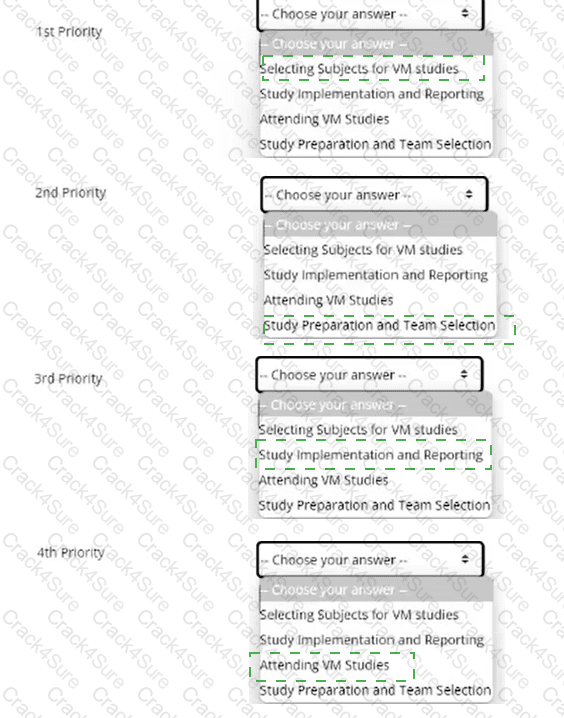
1st: Selecting Subjects for VM Studies
2nd: Study Preparation and Team Selection
3rd: Study Implementation and Reporting
4th: Attending VM Studies
The correct priority order reflects the highest-leverage responsibilities of a VM Program Manager. The first priority is selecting subjects for VM studies because the program’s value depends on choosing projects with meaningful improvement potential, management relevance, and timing suitable for influence. SAVE’s Value Methodology Standard identifies a typical duty of the value program unit as selecting projects for VM study, obtaining approval, and securing team members.
The second priority is study preparation and team selection . A VM study can fail before the workshop begins if scope, data, logistics, and team composition are weak. The Standard specifically requires team composition to be reviewed so customer, technical, and management areas are represented, and the team leader confirms schedule, location, support needs, and data-gathering assignments.
The third priority is study implementation and reporting , because accepted proposals must be tracked and benefits verified. SAVE guidance assigns the value program unit responsibility for progress reporting and monitoring implementation of accepted VM proposals. Attending VM studies is lowest because personal attendance is less critical than governance, study selection, preparation, and implementation control.
References/topics: VM Programs; Value Program Manager Responsibilities; Study Selection; Team Selection; Implementation Tracking and Reporting.
A function performance specification:
Choose 3 answers.
accurately identifies requirements specific to functions.
puts parameters on VM team options.
defines constraints on designers.
communicates customer performance wants and needs.
assists in uncovering hidden assumptions.
The correct answers are A, D, and E . A Function Performance Specification is used to define performance requirements in terms of the functions that must be achieved, not in terms of a predetermined design solution. In VM, value is linked to functions measured by the customer’s performance requirements, and the methodology seeks alternate ways to accomplish a function while meeting customer performance expectations. ( )
Therefore, it accurately identifies requirements specific to functions . FPS characterizes each function through criteria, expected performance levels, and flexibility, which makes the requirement measurable and traceable. ( Value Analysis ) It also communicates customer performance wants and needs because it documents what the user or customer expects the solution to accomplish. The FPS approach expresses needs and expected performance without reference to a specific solution, allowing broader innovation while maintaining customer requirements. ( Value Analysis )
It also helps uncover hidden assumptions because vague wants must be translated into explicit criteria, levels, and flexibility. Option B is incorrect because FPS does not evaluate or limit VM team options; it defines functional performance expectations. Option C is incorrect because FPS should avoid constraining designers to a specific design.
References/topics: Function Analysis Phase; Function Performance Specification; Customer Requirements; Performance Criteria; Functional Requirements.
There is resistance to a new VM program in an organization. What should a VM program coordinator focus on to increase acceptance of VM?
Explain the difference between VM and other value-improving programs (TRIZ, Lean 6-Sigma, etc.)
Highlight that there are many areas with deficiencies that will be improved by VM.
Prepare a memo for the CEO to sign that requires staff to incorporate VM in all departments.
Identify a few subjects that would benefit from change and recommend a VM study through dialogue with staff.
The correct answer is D. Identify a few subjects that would benefit from change and recommend a VM study through dialogue with staff . When an organization resists a new VM program, the coordinator should build acceptance through participation, relevance, and early demonstrated value—not by forcing compliance or emphasizing deficiencies.
SAVE’s Study Guide describes VM as a systematic process used by a multidisciplinary team to improve value through function analysis, with value improvement achieved by identifying alternate ways to accomplish required functions. ( ) This means VM acceptance is strongest when people see how the method applies to real organizational problems. The Study Guide also emphasizes that management should support resources and implementation, while affected parties should be involved early to gain maximum benefit from a Value Study. ( )
Option A may help education, but it does not directly overcome resistance. Option B can sound accusatory and may increase defensiveness. Option C creates top-down compliance, not genuine acceptance. Option D is best because it uses dialogue, selects practical pilot opportunities, and allows staff to experience VM as useful rather than imposed.
References/topics: VM Programs; Program Acceptance; Value Manager Role; Stakeholder Engagement; Organizational Change; Value Study Selection.
On a FAST diagram, the
Choose 3 answers.
scope lines represent limits of the VM study subject.
scope lines are shown as solid lines.
basic function is to the immediate right of the left scope line.
higher order function is to the immediate left of the left scope line.
lower order function is to the immediate left of the right scope line.
The correct answers are A, C, and D . In FAST diagramming, scope lines define the boundary of the subject being studied. They separate what is included in the VM study from functions that explain the larger reason for the study or the initiating input outside the study boundary. SAVE’s VM glossary explains that a FAST diagram includes scope lines and classified functions such as basic, higher-order, and lower-order functions. It also defines subject scope as the portion of the project, product, or process selected for the value study. ( )
Option A is correct because scope lines represent the limits of the VM study subject. Option C is correct because the basic function is placed immediately to the right of the left scope line; it represents the essential purpose of the subject within the study. Option D is correct because the higher-order function is placed to the left of the left scope line and explains the broader need or goal for which the basic function exists. SAVE defines the higher-order function as outside the scope of the subject under study. ( )
Option B is not selected because the key convention is boundary placement, not “solid line” style. Option E is incorrect because the lower-order function is outside the right scope boundary, not immediately left of it.
References/topics: Function Analysis Phase; FAST Diagram; Scope Lines; Basic Function; Higher-Order Function; Lower-Order Function.
Which of the following play a part in effective VM Facilitation?
Choose 3 answers.
Recognizing disruptive behavior is personal
Belief in the group and its possibilities
Familiarity of facilitation concepts and methods
Practiced ability to plan appropriate group processes
Technical knowledge in the subject area
The correct answers are B, C, and D . Effective VM facilitation depends primarily on the facilitator’s ability to guide a multidisciplinary team through a structured process, not on personally solving the technical problem. SAVE’s VM Standard Reference defines VM as a systematic process used by a multidisciplinary team, led by a qualified VM facilitator , to improve value through function analysis. It also states that a VM study is facilitated by someone competent in VM techniques, ideally a CVS®.
Therefore, the facilitator must have belief in the group and its possibilities because VM relies on team intelligence, cross-functional input, creativity, and consensus-building. The facilitator must also have familiarity with facilitation concepts and methods , including managing participation, conflict, divergent thinking, convergence, and decision flow. Finally, the facilitator needs a practiced ability to plan appropriate group processes , because each VM phase requires the right method, timing, participation structure, and output control.
Option A is incorrect because disruptive behavior should be managed objectively, not treated as personal. Option E is not a core facilitation requirement; technical knowledge belongs mainly to subject-matter team members, while the facilitator protects the VM process.
References/topics: VM Facilitation and Team Dynamics; Facilitator Competence; Group Process Planning; Team Participation; VM Study Leadership.
Match the statements that best identify a FAST diagram and flowchart.
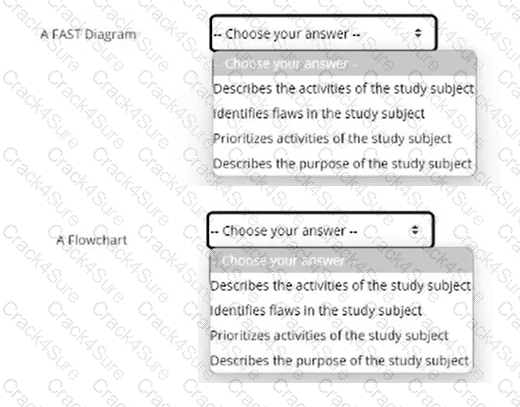
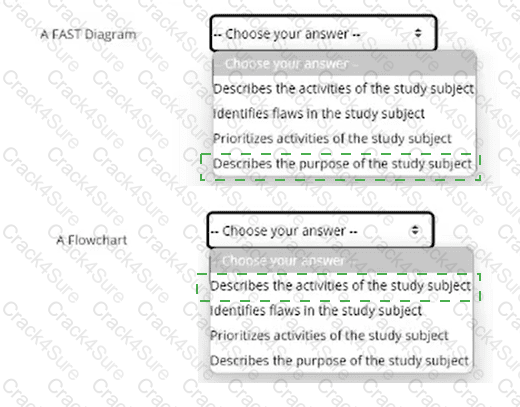

The correct matches are FAST Diagram = Describes the purpose of the study subject and Flowchart = Describes the activities of the study subject . In Value Methodology, a FAST diagram is not an activity map. It is a function model. SAVE’s Study Guide defines a function as the original intent or purpose that a product, service, or process is expected to perform, expressed in active verb/measurable noun form. It also defines FAST as a graphical representation of dependent relationships between functions within a project. Therefore, FAST is used to understand the functional purpose and how functions logically relate through “how/why” thinking.
A flowchart is different. It represents process flow: the sequence of activities, steps, or operations used by the study subject. SAVE’s glossary defines a process as a sequence of activities that delivers a product or project. That aligns directly with the option “Describes the activities of the study subject.”
“Identifies flaws” is too narrow; defects may be discovered during analysis, but that is not the defining purpose of either tool. “Prioritizes activities” is also incorrect because prioritization normally belongs to evaluation or decision methods, not basic FAST or flowchart definition.
References/topics: Function Analysis Phase; FAST Diagramming; Function Modeling; Process Flowchart; How-Why Logic.
Match the following to their appropriate “How” direction on the function logic path for the prescription eyeglasses.
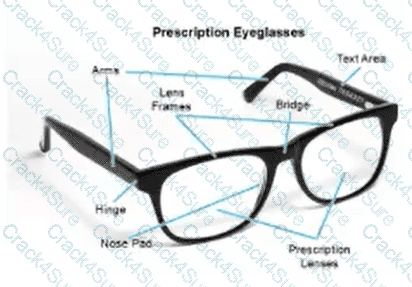
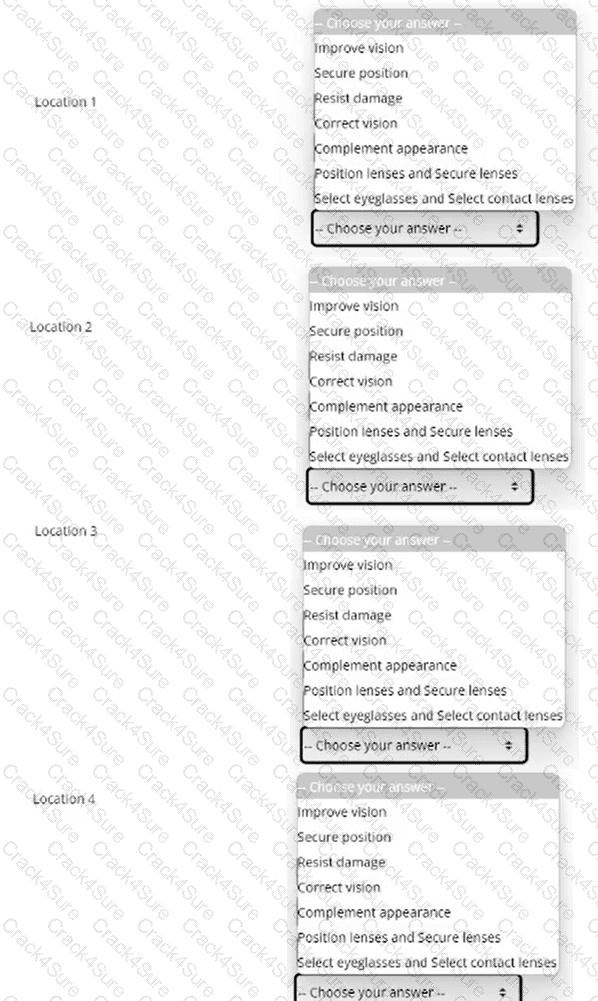
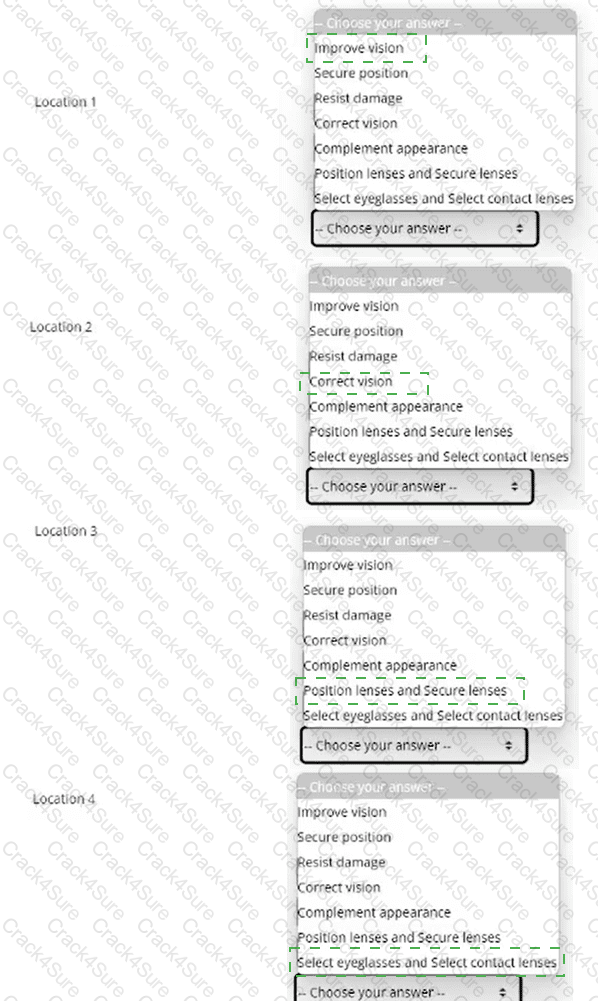
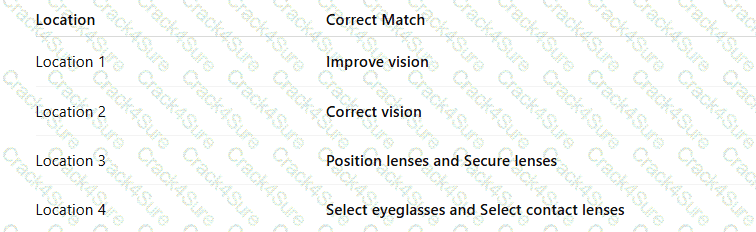
The correct “How” direction follows the classical FAST logic path from the broader purpose toward the dependent means of accomplishment. SAVE defines FAST as a graphical representation of dependent relationships between functions and states that a Classical FAST model displays function interrelationships using how-why logic . In this eyeglasses example, Improve vision is the higher-order purpose: it explains why the basic function exists. The basic function is Correct vision , because prescription eyeglasses exist primarily to correct the user’s vision. Moving in the “How” direction, the system corrects vision by Position lenses and Secure lenses ; the frame, bridge, arms, and nose pads exist to keep corrective lenses in the proper relationship to the eyes. The farthest “How”/lower-order decision is Select eyeglasses and Select contact lenses , representing the selected means or alternative correction approach.
The distractors are not on the critical function logic path. Secure position and Resist damage are supporting or secondary dependability functions. Complement appearance is a sell/aesthetic function, because it improves user acceptance but does not define the primary functional logic. SAVE’s glossary distinguishes higher-order, lower-order, and secondary functions and explains that secondary functions support the basic function through a specific design approach.
References/topics: Function Analysis Phase; FAST Diagramming; How-Why Logic; Critical Function Logic Path; Basic, Higher-Order, Lower-Order, and Secondary Functions.
A team wants to skip Function Analysis because the design solution already appears obvious. What is the best CVS-level response?
Agree, because Function Analysis is optional when experts are present
Skip directly to Development to save time
Perform Function Analysis because it is essential to a valid VM study
Replace Function Analysis with procurement benchmarking only
The correct answer is C . Function Analysis is not an optional administrative exercise. SAVE’s VM Standard states that, for a study to qualify as a Value Study, the team must follow an organized Job Plan and perform Function Analysis as defined in the standard. It also states that the team defines functions using active verb/measurable noun language and analyzes them to determine which need improvement, elimination, or creation.
Option A is wrong because expert confidence does not replace the VM process. Experts are valuable, but they often carry design bias. Option B destroys the logic of the Job Plan because Development should refine selected ideas, not bypass function understanding. Option D may provide useful cost intelligence, but benchmarking does not identify required functions or function relationships. The disciplined CVS answer is that Function Analysis protects the team from solution fixation. It reveals what must be accomplished, which functions consume resources, and where value mismatches exist. Skipping it reduces VM to ordinary design review.
References/topics: Function Analysis Phase; Valid Value Study; VM Job Plan Discipline.
What are tools the VM facilitator might use during the Creativity Phase?
Choose 3 answers.
Reverse brainstorming
Hitchhiking
SWOT analysis
Mind-mapping
RACI matrix
The correct answers are Reverse brainstorming, Hitchhiking, and Mind-mapping . In the Creativity Phase , the VM facilitator leads the team in generating many possible alternatives for performing the required functions identified during Function Analysis. The objective is divergent thinking: produce a broad range of ideas without judging them too early. SAVE’s certification study material identifies creativity as a distinct VM Job Plan area and emphasizes idea generation before moving into Evaluation. ( )
Reverse brainstorming is appropriate because it helps the team approach a function or problem from the opposite direction, often revealing hidden assumptions and new solution paths. Hitchhiking is also a valid creativity technique because one team member builds on another person’s idea, improving participation and expanding idea quantity. Mind-mapping supports creativity by visually organizing related thoughts around a central function or issue, helping the team see connections and generate additional alternatives.
SWOT analysis is not primarily a Creativity Phase tool; it is more commonly used for strategic assessment. RACI matrix is also incorrect because it assigns responsibilities and accountabilities, which fits planning or implementation control, not creative idea generation.
References/topics: Creativity Phase; Idea Generation; Brainstorming Techniques; Divergent Thinking; VM Facilitation.
A higher-order function
Choose 2 answers.
represents specific needs satisfied by the basic function.
describes the output of the basic function.
is fundamental to the subject scope.
describes input for the basic function.
The correct answers are A and B . In Function Analysis and FAST diagramming, a higher-order function is positioned to the left of the basic function and answers the question “Why is this function performed?” It represents the broader purpose or need that is satisfied when the basic function is successfully achieved. Therefore, option A is correct because the higher-order function expresses the customer, user, or project need served by the basic function.
Option B is also correct because the higher-order function can be understood as the output or result produced by accomplishing the basic function. In FAST logic, the basic function performs a required action, and the higher-order function explains the reason or outcome of that action. It is not normally the detailed mechanism for achieving the basic function.
Option C is incorrect because the basic function , not the higher-order function, is fundamental to the subject scope. The higher-order function often lies just outside or above the study scope as the reason the basic function is needed. Option D is incorrect because inputs or enabling actions are usually associated with lower-order or “how” functions, not higher-order “why” functions.
References/topics: Function Analysis Phase; FAST Diagramming; Higher-Order Function; Basic Function; How/Why Logic.
Place the process flow chart for the Function Performance Specification in the correct order.
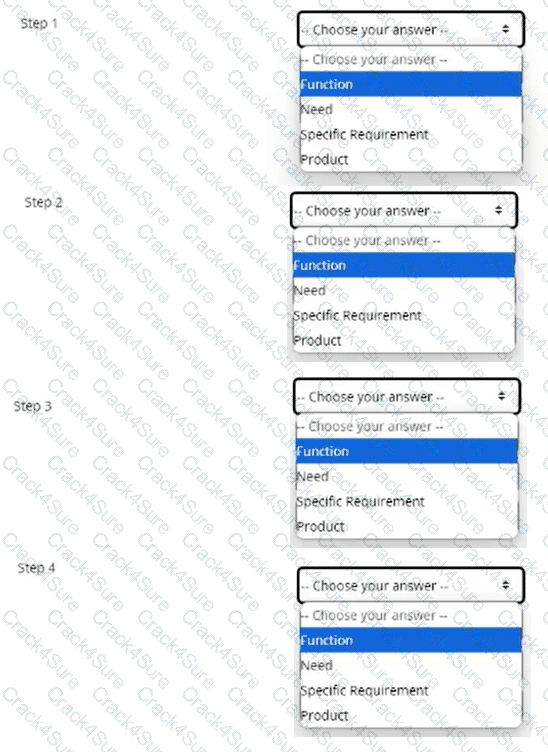
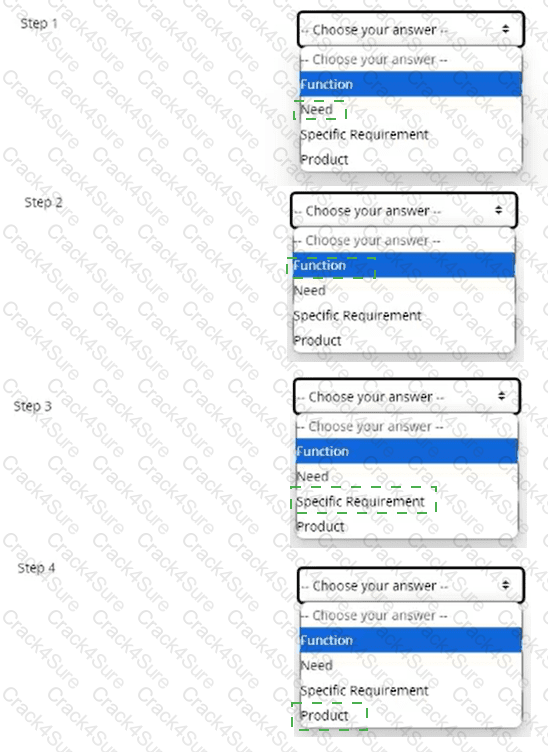
Need ? Function ? Specific Requirement ? Product
The correct order is Need ? Function ? Specific Requirement ? Product . This is the exact logic of the Function Performance Specification process. The VM Guide figure for Function Performance Specification shows the sequence as “Need Function Specific Requirement Product” , where a user need is translated into a function, then into measurable requirements, and finally into a product solution.
The sequence is important because Value Methodology begins with the user’s need or desire , not with a predetermined product. After the need is understood, the VM team defines the function that satisfies that need, normally in active verb/measurable noun format. SAVE’s study-guide material explains that work functions are quantitative and stated using an active verb and measurable noun. The next step is the specific requirement , where the function is converted into measurable performance or quality criteria, such as assessment criteria, level, and flexibility. Only after the need, function, and requirement are clear should the team identify the product , which is the solution provided to satisfy the defined need. Starting with “Product” would be a classic VM error because it locks the team into a solution before understanding function.
References/topics: Function Analysis Phase; Function Performance Specification; Need; Function; Specific Requirement; Product; Performance Criteria.
Which of the following assists the VM Facilitator in creating a collaborative client relationship?
Choose 3 answers.
Diagnosing client needs and creating appropriate VM Job Plan elements to achieve intended outcomes
Focusing on structure
Analyzing organizational involvement
Dictating tasks, deliverables, roles, and responsibilities
Clarifying mutual involvement
The correct answers are A, C, and E . A VM Facilitator creates a collaborative client relationship by first diagnosing client needs and then tailoring the VM Job Plan to produce the intended outcomes. Value Methodology is not a rigid checklist; it is a systematic, function-oriented team process led by a qualified facilitator to improve value. ( Value Engineering ) Therefore, the facilitator must understand the client’s objectives, constraints, decision environment, and expected deliverables before structuring the study.
Analyzing organizational involvement is also essential because successful VM depends on the correct sponsor, decision-makers, technical experts, users, and stakeholders being involved at the right level. The SAVE certification study material identifies Pre-Workshop responsibilities such as identifying team members, obtaining commitment, and preparing the study structure. ( )
Clarifying mutual involvement completes the collaborative relationship by defining how the facilitator, client, sponsor, team, and management will participate. This builds shared ownership and prevents misunderstanding. Option B is too narrow because structure alone does not create collaboration. Option D is incorrect because “dictating” tasks and responsibilities is directive, not collaborative.
References/topics: VM Facilitation; Client Relationship; Preparation Phase; Team Dynamics; VM Job Plan Planning.
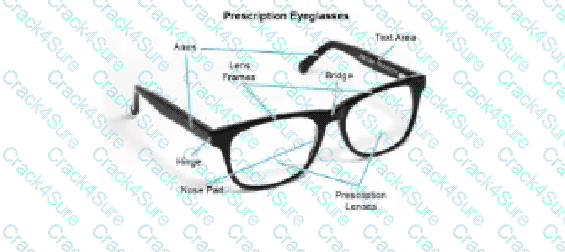
Which of the following is an “all-the-time” function in a FAST diagram for prescription eyeglasses?
Improve focus
Display information
Position lenses
Access vision
The correct answer is C. Position lenses . In FAST diagramming, functions are expressed in a disciplined active verb / measurable noun format, and the purpose of the diagram is to show how project, product, or process functions logically relate to each other. The SAVE certification study material identifies FAST as a graphical mapping tool that helps team members understand how functions relate, while preserving the basic function and analyzing supporting functions. ( )
An “all-the-time” function is a supporting or simultaneous function that must occur continuously while the product performs its basic function. FAST construction tests this by asking: when this function is being performed, what other function must also occur? This “when” relationship identifies functions that occur together, not necessarily functions timed by a clock.
For prescription eyeglasses, the lenses must be held in the correct optical position relative to the wearer’s eyes at all times. Therefore, Position lenses is the best all-the-time function. Improve focus and Access vision describe higher-order or basic-path purposes, while Display information is not a normal function of prescription eyeglasses.
References/topics: Function Analysis Phase; FAST Diagramming; All-the-Time Functions; Basic and Secondary Functions; Function Logic.
3 Months Free Update
3 Months Free Update
3 Months Free Update



TESTED 20 Sep 2026