Pre-Summer Special Sale - 70% Discount Offer - Ends in 0d 00h 00m 00s - Coupon code: spcl70

Practice Free CPXP Certified Patient Experience Professional Exam Questions Answers With Explanation

We at Crack4sure are committed to giving students who are preparing for the The Beryl Institute CPXP Exam the most current and reliable questions . To help people study, we've made some of our Certified Patient Experience Professional exam materials available for free to everyone. You can take the Free CPXP Practice Test as many times as you want. The answers to the practice questions are given, and each answer is explained.

Question # 6

What do patient feedback measures capture patient perceptions of?

A.

What and when things happened

B.

What and how frequently things happened

C.

Where and when things happened

D.

Where and how frequently things happened

Question # 7

How do service recovery models BEST ensure understanding and resolution of patient and family concerns?

A.

By allowing managers to offer patients compensation

B.

By empowering all levels of staff to address patient concerns

C.

By offering a formal apology

D.

By encouraging patients to voice concerns

Question # 8

Which is the MOST important element to consider when selecting a patient experience survey vendor for an organization?

A.

Use of externally validated and reliable survey instruments

B.

Use of the vendor by competitors

C.

Pricing of the vendor ' s services

D.

Ability to provide reliable longitudinal data

Question # 9

A non-English-speaking patient is asking questions that indicate a lack of understanding of the procedure that the patient is about to undergo. Which component of the patient ' s rights has been neglected?

A.

Respect for cultural diversity

B.

Confidentiality of personal health information

C.

Informed consent

D.

Patient’s right to file a complaint

Question # 10

Which statement BEST describes HCAHPS?

A.

An internal employee engagement survey used only for hospital workforce culture

B.

A national, standardized, publicly reported survey of patients’ perspectives of hospital care

C.

A complaint-resolution workflow used only in ambulatory clinics

D.

A financial benchmarking tool for payer reimbursement performance

Question # 11

An organization has decided to create behavior standards to specify what behaviors are expected. Which statement describes an appropriate implementation of this practice?

A.

Focus all behavior standards on the external customer because that is the primary target.

B.

Understand that on a very busy day, staff might not be able to uphold all behavior standards.

C.

Create broad service standards such as “demonstrate a positive attitude” so that they are applicable.

D.

Engage staff in creating the behavior standards and ensure that everyone signs the final product.

Question # 12

A patient experience professional has received complaints from patients and their families about a lack of communication from the nurses concerning the patients’ care. In an effort to build powerful relationships with the care staff, which of the following is the BEST way to engage the patients and their families in communication?

A.

Bedside shift report

B.

Hourly rounding

C.

Leadership rounding

D.

Whiteboard use

Question # 13

Which data visualization illustrates the impact of process change to staff related to patient experience improvement efforts?

A.

Bar graphs

B.

Pie charts

C.

Run charts

D.

Box and whisker diagrams

Question # 14

Regarding action plans, what does the acronym SMART stand for?

A.

Short, manageable, accurate, regulated, transparent

B.

Specific, measurable, achievable, relevant, time-bound

C.

Statistical, measurable, accurate, reliable, tabulated

D.

Specialized, marketed, accountable, reliable, tabulated

Question # 15

What is Gemba when used within the Lean process methodology?

A.

Collaboration to improve

B.

Continuous improvement designs

C.

Location where value is created

D.

Reduced waste in future mapping

Question # 16

Which practice BEST ensures learning across interdisciplinary teams?

A.

Using patient comment cards

B.

Forming department service councils

C.

Conducting patient experience training

D.

Implementing a service champion network

Question # 17

Which is the MOST commonly reported cause of adverse events affecting limited English proficiency/culturally diverse patients?

A.

Professional interpreters are not adequately trained to translate in medically challenging situations.

B.

Family members, friends, and nonqualified staff are used as medical interpreters.

C.

Administrators fail to hire bilingual staff to fulfill appropriate language services.

D.

Staff overlook cultural nuances, creating assumptions that affect patient safety.

Question # 18

Which of the following is the MOST effective team structure to improve the patient experience around pain management?

A.

Physician representatives and pain management specialists

B.

Director of pharmacy, patient experience leader, and nursing leadership

C.

Representatives from the nursing staff and the unit director

D.

Front-line nursing and pharmacy staff, directors, and physician representatives

Question # 19

Which of the following can ONLY be achieved through qualitative data collection methods?

A.

Determining the healthcare priorities of the community served

B.

Identifying top opportunities for patient experience improvement

C.

Understanding why patients feel a certain way about their care experiences

D.

Measuring a healthcare organization’s performance on patient satisfaction

Question # 20

According to consumers, what is the MOST important component of the healthcare experience?

A.

" Listen to me. "

B.

" Provide me with information. "

C.

" Educate me on my condition. "

D.

" Show me empathy. "

Question # 21

Which of the following introductions would BEST help a physician build trust and begin to earn confidence from a patient?

A.

" Good afternoon, Mrs. S. I ' m not quite sure how to pronounce your last name. I ' m Dr. Jones, an emergency medicine doctor here at this hospital. Why are you visiting the emergency department today? "

B.

" Good afternoon, Mrs. S. I ' m Dr. Jones. What brings you in today? "

C.

" Good afternoon. I want to make sure that I pronounce your last name correctly. Could you help me with this? Thank you. I ' m Dr. Jones, an emergency medicine doctor. "

D.

" Good afternoon. I want to make sure that I pronounce your last name correctly. Could you help me with this? Thank you. I ' m Dr. Jones, an emergency medicine doctor. We are going to take good care of you. "

Question # 22

Focusing on which departments is a strategy to move overall organizational performance for patient perception of care?

A.

Departments that receive the highest number of survey returns

B.

Departments that receive the lowest amount of survey returns

C.

Departments that focus on medical patients

D.

Departments that focus on ICU patients

Question # 23

Which is the BEST method to motivate staff to make patient-centered changes?

A.

Read a patient complaint letter.

B.

Invite a former patient to share his or her story.

C.

Post department and unit scores in the breakroom.

D.

Post organizational scores in the lobby.

Question # 24

Who is required to be named in a resolution letter in response to a patient grievance?

A.

The hospital contact person

B.

The nurses and doctors who cared for the patient

C.

The nurse manager of the unit where the patient stayed

D.

The chief experience officer of the hospital

Question # 25

Referencing the Change Model graph below, where in these zones does “The Point of Decision” usually occur?
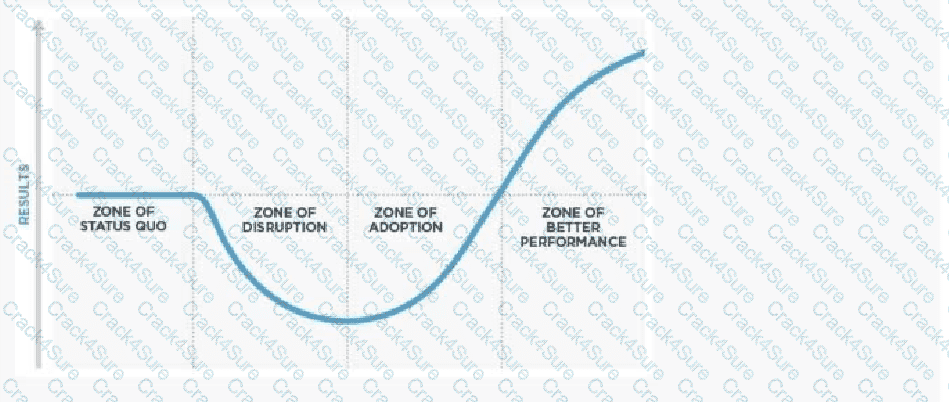
CPXP question answer

A.

At the midpoint of the “Zone of Status Quo”

B.

In between the “Zone of Status Quo” and “Zone of Disruption”

C.

In between the “Zone of Disruption” and “Zone of Adoption”

D.

In between the “Zone of Adoption” and “Zone of Better Performance”

Question # 26

The patient experience professional identifies experience-based co-design (EBCD) as the best approach to understand and ease growing challenges in an outpatient oncology setting. Which of the following is the BEST strategy to increase stakeholder collaboration in the process?

A.

Meet with a project manager and define tactics for an outpatient oncology action plan.

B.

Develop a series of staff and patient workshops to capture dialogue about different aspects of outpatient oncology services.

C.

Schedule exclusively in-person focus groups for current patients to redesign the process.

D.

Develop a questionnaire for patients to learn about their exam room experience in the outpatient oncology care setting.

Question # 27

Which option is BEST used to understand an individual’s patient experience within a healthcare organization?

A.

Patient and family advisory council

B.

Patient focus group

C.

Patient complaint

D.

Patient shadowing

Question # 28

The patient and family advisory council (PFAC) of a large healthcare institution is asked to give input on the design of a new ICU. Using experience-based co-design, it would be best for the PFAC to focus its energies on which component FIRST?

A.

Aesthetics of experience, focusing on usability

B.

Engineering, focusing on reliability and safety

C.

Performance, focusing on functionality

D.

Structure, focusing on building construction

Question # 29

Which practice BEST suggests an organization ' s commitment to providing care that is patient- and family-centered?

A.

Ensuring employee participation on patient experience quality committees

B.

Addressing the patient ' s definition of family

C.

Preserving patient confidentiality with a code word

D.

Extending visitation hours for critically ill patients

Question # 30

Which of the following BEST explains the distinction between patient experience and patient satisfaction?

A.

Patient experience is subjective while patient satisfaction is objective.

B.

Patient experience is focused on service outcomes while patient satisfaction is focused on happiness.

C.

Patient experience is about individual encounters while patient satisfaction addresses overall perceptions.

D.

Patient experience is about the integrated encounter while patient satisfaction addresses individual expectations.

Question # 31

A patient speaks a language other than the primary language at the hospital where they are receiving care. Because the care team recognizes and respects patient rights, they utilize a medical interpreter for verbal and written communication. What is the BEST rationale for why this would be necessary?

A.

The patient may be able to understand pictures.

B.

The patient should be able to refuse treatment.

C.

The patient should be able to state their preference for how they receive information.

D.

The patient should be able to receive information in a manner and format that they understand.

Question # 32

Which should be the FIRST step in implementing a bedside shift report as a new process?

A.

Providing education to staff about how to do shift report at the bedside

B.

Mandating the expectation that shift report must occur at the bedside every time

C.

Establishing with staff why they need to change their current practice

D.

Having nurses commit in writing that reports will occur at the bedside

Question # 33

What should healthcare organizations do to ensure more equitable health outcomes and a better patient experience?

A.

Provide comprehensive diversity and inclusion training for all staff.

B.

Work closely with community organizations to bring care to where people are.

C.

Engage the communities they serve in understanding the bias they believe exists.

D.

Ensure an understanding of the social determinants of health that influence a patient ' s life.

Question # 34

What is the BEST way to immediately address any type of patient experience failure?

A.

Kaizen events

B.

Capture complaints

C.

Grievance letters

D.

Service recovery

Question # 35

The spouse of a dying patient continuously asks to speak to multiple members of the healthcare team and seems to be confused about the next steps in the patient’s care. Why is the best course of action a family meeting with the members of the multidisciplinary team?

A.

To support the spouse, who needs more support than the patient at this time

B.

To discuss palliative care, which is the most important aspect of the situation

C.

To avoid splitting the staff and creating an ambiguous atmosphere for the patient and the staff

D.

To ensure that all stakeholders review the plan of care in a collaborative manner

Question # 36

Which of the following represents an element of leading change?

A.

Sustaining acceleration

B.

Picking a leader

C.

Formulating a communication plan

D.

Implementing rapid cycle improvement

Question # 37

Which statement BEST reflects The Beryl Institute’s definition of patient experience?

A.

The patient’s satisfaction score after discharge

B.

The sum of all interactions, shaped by an organization’s culture, that influence patient perceptions across the continuum of care

C.

The clinical outcome achieved during treatment

D.

The efficiency of registration, billing, and discharge processes only

Question # 38

Which leadership action MOST supports a sustainable culture of patient experience improvement?

A.

Reviewing patient experience scores privately at the executive level only

B.

Delegating all patient experience work solely to the patient relations department

C.

Setting clear expectations, conducting regular leadership rounding, and acting on feedback with visible accountability

D.

Waiting to address recurring concerns during the annual strategic planning cycle only

Question # 39

A healthcare organization wants to leverage their patient experience scores to support their brand messaging that the organization is a world-class health provider. Which data element would BEST support this campaign?

A.

A year-to-date top-box score for Overall Rating 0 to 10

B.

A previous fiscal year’s percentile ranking for Likelihood to Recommend on the state benchmark

C.

A 3-to-5-year series trend of the organization’s overall percentile ranking on the national benchmark

D.

A list of key drivers’ performance within the past two fiscal years

Question # 40

Which is the MOST reliable way of communicating survey performance to key stakeholders as part of the improvement process?

A.

Development of performance reports by individual teams posted on communication boards

B.

Development of a list of websites for employees to use in order to access organization and department-level data when needed

C.

Development of an organization-wide dashboard down to the department level shared broadly and regularly with leaders, providers, and staff

D.

Development and implementation of a comprehensive dashboard for leadership with all care experience performance metrics that are being tracked

Question # 41

During a brainstorming meeting, a team member appears resistant, stating, " Why are we even talking about this? We know nothing is going to change. " What is the BEST next approach in overcoming this challenge?

A.

Escalate to a senior leader.

B.

Agree with the team member.

C.

Create another shared work team.

D.

Explain the reason for the change.

Question # 42

Which is the MOST important element in achieving an exceptional patient experience?

A.

Financial resources

B.

Community engagement

C.

Employee engagement

D.

Technological advances

Question # 43

An increasing number of patients and family members believe that their treatment plans are wrong. Unit leaders report high census, staffing challenges, and difficult patient behaviors. What is the FIRST step a patient experience professional should take to address this situation?

A.

Create communications training for front-line staff and physicians.

B.

Seek additional information by reaching out to patients and families to ask about their involvement in the care process.

C.

Work with unit leaders to develop and add a custom question to the patient experience survey.

D.

Seek additional information by reaching out to friends and colleagues who have been patients and ask whether they have had similar experiences.

Question # 44

Which BEST describes a team that has reached consensus?

A.

At least 90% of the team members totally agree with the decision.

B.

At least 90% of the team members felt included and participated in discussions, sharing their opinions about the issue.

C.

All team members are involved in the final solution and are committed to supporting the decision.

D.

All team members answer that they are happy with the decision.

Question # 45

Which is the BEST description of a histogram?

A.

A continuous line that represents the frequencies of scores within a class interval

B.

A visual representation of the frequency distribution where the frequencies are represented by bars

C.

A chart with categories organized vertically on the y-axis and values shown horizontally on the x-axis

D.

A chart that shows the proportion of an item that makes up a series of data points

CPXP PDF

$33

$109.99

3 Months Free Update

  • Printable Format
  • Value of Money
  • 100% Pass Assurance
  • Verified Answers
  • Researched by Industry Experts
  • Based on Real Exams Scenarios
  • 100% Real Questions

CPXP PDF + Testing Engine

$52.8

$175.99

3 Months Free Update

  • Exam Name: Certified Patient Experience Professional
  • Last Update: Apr 19, 2026
  • Questions and Answers: 150
  • Free Real Questions Demo
  • Recommended by Industry Experts
  • Best Economical Package
  • Immediate Access

CPXP Engine

$39.6

$131.99

3 Months Free Update

  • Best Testing Engine
  • One Click installation
  • Recommended by Teachers
  • Easy to use
  • 3 Modes of Learning
  • State of Art Technology
  • 100% Real Questions included